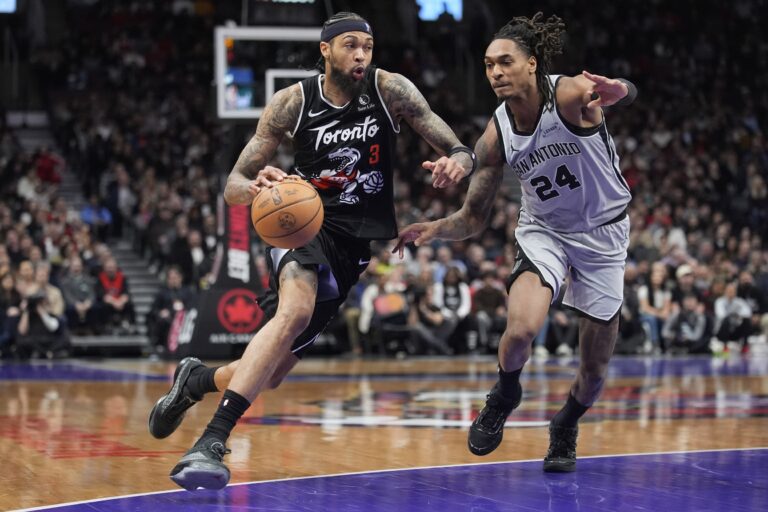
The Toronto Raptors are closing in on a milestone that once seemed slightly ahead of schedule: 50 wins. For a team balancing youth development with competitive ambition, the possibility now feels realistic rather than hopeful.
Reaching 50 victories in an NBA season is not just about talent. It requires health, discipline, consistency, and capitalizing on opportunity. Toronto has put itself in position, but the margin for error is slim. The final stretch of the schedule will ultimately decide whether this pursuit becomes reality.
The path itself is clear, even if execution won’t be easy.
The Raptors must take advantage of their remaining home games and avoid costly slip-ups against teams outside the playoff picture. Those matchups often determine whether a team finishes with 47 wins or pushes into the 50-win tier. A few unexpected losses could quickly derail the chase.
To reach that mark, Toronto likely needs to play at a .650 to .700 pace down the stretch. That is demanding but not unrealistic. The Raptors have already shown they can string together winning streaks this season. The bigger question is whether they can maintain that level as the pressure intensifies and playoff positioning tightens.
This season has highlighted genuine growth across the roster. The offense has looked more structured, defensive rotations more disciplined, and late-game execution far more composed than earlier in the year. Instead of relying on isolated individual performances, Toronto’s success has increasingly come from balance.
Roles are clearer. Bench production has stabilized. Lineups are developing chemistry.
Scottie Barnes continues to lead the charge, evolving into a two-way presence capable of impacting every phase of the game. His ability to create, defend, and control tempo has been central to the Raptors’ rise. But just as important is the development around him. The supporting cast has stepped forward, allowing the team to operate with more cohesion and versatility.
Still, the risks are real.
Injuries remain the most unpredictable threat. Even minor absences can disrupt rhythm and chemistry during a critical stretch. Offensive stagnation against elite defensive teams is another concern. When the pace slows and scoring becomes more difficult, Toronto must avoid falling into isolation-heavy possessions that limit ball movement.
Back-to-back games also present challenges. Fatigue can lead to defensive lapses and missed rotations, small mistakes that stronger opponents will punish. And perhaps most importantly, mental fatigue can creep in during a milestone chase. Teams hovering in the high-40 win range often fall short not because of a lack of talent, but because small lapses accumulate over time.
Toronto must eliminate those dips entirely.
Is 50 wins realistic? Based on their trajectory, depth, and structural improvements, the answer is yes.
The Raptors are not chasing an unrealistic ceiling. They are building toward a benchmark that aligns with their current level of competitiveness. The defense has held firm for long stretches, and when ball movement flows, the offense generates efficient looks.
Late-game composure has improved significantly as well. Close contests that might have slipped away earlier in the season are now being managed with more poise. That shift is often what separates solid playoff teams from legitimate conference threats.
Health will ultimately be decisive. If the core rotation remains intact and recent trends continue, the Raptors have a legitimate chance to hit 50 wins. The remaining schedule provides opportunities, particularly at home, to build sustained momentum.
Reaching that number would mean more than adding another line to the standings. It would signal that Toronto has transitioned from rebuilding momentum to reestablishing itself as a serious contender. It would validate the development of the young core and reinforce the belief that this group can compete at a higher level.
The next few weeks will determine whether this push becomes a defining milestone or simply a strong season that fell slightly short. The opportunity is there. The structure is in place. Now it comes down to execution.