Rangers’ historical influence on the Scotland national team is undeniable. During their dominant years, they provided the backbone of the squad, with local talent naturally gravitating towards Govan. The idea was simple—if you were one of the best Scottish players, you played for Rangers, and in turn, that meant you were likely to be a key part of the national team setup.
However, football has changed drastically over the last few decades. The advent of the Bosman ruling and the abolition of the three-foreigner rule were supposed to help teams from leagues like the SPFL compete better in Europe by allowing them to sign talent more freely. Instead, these changes inadvertently diminished opportunities for homegrown players, particularly those coming through the Rangers academy.
With Scottish clubs able to sign foreign players for cheaper fees than ever before, the priority shifted. Suddenly, rather than investing in developing Scottish talent, clubs were more willing to sign a bargain from Eastern Europe, Scandinavia, or South America, hoping to find a gem that could either make an instant impact or be sold for profit down the line. As a result, Rangers—and, to an extent, Celtic—moved away from the model that had once made them a conveyor belt of Scottish internationals.
Scotland’s Costly 1990 World Cup Mistake
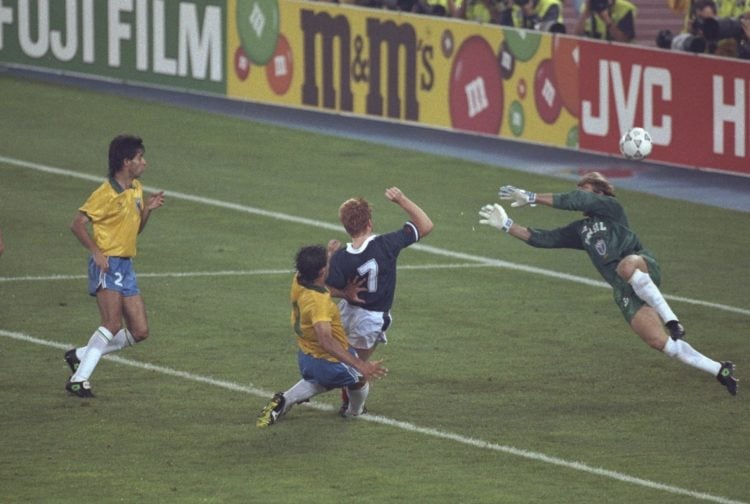
Once upon a time, Scotland would head to World Cups with Rangers players at the heart of their team—provided the manager picked them. The decision to leave out Ally McCoist in Italia ‘90 remains one of the most baffling calls ever made by a Scotland manager on the big stage.
That summer, Graeme Souness had already sent shockwaves through Scottish football by signing Maurice Johnston, making him the first high-profile Catholic to play for Rangers in modern times. Many Rangers fans were initially against the move, given Johnston’s Celtic background, but football has a way of making fans forget their grievances—especially when a player delivers on the pitch. And Johnston did just that, scoring in Old Firm derbies and playing a key role in securing the title for Rangers.
At the end of the season, Rangers had won the league, with the dynamic duo of McCoist and Johnston leading the line. Given their form, it seemed obvious that the pair would start together for Scotland in the World Cup opener against Costa Rica.
Instead, Andy Roxburgh made a shocking decision. As McCoist recalled on Talksport after Craig Brown’s passing in 2023, he initially thought he had been selected when Roxburgh announced the lineup.
“There’s a million stories. A million,” McCoist said.
“The World Cup as well, over in Italy, when Andy Roxburgh reads out the team and he says ‘Mo and Nally,’ big (Alan) McInally who was playing for Bayern Munich and Wee Mo (Johnston).”
“I think he’s said ‘Mo and Ally’ and I’m sitting there thrilled to bits thinking I’m playing in the opening game of the World Cup.”
“I remember looking across at Craig Brown and Craig looking at me going, ‘Jesus, Coisty’s taken this hell of a well’.”
“And then the bombshell—bang! I realised it was Nally.”
Scotland went on to lose 1-0 to Costa Rica in what is still remembered as one of the worst results in Scottish football history. To make matters worse, Robert Fleck—McCoist’s former Rangers teammate—was picked ahead of him in the next match, another puzzling decision considering McCoist’s goal-scoring prowess.
McCoist eventually had his moment for Scotland at Euro ‘96, scoring against Switzerland, but the decision to leave him out of the starting lineup at Italia ‘90 still lingers as a moment of what could have been.
The Shift Away from a Scottish Core at Rangers
That 1990 squad had a strong Rangers influence, but in the decades since, that connection has faded. The last time Rangers provided a significant contingent for Scotland was the late 1990s and early 2000s, when players like Barry Ferguson, Craig Moore, Allan McGregor, and Kenny Miller played key roles for both club and country.
But as Rangers looked further afield for signings, the number of homegrown players making it into the first team declined. There are multiple factors behind this shift:
- Foreign Recruitment Priorities
As mentioned, freedom of movement meant Scottish clubs could sign more affordable foreign players, leading to fewer opportunities for academy graduates.
- Pressure for Instant Success
With the expectation of winning the league every season, Rangers managers often opt for experienced signings rather than taking risks on young Scottish players.
- Lack of Quality Graduates
In fairness, there haven’t been many elite-level Scottish talents coming through Rangers’ academy in recent years. The last striker to graduate and make a real impact was Robert Fleck—and that was over 30 years ago.
Rangers’ Plan to Rebuild a Scottish Core
Recognizing the need for change, Rangers’ Head of Recruitment Nils Koppen and new CEO Patrick Stewart have set a transfer objective: bring more Scottish talent back into the squad.
It’s not just about promoting youth players—successful Rangers teams of the past had a mix of academy products and top Scottish players signed from rival clubs. The 1990s squad featured players like:
John Brown (from Dundee)
Dave McPherson (Hearts)
Davie Cooper (Motherwell)
Stuart Munro (Alloa Athletic)
Andy Goram (Hibernian)
Ian Ferguson (St Mirren)
David Robertson (Aberdeen)
These were established Scottish players brought in from other SPFL teams, something Rangers haven’t done enough of in recent years.
Looking at potential targets today, there are players in the SPFL who could improve Rangers’ squad:
Lawrence Shankland (Hearts) – A proven goal scorer, perfect for leading the line.
Jack MacKenzie (Aberdeen) – A versatile left-back who could add much-needed defensive depth.
Josh Mulligan (Dundee) – A young midfielder with potential.
Toyosi Olusanya (St Mirren) – Already linked to Rangers as a dynamic attacking option.
Rangers have already taken the first step by signing Lyall Cameron from Dundee in January. If Koppen and Stewart stick to their plan, he won’t be the last.
Will Rangers Fully Commit to This Approach?
The big question is whether Rangers will genuinely stick to this strategy or if it’s just PR talk.
There’s no doubt that having a strong Scottish core benefits a club in the long term, both for European squad registration rules and for keeping fans connected to the team. Celtic have managed this well with Callum McGregor, James Forrest, and Greg Taylor, but Rangers have been more reliant on foreign imports in recent years.
If they genuinely want to bring back a Scottish identity, they need to make domestic recruitment a priority, not just something they talk about.
Do you think they’ll follow through with this, or will it be another short-lived attempt before they return to the bargain-bin foreign market?