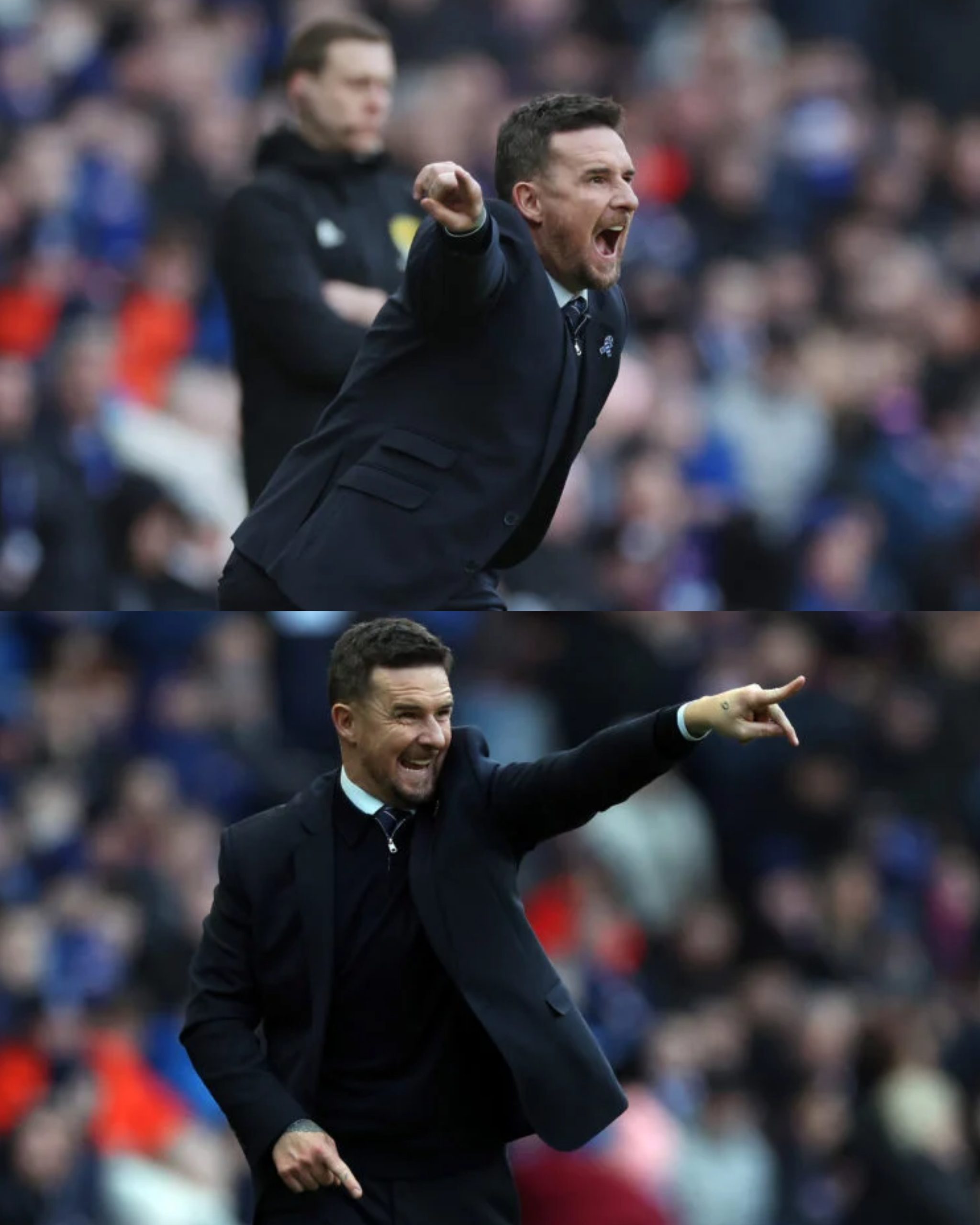
Barry Ferguson’s leadership style has always been one of relentless intensity, unwavering commitment, and an unshakable demand for high standards. As a player, Ferguson was known for his ability to drive his teammates forward, setting the tone for what it meant to wear the Rangers shirt. He led by example, both on and off the pitch, and had no hesitation in holding others accountable if they failed to match his own standards. Now, as interim manager, it appears that same approach has carried over into his coaching, and according to Jack Butland, some of the players have been taken aback by the sheer force of Ferguson’s personality.
The ‘hairdryer treatment’ is a phrase that has become legendary in football circles, largely thanks to Sir Alex Ferguson’s explosive touchline and dressing room outbursts at Manchester United. It’s a style of management that is direct, emotional, and sometimes confrontational—designed to wake players up and ensure they never forget the weight of the expectations placed upon them. While Sir Alex himself later admitted that these outbursts were not as frequent as some claimed, they were nonetheless an integral part of his managerial arsenal. When used correctly, they could jolt a team back into focus and push them towards success.
Barry Ferguson, of course, played in an era where strong personalities were the backbone of successful dressing rooms. He came through the ranks at Rangers in the 1990s, a time when leaders like Richard Gough and Lorenzo Amoruso commanded enormous respect, and when standards at the club were set at the highest level. As a player, he thrived under the intense scrutiny that came with being a Rangers captain, and it appears he has brought that same level of expectation into his role as interim boss. According to Butland, Ferguson and his coaching staff have made their presence felt immediately, arriving with “big voices, big energy, and big characters.”
The timing of Ferguson’s appointment—albeit on an interim basis—comes at a critical juncture for Rangers. The club has endured an inconsistent campaign, with disappointing results in Europe and a domestic title race that has seen them fall behind their greatest rivals. In such moments, a club requires strong leadership, and Ferguson’s approach suggests that he is determined to instill discipline, focus, and an unwavering work ethic into the squad. Butland’s comments suggest that while some players may have been taken aback by the intensity of Ferguson’s approach, it has had the desired effect in ensuring that everyone understands what is expected of them.
However, the success of such a hardline approach is not always guaranteed. In the modern game, footballers react differently to criticism and pressure than they did in previous generations. While strong leadership remains crucial, it must be combined with a sense of understanding and adaptability. Players today, particularly younger ones, often respond better to motivation, clear tactical guidance, and constructive feedback rather than outright confrontation. The key challenge for Ferguson will be striking the right balance—maintaining his high standards while also ensuring that players feel supported and motivated.
That being said, there are clear examples of managers who have successfully used intensity and passion to drive their teams forward. Jurgen Klopp’s high-energy approach at Liverpool, Diego Simeone’s relentless demand for commitment at Atletico Madrid, and even Pep Guardiola’s meticulous and often intense approach at Manchester City all show that there is a place for strong, emotional leadership in modern football. The difference, however, lies in how that energy is channeled—whether it inspires players or alienates them.
Ferguson will need to ensure that his methods are received in the right way. If players buy into his vision and respond positively to the increased demands, Rangers could find themselves rejuvenated and refocused. However, if the approach becomes too aggressive or players feel they are being unfairly targeted, there is always a risk that morale could be negatively impacted. The fact that Butland has emphasized the positive response from the squad so far is a good sign, but it will ultimately be results on the pitch that determine whether Ferguson’s methods are effective.
One of the key factors that will shape Ferguson’s success in this role is his ability to command respect from his squad. As a former captain and club legend, he already carries significant weight in the dressing room. Players will be aware of his achievements and the standards he upheld during his playing career. However, respect alone is not enough—he must also demonstrate a clear tactical understanding of how to get the best out of the squad. Motivation and intensity can only take a team so far; at some point, tactical acumen, adaptability, and smart decision-making will be just as crucial.
The coming weeks will be pivotal for Ferguson and Rangers. If the team responds well to his leadership, they could find themselves in a stronger position both domestically and in Europe. If his approach leads to friction or inconsistency in performances, however, it could raise questions about his long-term suitability for the role.
Ultimately, football is a results-driven business, and Ferguson’s impact will be measured by what happens on the pitch. If his ‘hairdryer’ moments serve as a wake-up call that drives Rangers forward, his methods will be hailed as exactly what the club needed. If performances do not improve, then his fiery approach could be questioned. Either way, his presence has already shaken things up, and it will be fascinating to see how his tenure unfolds in the weeks ahead.