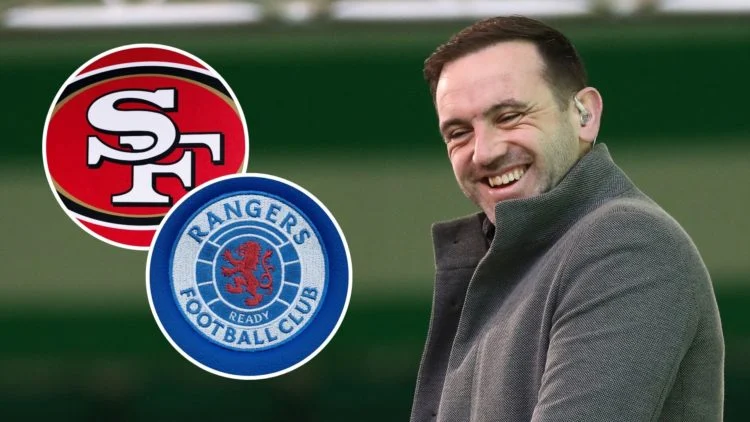
Rangers at a Crossroads: The Future of Nicolas Raskin and the 49ers Enterprises Takeover
Rangers Football Club is approaching a defining period in its modern history. The club’s potential takeover by 49ers Enterprises, led by Andrew Cavenagh, is set to reshape its financial and footballing structure, with wide-ranging implications for player recruitment, sales, and long-term strategic planning. One of the most pressing decisions facing Rangers’ leadership—both current and incoming—is the future of Nicolas Raskin.
Raskin has been one of Rangers’ most consistent performers this season, standing out in domestic competitions and earning international recognition with Belgium. Given his rising stock, the club finds itself at a crossroads: should they cash in on Raskin now, potentially funding squad reinforcements, or should they prioritize keeping him to build a stronger, more competitive team under the new regime?
The debate has sparked significant discussion among former players and analysts, with James McFadden warning that selling Raskin too soon could undermine the club’s ambitions and send the wrong message to both the squad and potential new signings. The decision is not just about Raskin himself; it’s a statement about Rangers’ direction in this new era.
The Importance of Nicolas Raskin: A Key Asset for Rangers
Since his arrival at Ibrox, Nicolas Raskin has proven to be a dynamic and influential midfielder. His energy, technical ability, and defensive awareness make him a crucial component of Rangers’ midfield. His performances for Belgium during the international break have only reinforced his value, leading to increased speculation that clubs in England and across Europe could be preparing bids.
Barry Ferguson has been among Raskin’s biggest advocates, describing him as a player with “elite qualities” capable of excelling at the highest level. This praise has fueled interest from other clubs, but it has also sparked debate over whether Rangers should retain him to build a stronger team or capitalize on his current market value.
Rangers have made costly errors in recent years by failing to maximize the value of their assets. The club lost Ryan Kent and Alfredo Morelos for free when their contracts expired, a mistake they cannot afford to repeat with Raskin. If they are to sell him, it must be on their terms—at the right time and for the right price.
However, James McFadden argues that selling Raskin now would be a significant mistake. He believes Rangers need to focus on squad stability, and offloading their best player during a transitional period could damage their competitiveness in the short term. McFadden sees Raskin as a pillar around whom Rangers should build, rather than a player to be sacrificed for quick financial gain.
The 49ers Enterprises Takeover: How Will It Shape Rangers’ Transfer Strategy?
The incoming ownership group, 49ers Enterprises, has extensive experience in sports ownership, particularly with Leeds United in England. Their investment in Rangers is expected to bring financial backing, but their approach to club management remains unclear.
At Leeds, the 49ers followed a mixed model—investing in key players while also making significant sales to maintain financial stability. If they take a similar approach at Rangers, selling Raskin could be a move designed to generate funds for reinvestment. However, McFadden warns that such a decision could backfire, particularly in terms of attracting and retaining other top talents.
Rangers are currently negotiating to sign Wolfsburg loanee Vaclav Cerny on a permanent deal, and they are also keen on Mohamed Diomande. Selling Raskin at this juncture could create uncertainty for these players. If Rangers appear to be a selling club rather than a team with long-term ambitions, players may hesitate to commit.
McFadden put it bluntly:
“If you’re a Diomande, if you’re a Cerny, and you’re trying to sign, you’re like ‘I’m not coming’.”
This highlights a crucial issue—football is not just about transactions; it’s about perception. The message Rangers send with their transfer decisions will shape how players, agents, and fans view the club under new ownership.
Lessons from Celtic: The Selling Club Model
One of the key arguments in favor of selling Raskin comes from the example set by Celtic. Over the years, Celtic have perfected a system of signing players, developing them, and selling them for significant profits—while maintaining domestic dominance.
Players like Odsonne Édouard, Josip Juranović, Jota, and Kieran Tierney were sold for substantial fees, yet Celtic continued to thrive. Si Ferry pointed this out during the discussion, suggesting that Rangers should adopt a similar model.
However, as McFadden countered, Celtic typically sell from a position of strength. They have a well-established recruitment structure and rarely offload their best players without a solid replacement plan. Rangers, by contrast, are in transition. They do not yet have the squad depth or stability to afford losing a key player like Raskin without suffering significant setbacks.
If Rangers were already dominating the league and had a clear pathway to success, selling Raskin might be a logical step. But given their current situation, McFadden believes that keeping him should be a priority.
Striking the Right Balance: Financial Prudence vs. Sporting Ambition
Derek Ferguson made an important point about timing:
“This is where at Rangers you need people who are making decisions at the right time. You want to maximize what you can get for him. That’s the balance.”
Balancing financial prudence with sporting ambition is one of the toughest challenges in football management. There is a strong argument that Rangers should sell Raskin while his value is high, ensuring they do not repeat past mistakes with expiring contracts. But there is also a risk that selling him now could create instability and weaken the squad at a crucial moment.
For Rangers to truly compete with Celtic and make an impact in European competitions, they need to build around their best players, not continually sell them. If the 49ers Enterprises takeover brings increased investment, keeping Raskin could be a statement of intent—showing that Rangers are ready to strengthen rather than dismantle.
The Road Ahead: What Should Rangers Do?
The decision on Nicolas Raskin will be one of the first major tests of the new ownership’s vision. If Rangers want to position themselves as a serious force in Scottish and European football, they need to make calculated decisions—not just financially, but strategically.
If they sell Raskin, they must ensure they reinvest wisely, securing high-quality replacements and reinforcing other key areas of the squad. However, if they truly want to challenge Celtic, they should consider keeping him for at least another season to build a stronger foundation under the new ownership.
This is not just about one player—it’s about setting the tone for Rangers’ future. Will they be a club that continually sells its best assets, or will they take the next step toward sustainable success?
What do you think—should Rangers sell Raskin now, or keep him as a cornerstone for their future ambitions?