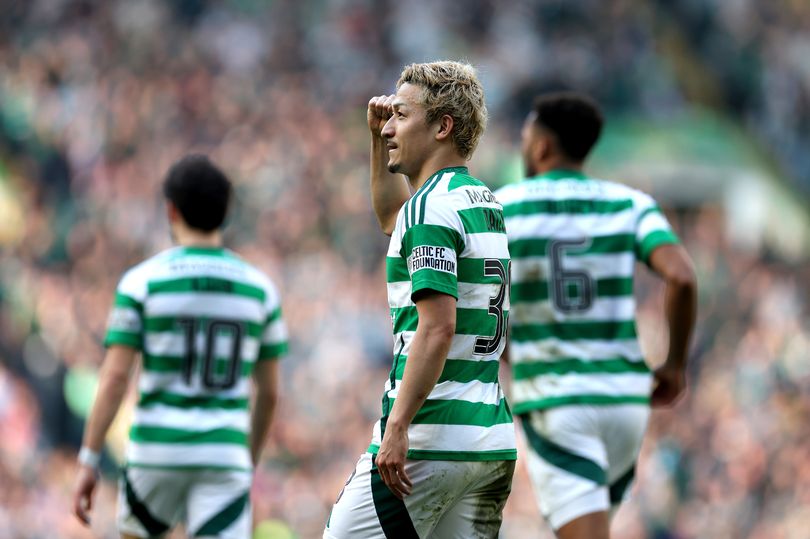
The debate on four of the biggest talking points in Scottish football this week is insightful and covers a variety of pressing issues, including player valuations, potential changes to the league structure, Rangers’ defensive struggles, and predictions for the top six. Each of these topics touches on critical aspects of the game and reveals different perspectives on how things might unfold in Scottish football over the coming months. Let’s dive deeper into each of these discussions.
Daizen Maeda’s Valuation
The topic of Maeda’s valuation has been a hot one this week, with the on-form Celtic forward continuing to impress. The key question is: how much should Celtic demand for him if they were to sell?
Fraser believes Maeda should be valued at around £20m. He points to the Japanese forward’s remarkable form, versatility, and relentless work ethic as reasons for this price tag. Maeda can play across the frontline, offering Celtic valuable depth and adaptability, which is something top clubs often pay a premium for. His energy levels, particularly his ability to press and run tirelessly throughout matches, set him apart from other attackers, making him a unique asset. Taking into account Celtic’s record transfer sales and the rising market for attacking players in Europe, £20m doesn’t seem unreasonable for Maeda, especially if there is significant interest from abroad.
Scott, however, sees the situation differently. While he agrees that Maeda is a player with notable quality, he places the forward’s value closer to £15m. His reasoning hinges largely on Maeda’s age, with the forward turning 28 in October. Scott suggests that top European clubs might be hesitant to invest a huge sum in a player approaching his late 20s, as they generally look for younger players with potential for further growth. The concern here is that Maeda might not have the resale value that clubs typically seek, especially given the current football landscape, where youth tends to be prioritized.
Andy offers a middle ground. At 27, Maeda is likely in the peak of his career, so Celtic have every right to demand a high price for him. He suggests that the bidding for Maeda should start at around £15m, but given the interest from potential suitors, it could easily rise higher if multiple clubs engage in the pursuit. This price reflects both his value as a player in his prime and his potential to contribute to top clubs immediately.
Ultimately, the question of Maeda’s valuation reflects the broader reality of the market in Scottish football, where players are increasingly being sold for higher prices, with Celtic’s recent successes in European competitions further increasing the demand for their stars.
League Reconstruction – What’s the Ideal Setup?
Another major topic of debate in Scottish football is the potential reconstruction of the league, which has been suggested as a way to improve the overall quality of the game and create more excitement. The proposals range from keeping things as they are to drastically expanding the Premiership.
Fraser is a supporter of the status quo. He believes that the current league structure is a good fit, particularly because of the split, which ensures that there is drama towards the end of the season as the top six and bottom six fight for their respective goals. For broadcasters and fans alike, the excitement of these “mini-leagues” brings an added layer of intrigue to the season, especially in the final stages. Fraser sees this model as something that works well, providing the right amount of games against top clubs and ensuring that the smaller clubs get their fair share of the big games. The split, he argues, has been a positive addition to the league, giving clubs a chance to push for European spots or fight relegation in a more condensed format.
Scott is in favor of an expanded Premiership, either 14 or 16 teams. He argues that this would provide more opportunities for clubs and help to enhance the overall quality of the league. With more teams in the league, clubs would play each other more frequently, which could increase the competitive nature of the league. However, Scott acknowledges the resistance to change in Scottish football and fears that many clubs and stakeholders might be reluctant to shift away from the current system. This reluctance could lead to the status quo being maintained, despite the potential benefits of expansion.
Andy suggests a compromise with a 14-team league that includes a top six and bottom eight. This structure could introduce an exciting play-off element, where the top team from the bottom half competes for a spot in European competition. Andy’s suggestion adds an interesting dynamic to the league, with the final European qualification spot up for grabs in a tense end-of-season shootout. This would also help ensure that teams outside the traditional top six have a chance to break into the higher echelons of Scottish football.
In summary, the debate about league reconstruction reflects a desire for change and improvement, though opinions vary on the best way to achieve that. Whether it’s sticking with the current system, expanding the Premiership, or introducing play-offs, there’s a shared recognition that Scottish football could benefit from a fresh approach.
Rangers’ Defensive Woes
Rangers’ defensive struggles have been a persistent issue this season, and with the team facing crucial European fixtures, the question is whether manager Barry Ferguson can resolve these issues with the current squad.
Fraser is concerned about the immediate future of Rangers’ defense, particularly in the upcoming match against Bilbao, where the suspension of John Souttar leaves the team short-handed in central defense. He acknowledges that while Souttar is Rangers’ standout center-half, the rest of the defense has been inconsistent, and the midfield has often failed to provide the necessary protection. With key fixtures coming up, Fraser believes it will be a tough challenge for Ferguson to stabilize the defense and maintain a competitive edge.
Scott agrees, pointing out that even goalkeeper Jack Butland has been far from his best. Butland, once considered one of the top goalkeepers in the league, has struggled to find his best form, which only exacerbates the issues in front of him. Scott suggests that the defensive woes are not just about individual mistakes but are symptomatic of deeper issues within the team, which may take more than just tactical tweaks to fix. Rangers may need to consider strengthening their squad in the summer to address these defensive concerns.
Andy feels that tactical changes could improve the situation, but the root of Rangers’ defensive problems may be psychological. He suggests that there is a deeper, more ingrained issue within the squad that causes lapses in concentration and defensive fragility. Upgrading the squad, in his view, would be necessary to address these weaknesses in the long term.
The defensive woes at Rangers highlight a need for both tactical adjustments and potentially deeper changes to the squad. Ferguson will have his work cut out for him as he looks to stabilize the team and address these vulnerabilities.
Top Six Predictions
With the split just around the corner, everyone is wondering who will make it into the top six. The battle for the coveted spots is heating up, and with only two games left before the split, the stakes are high.
Fraser predicts that Celtic, Rangers, Hibs, Aberdeen, Dundee United, and Hearts will make up the top six. He highlights Hearts’ upcoming fixtures, noting that they have a crucial match against Dundee United, which could prove pivotal for their chances. Fraser also points out that Hearts have the quality to secure a spot, but they need to show their mettle in the coming weeks. Aberdeen and Hibs, he believes, are already secure in the top six, while Dundee United’s strong form has them in a good position.
Scott shares similar views but sees St Mirren as a potential challenger to Hearts for the final spot. He believes that if Hearts fail to win their upcoming game against Dundee United, St Mirren could seize the opportunity and sneak into the top six. However, Scott acknowledges that Celtic, Rangers, Hibs, and Aberdeen are already firmly placed in the top six, with only one or two spots remaining to be decided.
Andy offers a slightly different prediction, placing Celtic, Rangers, Hibs, Aberdeen, Dundee United, and Hearts in the top six but in that specific order. He believes that the usual suspects will get it right in the final stretch of the season, with the top six spots being contested by these clubs. St Mirren, while impressive, may fall just short this season, according to Andy.
As the season draws to a close and the split nears, the top six race is one of the most exciting aspects of Scottish football, with several clubs still fighting for their place in the upper half of the table.
Conclusion
This week’s jury debate has touched on some of the most critical issues in Scottish football. From player valuations to league structure changes, defensive struggles at Rangers, and predictions for the top six, it’s clear that Scottish football is a dynamic landscape, full of intriguing questions and potential for growth. The discussions reflect both the excitement and challenges facing clubs like Celtic, Rangers, and others, as they navigate the remainder of the season. Whether it’s the future of Daizen Maeda, the structure of the league, or the fate of Rangers’ defense, these are debates that will shape the future of Scottish football.