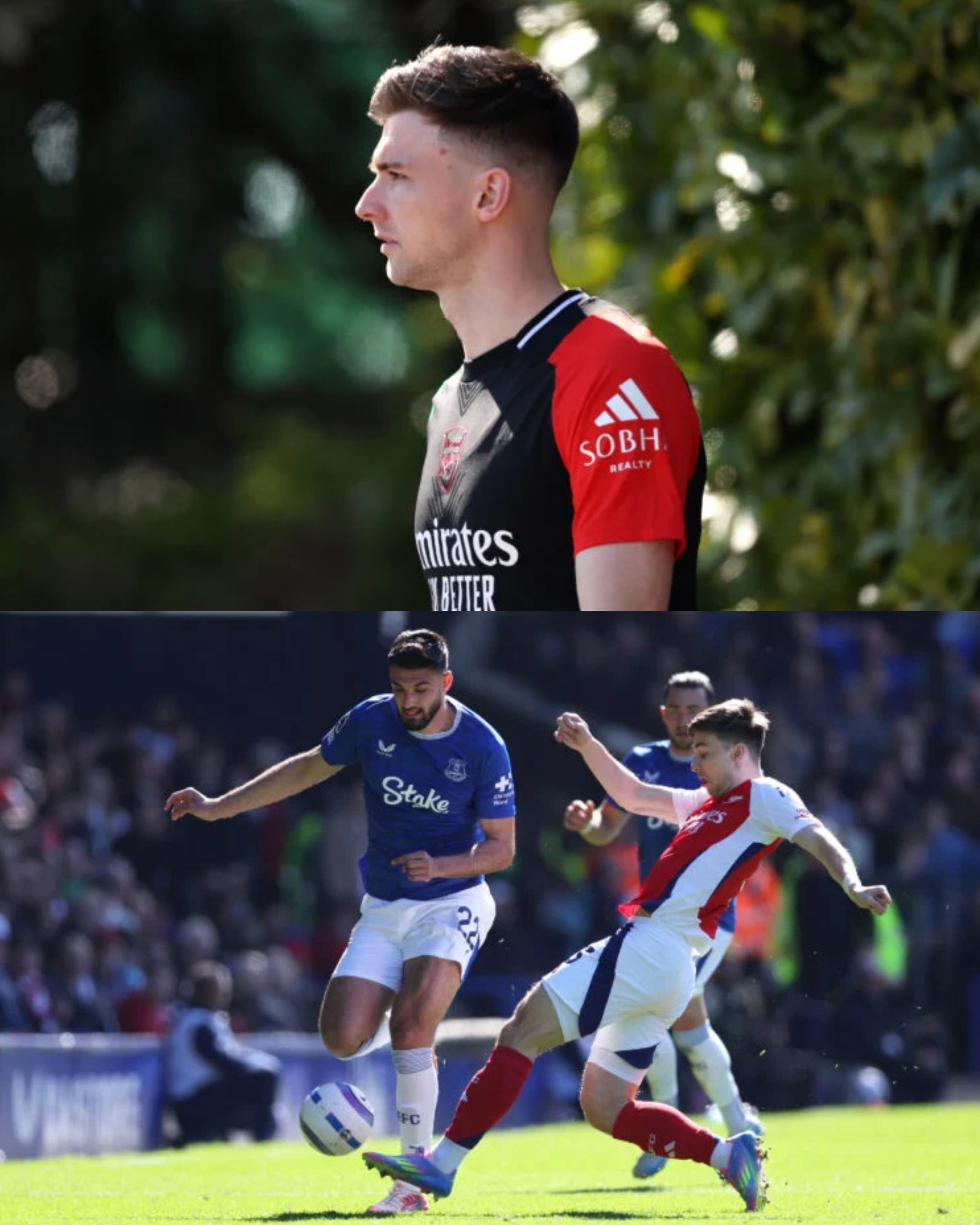
Kieran Tierney’s Return: Celtic’s Emotional and Strategic Coup
The countdown has begun for Celtic fans. The long-awaited homecoming of Kieran Tierney, the club’s prodigious academy graduate and boyhood Bhoy, is now within touching distance. While he’s currently wearing Arsenal colours and playing a key role in their Champions League campaign—remarkably helping them in a clash with Real Madrid—everyone in green and white knows where his heart truly lies. That heart beats for Celtic Park.
Tierney’s return, reportedly set for this summer, is not just an emotional boost for the fanbase. It’s a bold statement from the club—a clear sign that Brendan Rodgers and the Celtic board want to blend sentiment with sporting sense. Tierney, now 27, is not a faded star returning for a final payday. Despite past injury concerns, he remains in his prime, recently injury-free for an extended period, and still has the engine, quality, and intensity that made him one of the best full-backs in British football.
When fit, Tierney is a player capable of transforming Celtic’s left side, offering energy, overlapping threat, and a fierce commitment to defending. His influence will extend far beyond what he contributes on the pitch—he will raise standards in training, inspire the next generation, and bring leadership at a time when the club aims to reassert itself in Europe. However, for all his brilliance, Celtic must be wary of one thing: over-dependence.
No Guarantees: Celtic’s Left-Back Depth Looks Uncertain
The excitement surrounding Tierney’s return rightly dominates headlines, but there’s an equally pressing concern simmering beneath the surface: depth at left-back. As of now, Celtic’s options behind Tierney are paper-thin.
Greg Taylor, who has served the club loyally since 2019 and enjoyed some fine form under Ange Postecoglou, is widely expected to leave this summer. He’s approaching the final year of his deal, and with fatherhood and fresh challenges on the horizon, a move could make sense for both parties. Taylor, for all his limitations, has been consistent and dependable, and replacing his minutes won’t be straightforward.
Then there’s Jeffrey Schlupp. The Ghana international was a surprise addition, brought in on loan from Crystal Palace to offer short-term cover and versatility. While he has done a steady job, there’s no clarity on whether a permanent move is in the pipeline. His contract at Palace is running down, and if Celtic want to keep him, negotiations will need to start soon. But at 31, Schlupp may not be the long-term solution the club needs as backup to Tierney.
That leaves a vacuum. A club the size of Celtic, one with Champions League aspirations and Treble expectations, cannot go into a season with just one recognised left-back—especially one with a history of injury setbacks. Brendan Rodgers and the recruitment team must be proactive. Do they go out and sign a new player? Do they bring back Schlupp permanently? Or do they dare to promote from within?
Andy Walker’s Challenge to Celtic: Trust the Academy Again
Former Celtic striker Andy Walker has never been shy in voicing his opinion, and his recent comments on Celtic’s left-back situation strike at a deeper issue within the modern game—particularly in Scotland. Walker believes that the club should be looking internally to fill the backup role behind Tierney. More specifically, he’s urging Celtic to give youth a chance.
“When you look at next season, the number one left-back will be Kieran Tierney,” Walker told Go Radio. “Whilst we are on the theme of it, it would be great if they promoted someone from their academy. From the reserves. From a Lowland team. I don’t know who the left-back is there. But it used to be the case that you might get an opportunity. Maybe not now. You have to be the finished article and you aren’t allowed to develop, or maybe you aren’t given the opportunity to develop.”
It’s a nostalgic, almost romantic view of football—but one many Celtic fans share. The club’s academy has produced gems over the years—Tierney himself being the poster boy for what’s possible. However, in today’s high-pressure environment, the pathway from the B Team to the senior side has grown increasingly narrow. Managers and boards are often unwilling to take risks on unproven players when the margin for error is so small. The consequence? Talented youngsters stagnate or leave, and clubs become more reliant on the transfer market.
Who Could Step Up from Within?
While Walker’s idea is admirable, is there currently a left-back in Celtic’s academy capable of making the leap?
One name that has emerged as a potential candidate is Mitchel Frame. A dynamic young full-back who’s been part of the Celtic B Team, Frame has shown technical ability, athleticism, and a willingness to get forward—traits that would align well with how Celtic full-backs are expected to play. He’s represented Scotland at youth levels and is quietly building a reputation. However, he remains raw and untested at senior level. Giving him minutes in pre-season or cup games could be a logical next step, but expecting him to provide consistent cover in Champions League nights or away fixtures at Ibrox may be too big a leap, too soon.
External Solutions: Who Should Celtic Target?
If promotion from within is too risky, then the club will almost certainly need to dip into the market for a left-back—either as backup or competition for Tierney. This is where recruitment becomes vital. Do they go for a like-for-like backup, or a developing talent who could one day replace Tierney?
One realistic target would be Josh Doig, currently at Hellas Verona in Serie A. The former Hibs man has matured significantly in Italy, gaining valuable experience in a top-five league. At just 22, he fits Celtic’s model of buying young, developing talent with potential resale value. He’s Scottish, physically strong, and tactically astute. If Verona were to be relegated or if Doig desires a return to Scotland, Celtic should absolutely be in the mix.
Another option could be looking again to South America, though lessons from the Alexandro Bernabei situation might make them cautious. Bernabei, while technically gifted, never truly settled or met expectations. The club would need to ensure that any new signing fits the culture, climate, and intensity of life at Celtic.
How Can Celtic Evolve Beyond Domestic Dominance?
With the Premiership title all but secured and a Scottish Cup semi-final looming, Celtic could very well be on the path to yet another Treble. For most clubs, that would represent the pinnacle. But at Celtic, success isn’t just measured in silverware anymore—it’s measured in progress, particularly in Europe.
As Andy Walker noted, the next step for Celtic must involve beating Rangers more consistently and progressing deeper into European competition. Despite their domestic dominance, Celtic’s performances in the Champions League have fallen short in recent years. Being competitive on the continent requires more than just a strong XI—it demands a deep, adaptable squad. That’s why solving the left-back dilemma is about more than just covering for Tierney—it’s about building a squad capable of rotating and coping with injuries while maintaining standards across multiple competitions.
If Celtic win a Treble and stand still, the risk is regression. But if they strengthen smartly—using Tierney’s return as a cornerstone while also adding depth and trusting youth—there’s every reason to believe they can not only sustain domestic supremacy but also finally start to shift their European narrative.
Conclusion: A Crucial Summer Ahead for Celtic
The summer of 2025 is shaping up to be a defining one for Celtic. The return of Kieran Tierney will be a major moment—one that sends a message to the fans and the rest of Scottish football. But for the fairytale to succeed, it must be supported by practical planning and a clear strategy for the season ahead.
Whether that means promoting from within, re-signing Schlupp, signing Josh Doig, or discovering a new gem entirely, Celtic must ensure that Tierney has support behind him. The decisions Rodgers and the board make this summer won’t just determine the club’s left-back situation—they could shape Celtic’s ambitions for the next five years.
If you’d like, I can also write a separate piece profiling the top 3 left-back transfer targets Celtic should pursue this summer, or a scout-style report on Mitchel Frame. Want me to?