From Rock Bottom to Respect: How Rangers’ European Rebirth Under Gerrard and Clement Almost Secured a Champions League Breakthrough
When Steven Gerrard was appointed as manager of Rangers in 2018, the footballing world raised its collective eyebrows. A legendary figure as a player with Liverpool, his managerial credentials at the time were non-existent. Yet Rangers took a bold step, seeking not just a head coach, but a figurehead — a symbol of ambition, stature, and long-term vision. For a club still trying to find its feet after financial collapse and the years spent outside the top flight, Gerrard’s arrival was not only about restoring pride on the domestic front — it was about rebuilding a shattered European reputation.
Rangers, at that point, were in the footballing wilderness on the continent. Their UEFA club coefficient — the measurement of a team’s success in European competition over a rolling five-year period — had plummeted. They were ranked an astonishing 262nd in Europe. That placed them below clubs from nations with a fraction of Scotland’s footballing heritage. European nights at Ibrox had once been iconic; now they were non-existent. Gerrard’s first mandate was to restore belief, structure, and consistency. What followed was one of the most understated but impressive rebuilds in modern European football.
The Climb Back: Gerrard’s Foundation Years
Gerrard’s debut season involved a grueling Europa League qualification campaign, beginning in the first qualifying round — the very bottom rung of continental competition. Overcoming teams like Shkupi, Osijek, Maribor, and Ufa, Rangers clawed their way back into the group stage. That achievement, in isolation, was monumental. But it was only the beginning.
Over the next three seasons, Gerrard would lead Rangers into the knockout stages of the Europa League three times, building a pattern of progress that was rarely flashy but always effective. Their 2020/21 campaign was the highlight — not only did they go unbeaten in the league to win their 55th Scottish title, but they reached the Round of 16 in Europe, playing a dynamic, high-intensity brand of football that earned plaudits across the continent.
In coefficient terms, this was gold dust. Every win, every draw, every group stage reached meant more points. Rangers were steadily rising — from 262nd to inside the top 40, then top 30. Europe began to take notice again. Ibrox returned to being one of the most intimidating venues on the continent, and Rangers’ brand as a club was slowly but surely being rebuilt.
Legacy Beyond Trophies
Much is made of Gerrard only delivering a single trophy, but that view overlooks a key point: Rangers, at that stage, were not operating with the resources to match Celtic’s dominance, nor did they have the financial might of English sides. What Gerrard did deliver was infrastructure — on and off the pitch. He professionalised the culture, improved the training ground, brought in higher calibre players, and, crucially, made Rangers respected again in Europe. That legacy has paid dividends far beyond the 2020/21 title.
The Clement Era: Maintaining and Building Momentum
Philippe Clement arrived at Ibrox in October 2023, inheriting a club that had plateaued under Michael Beale. But unlike Gerrard, Clement brought with him considerable European experience — having guided Genk and Club Brugge into the Champions League. Under his leadership, Rangers have been resilient, often unremarkable in style but effective in substance.
Notably, Clement’s Rangers side have begun to break club records for European wins away from home — a long-standing Achilles’ heel. Tactical discipline, improved squad depth, and better game management have helped Rangers become regulars in the Europa League’s deeper stages.
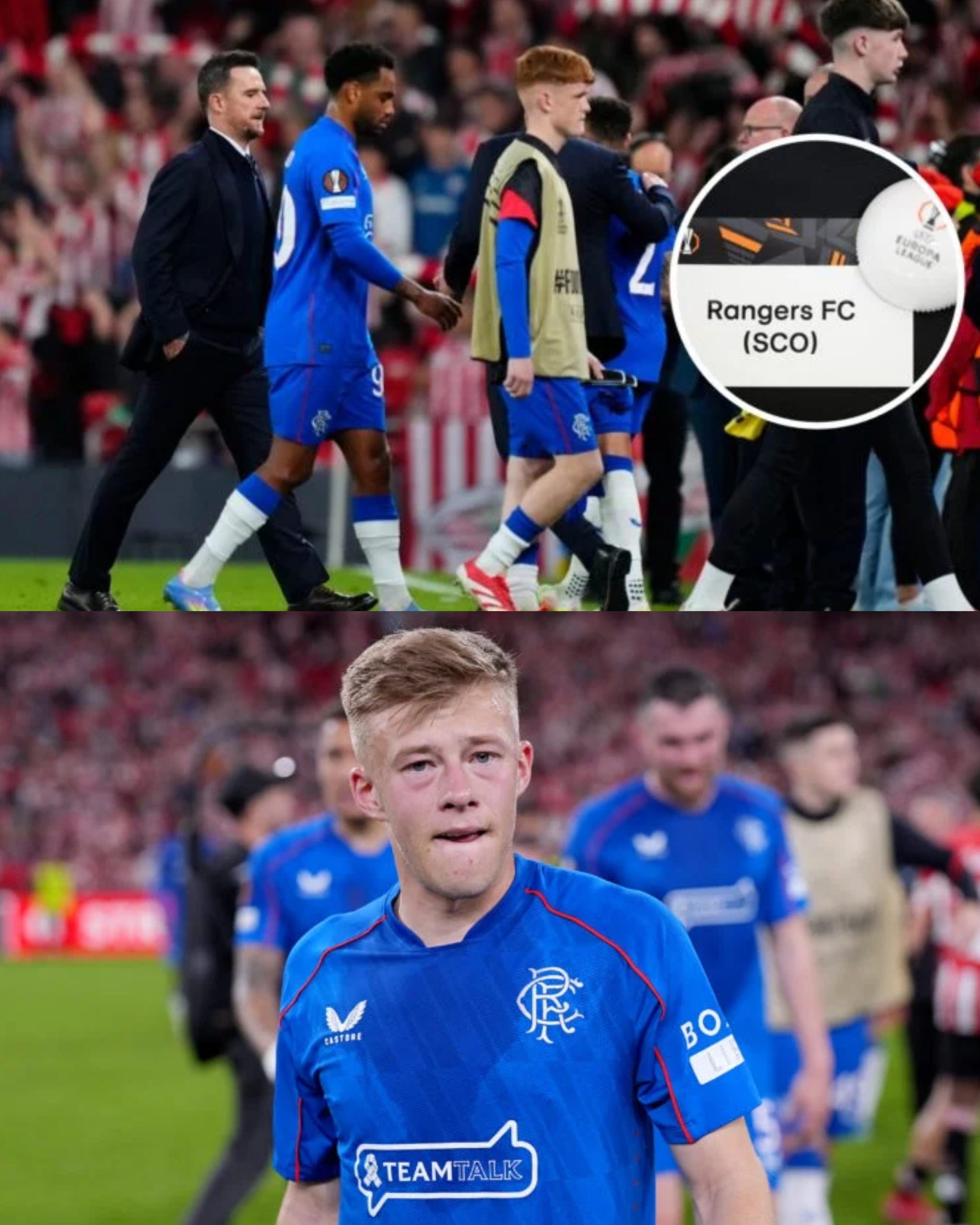
But it’s a game of margins — and that brings us to the recent, painful defeat to Athletic Club. The loss doesn’t just knock Rangers out — it denies them a strategic opportunity. A win (or even a draw after extra time) would have pushed them up to 24th in the UEFA club coefficient rankings, overtaking Club Brugge. This matters far more than it seems.
Why Coefficients Are Everything
UEFA’s coefficient rankings dictate everything in European competition. Which pot a team is in during group stage draws. Whether a team is seeded or unseeded during qualification rounds. Even which round a club enters. The higher the coefficient, the more favorable the path.
For Rangers, finishing 24th would have guaranteed they were seeded in every round of Champions League qualifying next season. Instead, by staying in 25th, they now face the very real possibility of drawing a tougher side early — one result away from £40 million or bust.
And that £40 million — the estimated earnings for Champions League group stage qualification — would be transformational. Not just for the playing squad, but for infrastructure, youth development, scouting, and future sustainability.
Missed Opportunity — Again
The real frustration lies in the fact that this isn’t the first time Rangers have been on the cusp of taking the next step. Last season’s failed Champions League campaign, where they were handed a brutal group with Napoli, Ajax, and Liverpool, ended with six defeats and a -20 goal difference. Not only did it damage reputation, it severely hurt coefficient momentum.
Had Rangers managed to stay competitive and earn even a point or two in that campaign, they might already have broken into the top 24 and beyond. Instead, they’ve lingered on the edge — in touching distance of the promised land, but always a slip away from falling back.
The Bigger Picture: Scottish Football’s Rebirth
Rangers’ resurgence in Europe hasn’t just benefited themselves. The country coefficient for Scotland has soared. In recent years, it has regularly ranked inside UEFA’s top 10 — ahead of nations like Belgium, Ukraine, and even Russia (pre-sanctions). As a result, the Scottish Premiership winner is now guaranteed a Champions League group stage place — a far cry from the days when even the champions had to battle through multiple qualifiers.
Make no mistake — Celtic’s performances have contributed too, but it was Rangers’ back-to-back Europa League knockout runs — and the 2022 final appearance — that did the heavy lifting. Their success elevated the entire league’s European status, increasing broadcast revenues, prize money, and international visibility.
A Crucial Summer Ahead
Looking forward, Rangers face a critical summer. The current squad — though solid — is not yet Champions League-ready. There are glaring deficiencies in central midfield, questions around depth at centre-back, and a need for a proven goalscorer at the highest level. Should they fail to invest wisely, they could repeat last season’s cycle: struggle through qualifiers, reach the group stage, and fall flat, undoing years of coefficient progress in one swift blow.
Philippe Clement must be backed — not just in the transfer market, but structurally. A strong summer window, combined with a favourable qualifying draw, could finally deliver Rangers the group stage football they’ve been chasing since 2011.
Conclusion: At the Edge of a European Breakthrough
From 262nd in Europe to 25th. From humiliation at the hands of Luxembourg’s Progrès Niederkorn to a Europa League final in Seville. From managerial uncertainty to building a platform for sustained success.
Rangers stand at a precipice. With just a little more fortune, and a little more consistency, they can take that elusive final step into the Champions League proper — not just as participants, but as contenders capable of making an impact.
But the margins are razor-thin. One more slip, and the hard-fought progress could begin to unravel. For a club that has climbed so far, the next chapter will define whether this is a golden age rekindled — or another missed opportunity in the annals of European football.
Would you like this polished into a professional article layout, perhaps for a blog or magazine submission? I can also add visuals, quotes, or a timeline of Rangers’ coefficient climb if you want.