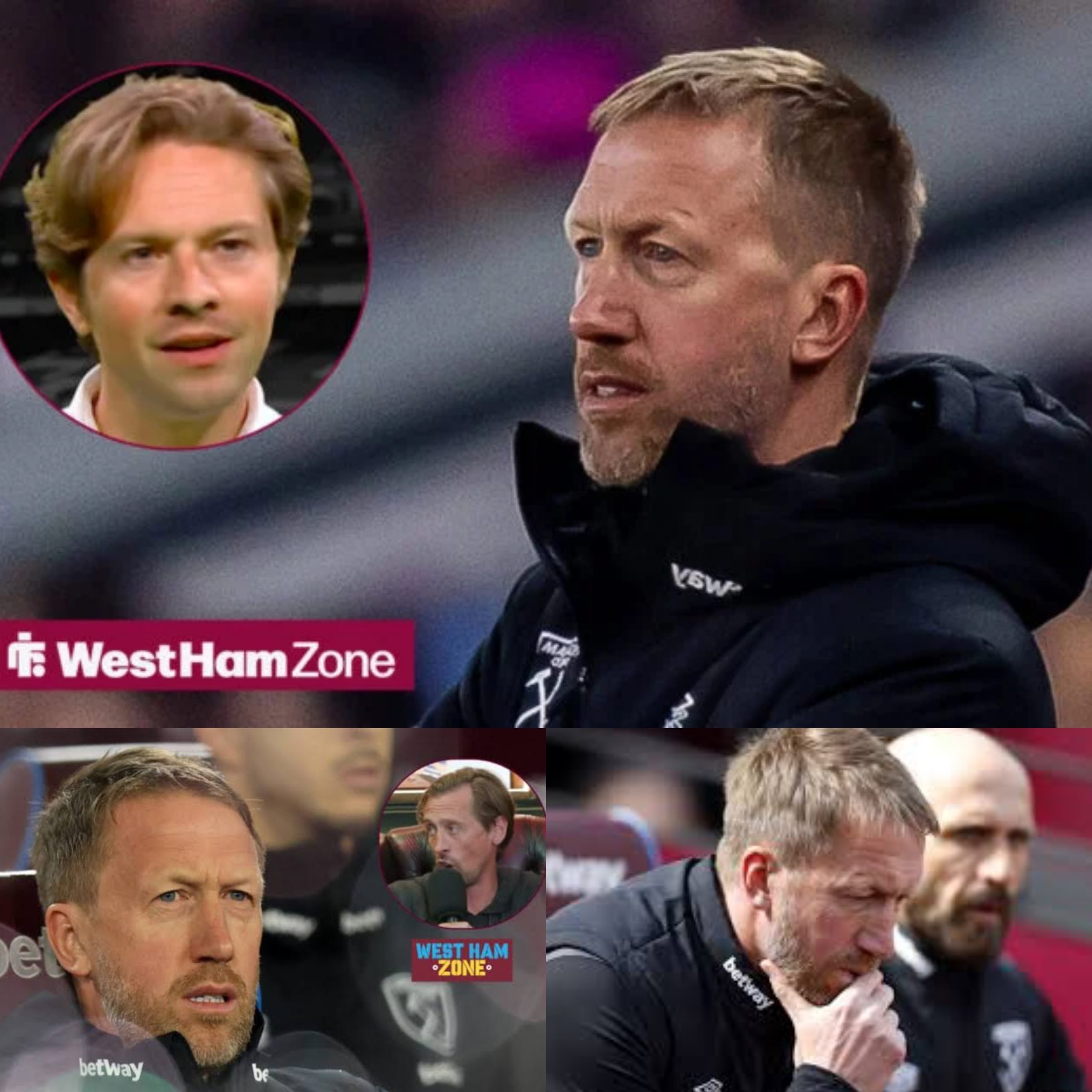
Graham Potter at West Ham: A Manager at the Crossroads of Patience and Pressure
Graham Potter’s appointment as West Ham United’s manager in January 2025 represented a significant shift in the club’s direction. Known for his progressive, possession-based approach at Brighton & Hove Albion, Potter arrived with the task of transforming a West Ham squad that had shown flashes of brilliance under David Moyes but struggled for consistency, especially after the Scottish manager’s departure. For many fans and pundits, the hope was that Potter would instill a clear footballing identity, blending West Ham’s rich traditions with a modern, expansive style of play.
However, after a turbulent first half-season, Potter’s position has become a point of contention. West Ham’s dismal finish in 14th place, combined with a return of just five wins from 18 Premier League matches, has led to widespread criticism, including a bold prediction by talkSPORT host Rory Jennings that West Ham could be relegation candidates under Potter’s stewardship.
But is this assessment fair? And more importantly, is it the right time to judge Potter’s future at West Ham, given the unique circumstances he has faced?
The Immediate Results: Not What Potter Expected
On paper, Potter’s early record at West Ham is undoubtedly disappointing. Five wins, six draws, and seven losses from 18 matches is not a return that would inspire confidence, especially when considering the club’s mid-season position and aspirations for the campaign. West Ham’s disjointed performances have left many fans frustrated, with questions raised about whether Potter’s philosophy is suited to the Premier League’s demands — or, more specifically, whether it is suited to the unique culture of West Ham United.
Yet, as is often the case in football, results tell only part of the story. To truly understand what Potter has inherited, we must examine the context in which he took over. West Ham’s season under Moyes had already been marked by inconsistencies and signs of regression, with a squad struggling to adapt after years of being coached in a very specific way. Moyes’ team had been built around physicality, directness, and counter-attacking football — qualities that West Ham fans had grown accustomed to. But for Potter, a coach who favors a more possession-based style of play, inheriting such a squad halfway through the season posed significant challenges.
Furthermore, Potter didn’t get a pre-season to instill his ideas. This is a crucial point. Pre-season is the time when a manager can impose their tactical philosophy on the squad, fine-tune systems, and prepare the players for the demands of the new season. Potter, however, was thrust into a situation where he had to make quick adjustments without the luxury of that preparation. As a result, it’s not just the players that are struggling — it’s also Potter’s ability to fully implement his system under high-pressure circumstances.
In many ways, this season is a write-off in terms of results. But what matters more is how West Ham set themselves up for the future — whether they commit to the long-term vision Potter represents or whether they revert to a more short-term approach driven by impatience and immediate gratification.
Rory Jennings’ Criticism: A Lack of Tactical Understanding?
Rory Jennings’ strong criticism of Potter’s role at West Ham has stirred significant debate. On talkSPORT, he boldly stated that Potter is “not befitting” of West Ham’s identity and warned that the club could be relegation candidates under his leadership. His critique seems more emotionally charged than analytically rigorous, drawing upon the belief that West Ham, with its working-class roots and a history of gritty, passionate football, cannot thrive under the quieter, more cerebral approach of Potter.
Jennings’ assessment is not unique in the footballing world. It represents a common reaction when a manager with a more reserved demeanor and a possession-first philosophy is appointed at a club known for its fiery fanbase and aggressive playing style. However, the suggestion that West Ham are relegation candidates under Potter’s stewardship seems far too harsh and premature.
Jennings’ argument hinges on the belief that West Ham’s identity is incompatible with Potter’s approach, which focuses on possession, fluidity, and tactical intelligence. He argues that the club’s passionate fanbase, combined with the club’s rich history of battling in tough circumstances, would not resonate with Potter’s measured and methodical approach.
But Jennings’ analysis fails to take into account a fundamental truth about football: identity is not static. Football clubs evolve, just as footballing philosophies evolve. West Ham may have prided itself on its blue-collar, no-nonsense style in the past, but in today’s game, even clubs with a rich history must adapt to modern trends if they are to compete at the highest level. The most successful clubs in Europe have done this — whether it’s Manchester City, Barcelona, or even Liverpool. West Ham can certainly maintain their core identity while embracing a more sophisticated, progressive style of football.
Jennings’ criticism also seems influenced by a bias against Potter’s time at Chelsea, where his appointment came amidst turmoil, and the club’s own identity crisis left him fighting an uphill battle. It’s understandable that a Chelsea fan would harbor lingering disappointment over his time there, but Potter’s tenure at Chelsea should not be the defining factor in evaluating his potential at West Ham.
The bottom line is this: West Ham are not struggling because of Potter’s personality or his tactical approach. They are struggling because the squad is a work in progress, and their current players are not ideally suited to his system. Whether Potter’s style works for West Ham in the long term will ultimately depend on how well he can reshape the squad in his image — something he hasn’t had a chance to do yet.
The Tactical Challenges: The Need for the Right Tools
What Potter requires more than anything is the right squad to implement his vision. His style of play revolves around technical ability, ball retention, and positional intelligence. Under him, Brighton became one of the most tactically sophisticated teams in the Premier League, regularly outplaying bigger sides and punching above their weight. But West Ham, at present, simply don’t have the type of players who can thrive in that system.
Take Jarrod Bowen and Mohammed Kudus, for example. Both are talented players, but their strengths lie in exploiting space and playing on the counter. This is the complete opposite of what Potter’s system demands. Under his approach, wide players must be comfortable coming inside, linking play, and contributing to the build-up in the middle of the park — something Bowen and Kudus have struggled with so far.
In terms of midfield, West Ham are light on players who can dictate the tempo. The midfielders that Potter has at his disposal are more accustomed to a physical, direct style of play rather than one based on short, incisive passing sequences. Without a proper playmaker or deep-lying playmaker capable of controlling the rhythm of the game, West Ham will continue to falter in matches where they’re asked to dominate possession.
Then there’s the issue of the striker position. Michail Antonio, while a warrior in West Ham’s counter-attacking system, is not suited to a style that demands fluid, interchanging movements from the forward line. West Ham’s next striker should ideally have the ability to link up play and drop into deeper positions to create overloads — characteristics that are more commonly seen in players such as Evan Ferguson or Dominik Szoboszlai.
To put it simply, Potter has inherited a team that isn’t built for his philosophy. And until he’s given the chance to bring in players who fit his system, the squad will remain stuck in limbo. This summer’s transfer window will be absolutely crucial for the club’s future direction.
A Long-Term Vision: The Case for Patience
Ultimately, Potter’s long-term vision should not be judged based on a few months of results, especially considering the challenges he’s faced in his first season. As much as the West Ham fanbase craves success and immediate results, they must also understand that good things take time.
If West Ham back Potter this summer and allow him to rebuild the squad, the future could be bright. The club has an opportunity to carve out a new identity — one that blends its history of passion with a modern, progressive style of football. Potter has the tactical intelligence, the experience, and the composure to succeed, but only if he is given the tools to do so.
A slow rebuild, rather than a quick-fix approach, is what will enable West Ham to reach the next level. This means making smart acquisitions in the transfer market, allowing Potter to develop his young players, and building a team that is built for long-term success.
Relegation? Highly Unlikely. Rebuilding? Absolutely Essential.
Let’s make one thing clear: West Ham are not relegation candidates under Graham Potter. The club has more than enough quality to remain in the Premier League, even if this season ends with a mid-table finish. The real question is whether West Ham are prepared to commit to the long-term vision of their manager, rather than succumbing to the short-term pressures of results.
Potter has shown, in his time at Brighton, that when given the right conditions, he can build a team that overachieves. West Ham have to back him, not only financially but also in terms of patience and trust. After all, success in football is rarely immediate — it’s about building something sustainable, and Potter has all the qualities needed to do just that.
The true test of his reign will come in the summer when he is finally able to shape his squad. Until then, West Ham must allow Potter the freedom to execute his ideas, confident that the future will be brighter if they stick with him.