Gold and Glory: The 5 Greatest Wolves Home Kits of All Time
Few football clubs can boast a history as rich and evocative as Wolverhampton Wanderers. From their rise as one of the founding members of the Football League to their return to the Premier League in the modern era, Wolves have always stood apart — not just because of their footballing identity, but because of their unmistakable look.
The gold and black of Wolves is more than a colour combination — it’s a badge of honour, a symbol of loyalty, and a visual link between generations of fans. Whether at the old Molineux terraces or under the floodlights of today’s state-of-the-art ground, Wolves kits have told the story of the club’s highs, lows, and everything in between.
With the release of the 2025/26 home kit, there’s renewed excitement and anticipation. The new shirt has already been well received by supporters — sleek, understated, and rooted in tradition. But does it have what it takes to be remembered among the very best?
Let’s take a trip through history and explore five of the greatest home kits Wolves have ever worn, from legendary title-winning designs to cult favourites that defined an era.
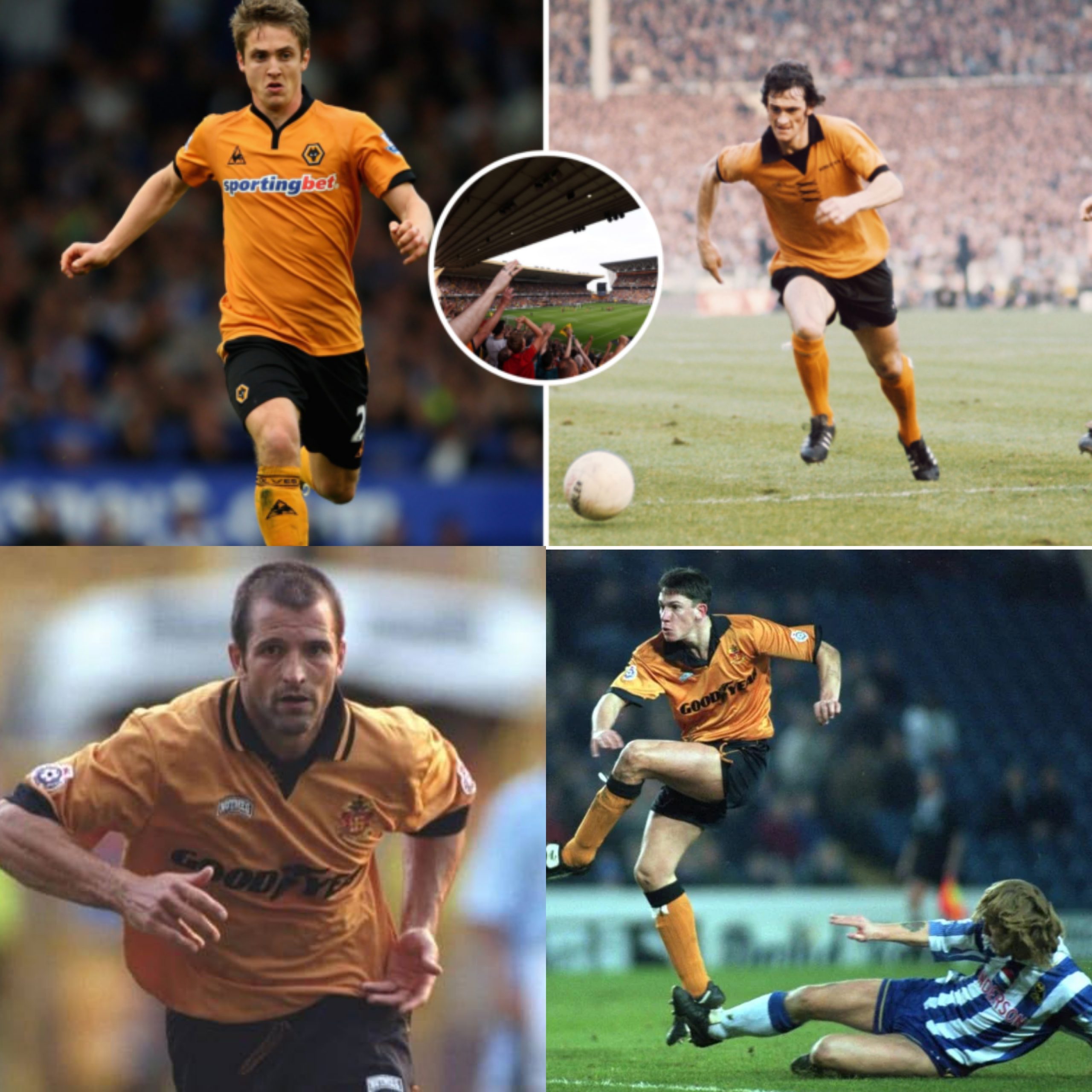
- 1994–95 – Nutmeg x Goodyear: Retro Gold with Grit
The mid-90s were a transformative time in English football — the Premier League was booming, and clubs outside the top flight were scrambling to catch up. For Wolves, the 1994–95 season represented a pivotal moment, and their kit that year reflected the mood of ambition and resilience.
Manufactured by Nutmeg, a lesser-known but fondly remembered brand, this kit was as bold as it was nostalgic. The thick black collar and sleeve trim gave the shirt a commanding presence, while the traditional Wolves gold was warm and inviting. Perhaps most iconic of all was the Goodyear sponsorship, which would become a staple of Wolves kits throughout the 90s.
What made this shirt stand out wasn’t just its look — it was the memories associated with it. That season, Wolves narrowly missed promotion to the Premier League, losing a heartbreaker of a play-off semi-final to Bolton Wanderers. Yet, the spirit of that squad and the support they received laid the foundation for years to come.
For many fans who grew up in the 90s, this kit holds powerful emotional weight. It represents a team that fought hard and a fanbase that never stopped believing. In many ways, it’s the jersey of the nearly-men — and that’s what makes it unforgettable.
- 1974–75 – Umbro: Three Wolves, One Cup
In terms of minimalist brilliance, few kits come close to Wolves’ 1974–75 home strip, designed by Umbro. In an era before commercialisation and shirt sponsors, the beauty of a football kit lay in its simplicity — and this design nailed it.
The most notable feature was the badge. Rather than the usual single wolf, Umbro introduced the trio of wolves, elegantly positioned in the centre of the shirt. It was a bold but classy move — one that instantly gave the jersey a distinctive look.
Set against a smooth gold background with black trim on the sleeves and collar, the shirt was timeless. There were no distractions, no advertisements — just pride in the club colours and crest.
This was also the shirt worn during Wolves’ 1974 League Cup triumph, when they beat Manchester City 2-1 at Wembley. That victory added a winning pedigree to the shirt’s aesthetic value, elevating it to iconic status.
For older fans, it’s a direct link to one of Wolves’ most cherished moments. For younger ones, it’s a reminder of a time when football kits were truly about identity — not marketing.
- 2009–10 – Le Coq Sportif: Premier League Return in Style
After years in the wilderness, Wolves made their long-awaited return to the Premier League in the 2009–10 season — and they did so wearing one of the most visually striking kits in their modern history.
Designed by Le Coq Sportif, the French manufacturer known for their stylish flair, the kit perfectly balanced tradition and innovation. The shade of gold was slightly darker than in previous eras, giving the shirt a bold richness. The collar featured a modern V-shape with sharp black trim, and the contrasting black sleeve detailing added further depth to the design.
The sportingbet.com sponsor was cleanly integrated into the shirt without overwhelming it, and the club’s crest sat proudly over the heart — a symbol of belonging for every fan who wore it.
But what really elevated this kit was the context. Under manager Mick McCarthy, Wolves battled their way through a tough season, ultimately surviving and securing their Premier League status. It wasn’t the most glamorous campaign, but it was gritty, determined, and passionate — just like the shirt.
This kit is remembered not just for how it looked, but for what it represented: Wolves were back. And they were here to stay.
- 2025–26 – A New Era, A New Favourite
The buzz surrounding the 2025–26 Wolves home kit is hard to ignore — and with good reason. In many ways, it’s a perfect encapsulation of where the club stands today: rooted in tradition, but looking firmly to the future.
The designers opted for a clean, minimalist aesthetic, sticking closely to the classic Wolves colour palette. The gold is rich and vibrant, not overly flashy, but unmistakably Wolves. The black detailing is subtle — present around the collar and sleeves, but not dominating the shirt.
The club crest is woven into the fabric, both literally and metaphorically. This isn’t just a shirt to wear — it’s a statement of pride, resilience, and belief.
What sets this kit apart is not just its design, but its potential. Following a strong end to the 2024–25 campaign, optimism is growing around Molineux. With an exciting core of players, a clear vision, and passionate supporters, there’s a sense that Wolves could push further — perhaps toward European qualification or a deep domestic cup run.
Should that success come, this jersey will become more than a nice design — it will become part of club folklore. It will be remembered as the kit of resurgence, belief, and unity.
- 1956–70 – The Legendary Shirt of Champions
Topping the list is the jersey that defines Wolverhampton Wanderers — the one worn during the club’s most successful era. Between 1956 and 1970, Wolves cemented themselves as giants of English football, and this classic gold kit was the symbol of that dominance.
There was no brand, no sponsor, no flashy extras — just pure, unmistakable Wolves gold. The shirt featured a simple rounded collar, light black trim, and the unmistakable club badge, embroidered rather than printed. It was understated yet powerful, just like the teams that wore it.
This was the kit in which Wolves won two First Division titles (1957–58, 1958–59), the 1960 FA Cup, and competed in famous friendlies and European competitions against teams like Honvéd and Real Madrid. Under legendary manager Stan Cullis, Wolves weren’t just successful — they were pioneers, playing under floodlights in front of packed stadiums, introducing English football to a global audience.
The shirt remains timeless, even today. Retro reproductions continue to sell out, and images of Wolves greats like Billy Wright and Ron Flowers in this jersey hang proudly across Molineux and beyond.
It’s more than just a football kit — it’s the very essence of Wolverhampton Wanderers. It’s glory stitched in fabric.
🟨 Final Whistle: A Kit for Every Era
Wolves kits are more than colours on a shirt — they are chapters in a living story. Each design tells us something about the time in which it was worn: the ambitions of the club, the spirit of the fans, and the moments — both joyful and painful — that make football what it is.
From the clean-cut dominance of the 50s and 60s, to the bold ambition of the 90s, the modern renaissance of the 2000s, and the hopeful energy of today — Wolves’ gold and black jerseys have walked through every corner of the footballing landscape.
As fans head to Molineux this season, they’ll do so wearing a shirt that may, in time, become just as legendary as the others on this list. Because in football, every season is a new story — and every kit is its uniform.
Here’s to the shirts that brought us here… and the ones still to come.