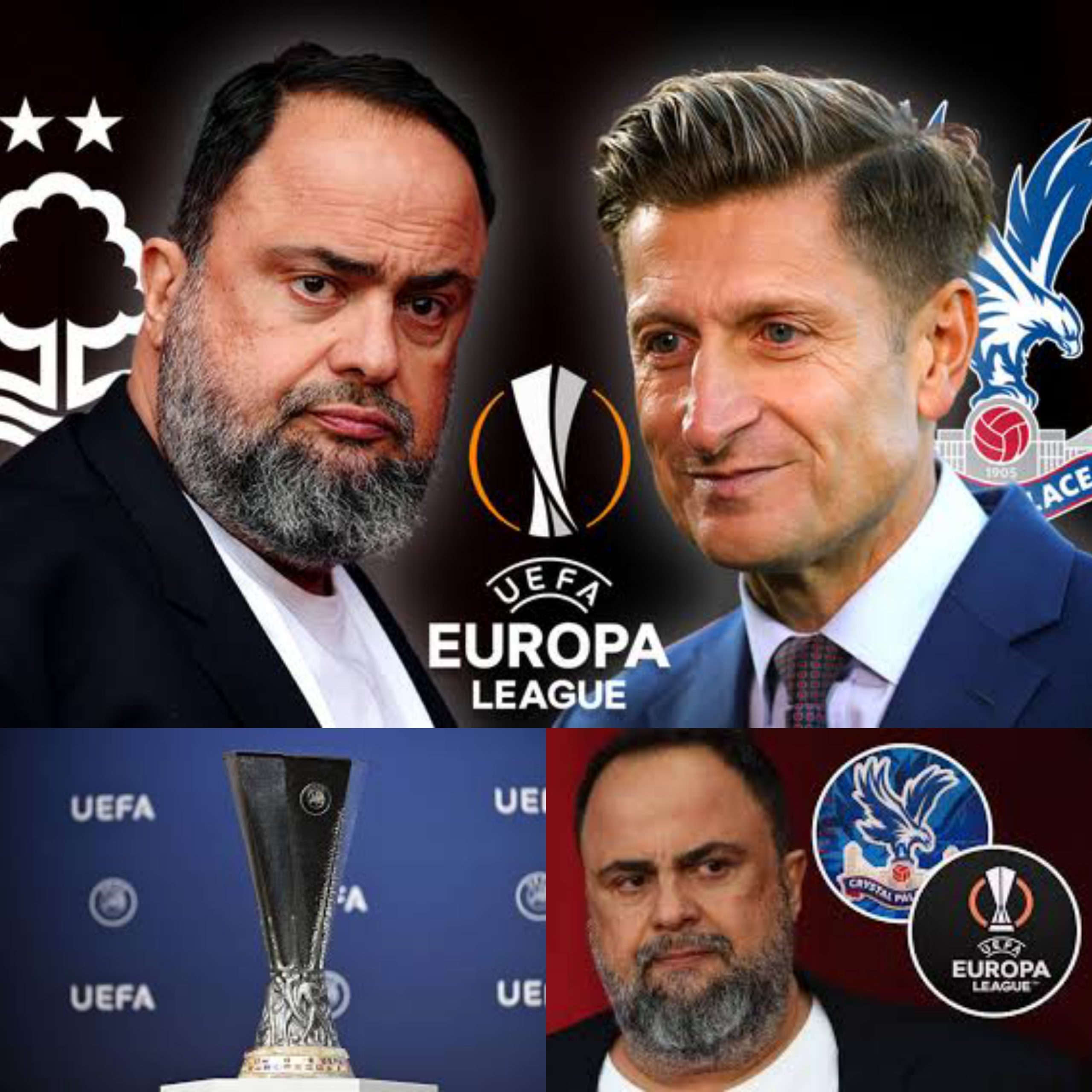
⚖️ Nottingham Forest’s Unexpected Shot at the Europa League: How a Relegation Appeal in France Could Transform an Entire Premier League Season
🔍 Introduction: Football’s Off-Field Power Plays
Football is a sport defined by drama — not just on the pitch, but often off it, in the corridors of power, the boardrooms of UEFA, and the intricacies of financial regulation. In the summer of 2025, Nottingham Forest — a historic club with European pedigree but more recent struggles to reestablish itself among the elite — finds itself in the middle of a situation that few could have predicted.
The story begins in France, winds through South London, ends in Nottingham, and has UEFA scrambling to enforce its own rules. With the stakes involving millions in European prize money, squad planning, prestige, and regulatory precedent, it’s no exaggeration to say that the decision ahead could reshape Forest’s entire 2025–26 season.
🇫🇷 The First Domino: Lyon’s Relegation and Successful Appeal
In May 2025, the French financial football watchdog — the DNCG (Direction Nationale du Contrôle de Gestion) — relegated Olympique Lyonnais from Ligue 1 to Ligue 2 after severe breaches of financial regulations. Lyon had posted huge losses over the past three seasons and had fallen foul of the watchdog’s strict financial thresholds. A shortfall of over €170 million was identified, along with uncertainty around the club’s ability to fund future operations.
This ruling, unprecedented for a club of Lyon’s stature, sent shockwaves through French football — and further afield. Lyon immediately launched an appeal, backed by fresh guarantees from American owner John Textor, including promises of player sales (like Rayan Cherki), equity restructuring, and external capital injections.
On July 9th, 2025, their appeal succeeded. Lyon’s Ligue 1 status was restored, although the club remains under tight financial scrutiny and operating restrictions for the coming season.
🔗 The Ownership Web: John Textor, Lyon, and Crystal Palace
John Textor, the key figure in this saga, is a major American businessman and the founder of Eagle Football Holdings. He holds controlling stakes in multiple football clubs:
Olympique Lyonnais (France) – Majority owner (77%)
Crystal Palace (England) – Significant shareholder (44%)
Botafogo (Brazil) and RWD Molenbeek (Belgium) – Also part of his network
This multi-club ownership model, while increasingly common in modern football, brings with it major legal and regulatory challenges, especially in UEFA competitions.
🛑 UEFA’s Multi-Club Ownership Rule Explained
UEFA has long held rules designed to protect the integrity of its competitions. Article 5 of the UEFA Club Licensing and Financial Fair Play Regulations prohibits two clubs from participating in the same UEFA competition if one party holds influence over both. This is defined as:
Holding more than 30% of shares
Being able to appoint board members
Having “decisive influence” over sporting or commercial operations
These rules are not abstract. They have already forced clubs to:
Restructure ownership (e.g. Red Bull with Leipzig and Salzburg)
Withdraw from competitions (e.g. in cases involving Milan, Lille, or Sevilla)
With Lyon and Crystal Palace both set to compete in the Europa League (Lyon via Ligue 1 finish; Palace via winning the FA Cup), UEFA must determine:
- Whether John Textor’s ownership creates a conflict of interest
- Which club gets priority if so
- Who fills the vacated slot — most likely, Nottingham Forest
🏁 UEFA’s Dilemma: Palace or Lyon?
UEFA’s guidance typically prioritizes the club with:
The higher domestic league finish
Earlier qualification
Clearer governance structure
In this case:
Lyon finished 6th in Ligue 1
Palace finished 10th in the Premier League but qualified through the FA Cup
Under normal circumstances, Lyon would take priority. That would mean Crystal Palace being forced to relinquish their Europa League place, despite qualifying through England’s prestigious cup competition.
Palace have attempted to restructure ownership and have submitted documents to show that Textor does not exert “decisive influence” — but these changes reportedly missed UEFA’s March 1 regulatory deadline.
As a result, Palace’s position is extremely fragile.
🌳 Enter Nottingham Forest: The Beneficiaries in Waiting
If Palace are removed from the Europa League, Nottingham Forest — who earned a Conference League spot via league finish — would be automatically promoted to the Europa League. This outcome would dramatically change Forest’s entire outlook for the upcoming season.
Forest, led by owner Evangelos Marinakis, have already filed complaints with UEFA regarding the potential conflict at Palace. Marinakis himself has navigated multi-club complexities in the past, as he also owns Olympiacos, a regular in European competitions.
Forest’s legal team argue that UEFA should enforce its rules fairly and consistently, especially given precedent in previous years. If UEFA agrees, Forest stand to gain a significant financial and competitive boost.
💰 Financial Implications: A Game-Changer for Forest
Let’s examine the raw economics.
UEFA Prize Money Estimates (Group Stage Only):
Item Europa League Conference League
Participation Bonus €3.63 million €2.94 million
Match Win Bonus (per win) €630,000 €500,000
Group Stage Draw Bonus (per draw) €210,000 €166,000
Market Pool & Coefficient Bonus €6–12 million €2–4 million
Estimated Total €10–15 million €4–7 million
For Forest, who are building towards sustainability after significant investment in recent seasons, an extra €7–10 million can significantly impact:
Squad strengthening
Youth development
Stadium operations and expansion plans
Attracting higher-quality signings
📅 Sporting Impact: Prestige, Fixtures, and Ambition
- Transfer Market Strategy
Europa League football immediately makes Forest more attractive to potential signings, especially those with European experience or ambitions. It allows the club to target a higher calibre of player, particularly with the lure of Thursday night football against major continental clubs.
- Fixture Congestion
With group-stage matches guaranteed from September to December, the squad will face increased demands. Rotation, depth, and injury management become vital. Forest may need 5–6 new first-team-ready players to compete effectively on both fronts.
- Long-Term Coefficient Gains
UEFA coefficients determine seeding in future competitions. Even a decent Europa League run could boost Forest’s score, increasing the likelihood of easier groups or even automatic qualification in future years.
- Champions League Backdoor
The Europa League winner qualifies for the Champions League. Though a long shot, it adds an aspirational path for Forest — a reminder that this is more than just financial gain; it’s a potential gateway to elite European football.
🤯 Palace’s Response: Frustration, Legal Challenges, and Uncertainty
Crystal Palace, understandably, are furious. Sources suggest they are prepared to appeal any UEFA decision to the Court of Arbitration for Sport (CAS). They argue that:
Textor’s influence is not “decisive”
The sale of his shares is imminent
Removing them for an ownership technicality is unjust
However, UEFA typically rules in favor of strict deadlines and transparency. Unless a last-minute restructuring is accepted, Palace face the very real prospect of missing out — through no fault of their players or coaching staff.
🧭 The Broader Implication: UEFA’s Precedent for the Future
This case has major ramifications for European football:
Can multi-club models operate freely without being penalized?
Will UEFA adjust its rules to allow more flexibility?
How strictly will governance be enforced going forward?
A ruling in Forest’s favor would set a firm precedent that ownership influence, not just club merit, plays a critical role in access to European competitions.
🎯 Conclusion: Forest Await a Potential Game-Changer
For Nottingham Forest, this could be a season-defining twist. What began as a standard offseason may end with the club returning to the Europa League for the first time in decades — a massive leap forward, financially and competitively.
UEFA’s decision is still pending, but all signals point to Forest being next in line if Crystal Palace are excluded. If the ruling goes their way, it will not only boost Forest’s bank balance — it could change their status in English and European football for years to come.