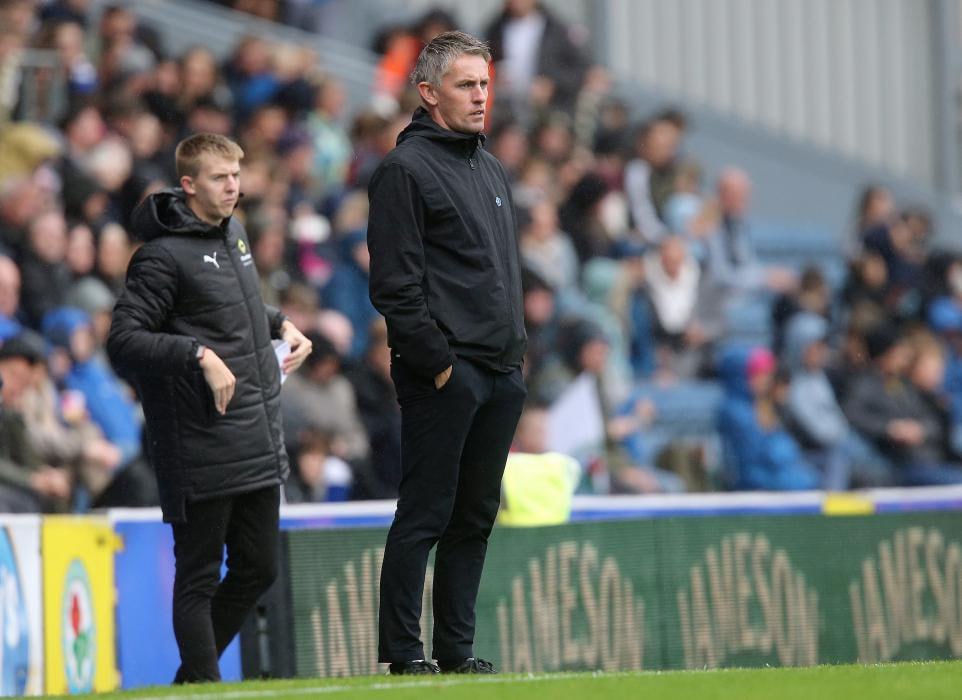
Tactical Chess: Why Kieran McKenna Views Blackburn Rovers as Ipswich’s Ultimate “Banana Skin”
As the Championship promotion race reaches its fever pitch, every fixture is scrutinized through the lens of points-per-game and squad depth. However, Ipswich Town manager Kieran McKenna is looking far beyond the league table ahead of the visit of Blackburn Rovers to Portman Road. While the standings might suggest a routine home win for the high-flying “Tractor Boys,” McKenna’s recent comments to the East Anglian Daily Times reveal a deep respect for a tactical setup that is specifically designed to disrupt teams of Ipswich’s profile.
The narrative surrounding Blackburn this season is one of paradox: a side that struggles against relegation rivals but transforms into a giant-killing machine against the league’s elite. For McKenna, this isn’t a fluke of luck or “cup magic,” but the result of a deliberate, aggressive tactical blueprint that thrives on chaos.
The Statistical Illusion: Why the Table Lies
One of McKenna’s first points of emphasis was that Blackburn’s current league position is a poor indicator of their true threat level. He specifically pointed toward Expected Goals (xG) metrics.
In modern football analytics, xG difference (the quality of chances created versus those conceded) often acts as a leading indicator of future performance. Blackburn’s underlying numbers suggest they are far more competitive than their points tally reflects. McKenna noted:
“When you look at some of the xG difference and stuff like that, they’re not a bottom-of-the-table team… The table is really tight and the results are really tight and I think everyone knows that.”
This statistical depth explains why Rovers have been able to secure massive results against the likes of Southampton and Leicester City. They aren’t merely parking the bus; they are actively suppressing the quality of chances their opponents create while carving out dangerous opportunities of their own.
The Man-to-Man Minefield
The core of the challenge lies in Blackburn’s defensive philosophy. Under Valerien Ismael, Rovers have leaned into a high-intensity, man-to-man marking system, often deploying a back five.
For a coach like McKenna, who prioritizes “playing through the pitch” with intricate passing sequences and third-man runs, a man-to-man system is the ultimate irritant. In a traditional zonal system, players occupy spaces, allowing technical teams like Ipswich to find “pockets” between the lines. In Blackburn’s system, every Ipswich player—with the exception of the goalkeeper—effectively has a shadow.
McKenna explained the tactical fallout of this approach:
The Isolated Keeper: Because every outfield player is marked, the goalkeeper becomes the only “free man.” While this gives the keeper time on the ball, it forces them to become a primary playmaker, often dragging them out of their comfort zone or forcing long balls that play into Blackburn’s hands.
The Death of Rhythm: Ipswich thrives on “flow.” By hounding players the moment they touch the ball, Blackburn ensures the game becomes “fragmented.”
The Duel Mentality: When a game is man-to-man, it stops being about tactical shapes and starts being about individual physical battles. As McKenna noted, “They run hard. They duel well. They’re aggressive in tackles.”
The “Chaos Factor”: Set Plays and Long Throws
Beyond their defensive structure, Blackburn utilizes “leveling” tactics to neutralize the technical gap between themselves and the top four. McKenna highlighted their reliance on set plays and long throws from both sides.
In a game where Ipswich might have 60% possession, a single long throw-in into the box can transform a controlled defensive situation into a 50/50 scramble. By forcing these “broken” moments, Blackburn increases the variance of the game. They don’t need to outplay Ipswich for 90 minutes; they only need to win three or four key duels in the box following a dead-ball situation.
The Psychological Battle: Lessons from Ewood Park
History is a potent teacher. Ipswich and Blackburn have already locked horns twice this season, and on both occasions, the Tractor Boys were pushed to the absolute limit.
At Ewood Park, the elements played into Blackburn’s hands. A waterlogged pitch effectively neutralized Ipswich’s ground-based passing game, turning the match into a physical slog. Blackburn were minutes away from a victory until a last-gasp equalizer saved Ipswich’s blushes.
McKenna is acutely aware that Blackburn doesn’t fear his side. They have the blueprint to frustrate them. They have the memory of beating Leicester and Southampton—the benchmarks of the division—to fuel their confidence. This makes them a “tricky opponent,” particularly for a team that prides itself on possession.
How Ipswich Must Respond
So, how does McKenna plan to navigate this tactical minefield at Portman Road? The solution likely lies in mobility and rotation.
To beat a man-to-man marking system, players cannot stay in their designated “slots.” If an Ipswich midfielder drops deep and his marker follows him, a space opens up behind. Success will depend on:
Vacating Spaces: Forcing Blackburn defenders to decide whether to follow their man into “uncomfortable” areas or hold their position and leave a man free.
Winning the Second Ball: Since Blackburn will force a fragmented game, Ipswich must be elite at winning the “second balls” after a long pass or a headed clearance.
Set-Piece Concentration: With Rovers hunting for long throws and corners, Ipswich’s defensive organization during dead-ball phases must be flawless.
Final Thoughts
Kieran McKenna’s assessment of Blackburn Rovers is a masterclass in modern managerial respect. He isn’t looking at their league position; he is looking at their DNA. He sees a team that is aggressive, physically imposing, and tactically designed to destroy the “rhythm” that Ipswich relies upon.
For the Portman Road faithful, the message is clear: do not expect a walkover. This will be a “broken” game of duels, long throws, and high-intensity pressing. If Ipswich are to maintain their charge toward the Premier League, they must prove they can win not just with their style, but with their grit.