The Raptors’ Fourth-Quarter Meltdowns Are Becoming a Pattern — and Time Is Running Out
There’s a difference between a bad night and a bad habit.
For the Toronto Raptors, fourth-quarter collapses are starting to look like the latter.
Heading into Saturday’s road clash with the Washington Wizards, Toronto owns an unwanted distinction: no NBA team has blown more double-digit fourth-quarter leads this season. Five times, the Raptors have entered the final frame up by 10 or more — and five times, they’ve watched it unravel.
For a team sitting at 34–25 and pushing for playoff positioning, that trend is more than frustrating. It’s potentially damaging.
The Pattern Is Clear
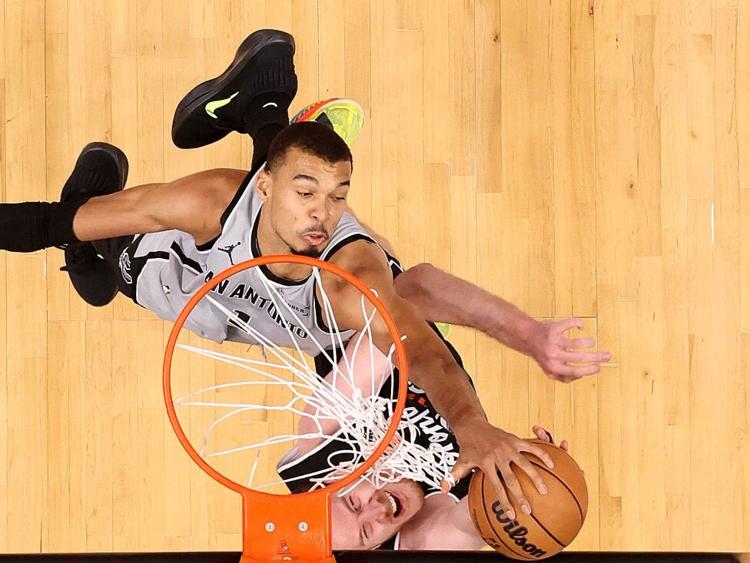
The latest collapse came against the San Antonio Spurs. Toronto led 90–78 after three quarters, only to be outscored 32–17 in the fourth and lose 110–107.
It wasn’t an isolated incident.
Against the Minnesota Timberwolves, the Raptors carried a 10-point edge into the final period before turnovers and a late Anthony Edwards surge flipped the result. In Orlando, a 13-point cushion evaporated as the Magic exploded for 44 fourth-quarter points. Even the struggling Wizards — the league’s worst team at the time — erased a comfortable deficit in December.
Different opponents. Same ending.
Execution vs. Urgency
Head coach has pointed to execution.
“It really comes down to execution of every single play,” Rajaković said, noting that earlier in the season the Raptors managed to win tight games that could have swung the other way.
He’s not wrong. Late-game offense has too often devolved into stagnant possessions, miscommunication and rushed shots. On defense, rotations have broken down at critical moments.
But execution is often tied to urgency — and that’s where the Raptors’ issue may run deeper.
Momentum Mismanagement
Against San Antonio, a key stretch early in the fourth quarter shifted everything. With Scottie Barnes and Brandon Ingram resting simultaneously, the Spurs opened on a 7–0 run. Momentum flipped. Confidence shifted. The game tightened.
By the time Toronto tried to reassert control, the energy had changed.
In close games, rotations matter. Timing matters. Feel matters.
The Raptors have frequently built leads through pace, ball movement and defensive intensity. Yet when the fourth quarter begins, that edge softens. Opponents, meanwhile, increase theirs.
Brandon Ingram framed it in psychological terms.
“We have to be better at communicating when we have the momentum to keep the momentum,” he said. “Not getting so caught up in being up 10 by the fourth quarter — but actually just pushing even harder.”
That’s a telling admission. Protecting a lead requires a different mentality than building one.
The Solution Isn’t Complicated — But It Isn’t Easy
The fix isn’t schematic genius. It’s discipline.
Late-game possessions must prioritize quality shots over isolation desperation. Defensive coverage must be called out clearly and executed without hesitation. Lineups must maintain at least one primary creator or stabilizer at all times.
In many ways, the solution is “hiding in plain sight.” The Raptors know what works — they’ve shown it for three quarters at a time.
The challenge is sustaining it when the pressure tightens.
The Bigger Picture
At 34–25, Toronto remains firmly in the playoff race. They’ve competed well against elite Western Conference opponents, even rallying from significant deficits against Oklahoma City before falling short.
There is growth here.
But growth without closure is incomplete.
Playoff games are defined by fourth quarters. Leads shrink. Possessions slow. Mistakes are magnified. If the Raptors cannot close in February and March, April will be unforgiving.
No Room for Complacency
Saturday’s matchup against the 16–42 Wizards presents another test. Washington plays freely, without expectation — a dangerous combination for a team that has struggled to maintain intensity with a lead.
Rajaković’s message is simple: take it seriously, set the tone early, and don’t assume anything.
Because the Raptors’ issue isn’t talent.
It isn’t effort.
It’s consistency when it matters most.
And until that changes, every double-digit lead will feel slightly fragile — no matter how comfortable it looks after three quarters.