Sixty-six attempts. One goal.
It is a statistic that tells its own story — and one that perfectly captures the growing anxiety surrounding Nottingham Forest as the Premier League season edges towards its decisive stretch.
For Vitor Pereira and his players, the issue is no longer about effort, intent, or even chance creation. It is about execution. Forest’s inability to convert opportunities into goals has left them teetering just two points above the relegation zone, with the margin for error shrinking by the week.
The defeat at the Amex Stadium against Brighton & Hove Albion was simply the latest chapter in a troubling narrative. Animated on the touchline, Pereira watched as promising moves fizzled out in front of goal — shots dragged wide, headers miscued, speculative efforts blocked. It was a familiar sight.
Quantity Over Quality?
On the surface, Forest’s attacking output appears impressive. Across their last three matches, they have registered 66 shots — the most of any Premier League side in that period. Even leaders Arsenal, despite playing an extra game, have not come close to that volume. Forest’s expected goals (xG) total of 4.54 during the same stretch further suggests they should have found the net more than once.
Yet context matters.
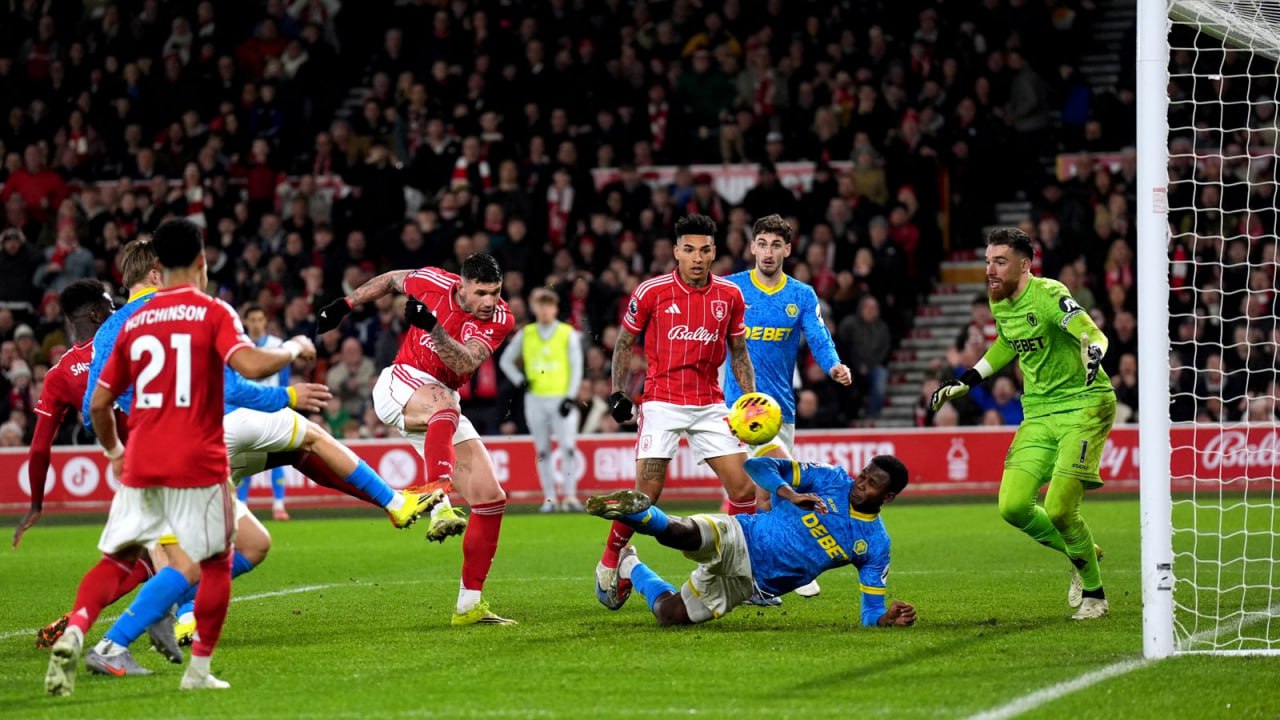
A staggering 35 of those attempts came in a single fixture — a frustrating stalemate against Wolverhampton Wanderers. It was the second-highest shot tally in Premier League history without scoring. One clinical moment that day could have dramatically altered Forest’s position in the table.
Dig deeper and the problem becomes clearer. Across those three matches, Forest created just 47 actual chances. Nearly 30 percent of their shots were taken without being classified as clear opportunities. In other words, the volume masks a deeper inefficiency — hopeful strikes rather than high-quality openings.
This is not merely a finishing crisis. It is a decision-making crisis.
Misfiring Attack
The distribution of attempts highlights the imbalance. Elliot Anderson leads the way with 12 shots but a combined xG of just 0.43 — an average of barely 0.03 per effort. Morgan Gibbs-White has 10 shots at 0.82 xG, while defender Neco Williams ranks third with eight attempts.
Meanwhile, the two strikers tasked with leading the line — Igor Jesus and Lorenzo Lucca — have combined for just six attempts in the same period.
That statistic is perhaps the most damning of all.
Forest are not consistently creating clear-cut chances for their centre-forwards. Instead, efforts are coming from deeper or wider areas, often under pressure or from low-percentage angles. It is a case of quantity over quality — and in a relegation battle, such inefficiency is costly.
The Chris Wood Factor
The absence of Chris Wood looms large over this slump.
Last season, the New Zealander was Forest’s talisman, scoring 20 Premier League goals from an xG of 13.35 — a remarkable overperformance that underlined his clinical edge. Only Bryan Mbeumo outperformed his xG by a greater margin.
Wood averaged just over two shots per game but consistently made them count. His xG per 90 minutes of 0.4 is comparable to Anderson’s total output across the last three fixtures combined.
Since Wood’s knee surgery in October, Forest have lacked that focal point. His physical presence, aerial dominance, and penalty-box instincts provided a target for crosses and a reference point for attacking patterns.
In his absence, Pereira has rotated options, including Igor Jesus and Lorenzo Lucca. The latter, physically closest in profile to Wood, has shown promise — his two recent shots carried an xG of 0.56 — yet he has found himself out of favour since Pereira’s arrival.
Forest’s current approach seems misaligned with their strengths. When they had Wood, the strategy was clear: deliver into dangerous areas and trust the striker’s instincts. Now, the build-up play often ends in hopeful long-range attempts rather than crafted openings.
A Difficult Trip to the Etihad
The challenge does not get easier. A midweek trip to face Manchester City awaits — hardly ideal for a team struggling for confidence in front of goal.
Yet there are faint positives. City have conceded 283 shots this season — just over 10 per 90 minutes — and that figure has risen to 13.6 per game across their last five matches. Opponents are finding space.
The problem? Converting those opportunities.
No side has prevented more goals relative to chances conceded than Pep Guardiola’s team this season. Forest may generate attempts, but turning them into tangible reward is another matter entirely.
Pereira has publicly insisted he will not set up his side merely to chase draws. His philosophy is proactive — win at all costs. But the mathematics of survival are unforgiving.
If you do not score, you do not win.
Pressure Mounting
The relegation battle is tightening. With Forest just two points above the drop zone, each missed opportunity feels magnified. Owner Evangelos Marinakis has already been pictured visibly frustrated in recent weeks, and the mood around the City Ground is tense.
There is still hope. The underlying metrics show Forest are capable of generating chances. The creativity is there. The intent is evident. What is missing is composure, precision, and perhaps a ruthless edge that Wood once supplied.
If Pereira can recalibrate his side’s attacking focus — prioritising quality over sheer volume and re-establishing a clear focal point — survival remains firmly within reach.
But time is not on their side.
Sixty-six attempts have yielded one goal. The margins are razor-thin. And unless Forest rediscover their cutting edge soon, those wasted opportunities may come to define their season.