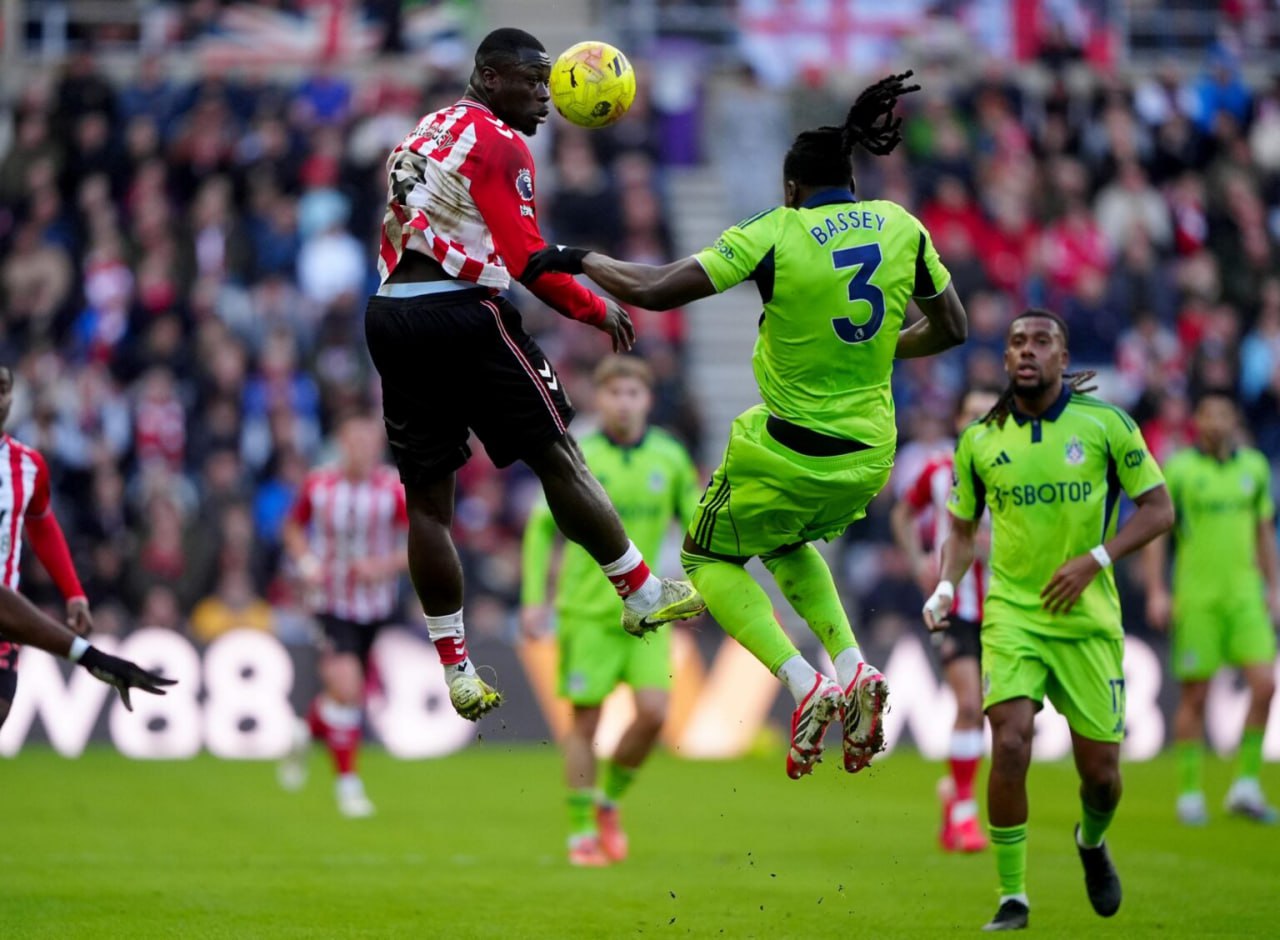
It has been a frustrating few weeks for Sunderland. A morale-boosting win at Elland Road not long ago suggested a campaign full of promise was heading toward a strong finish, yet subsequent setbacks — including a disappointing FA Cup exit and a narrow league defeat to Brighton & Hove Albion — have shifted the mood around the club.
And yet, to judge Sunderland’s 2025–26 season solely on this recent downturn would be to ignore the broader context of what has, in many ways, been a remarkable campaign.
From Survival Hopes to Stability
At the start of the season, Sunderland’s primary objective was clear: survival. As a newly-promoted side stepping into the relentless intensity of the Premier League, expectations were modest. The gap between the Championship and the top flight has rarely been wider, and many teams in Sunderland’s position have struggled to adapt.
But this Sunderland side, under Régis Le Bris, exceeded those expectations early on. Breaking the 40-point barrier with nine games to spare was not just an achievement — it was a statement. It effectively secured survival and allowed supporters to dream of more than just avoiding relegation.
For a club that, during previous Premier League spells, often flirted dangerously with the drop, this level of stability represents genuine progress.
The Cost of Overperformance
Part of the current frustration stems from how high Sunderland set the bar earlier in the season. Impressive performances, late goals, and a fearless approach created a sense that something special might be unfolding.
However, there were always signs that regression might follow.
Underlying metrics such as expected goals (xG) suggested Sunderland were outperforming their chance creation. In simple terms, they were making the most of relatively few opportunities — a trend that is rarely sustainable over a full season.
As the campaign has worn on, that clinical edge has dulled. One goal from open play in eight matches is a stark statistic, highlighting a growing struggle in attack. At the same time, defensive vulnerabilities — particularly from set-pieces — have become more apparent.
These issues are real, but they are also typical of a team adjusting to life at the highest level.
Injuries, Fatigue, and Squad Depth
Another key factor in Sunderland’s dip has been the physical toll of the season. A demanding fixture schedule, combined with injuries to key players, has exposed a lack of depth in the squad.
Despite significant summer investment, Sunderland still possess one of the least expensive squads in the division. The recruitment drive — which brought in players such as Granit Xhaka, Nordi Mukiele, and Reinildo Mandava — was necessary to compete, but it has not yet created the level of depth seen at more established Premier League clubs.
This has been particularly evident during the winter period, where fatigue has set in and performances have dipped. A young squad, still adapting to the demands of top-flight football, was always likely to experience such a phase.
Tactical Questions and Growing Scrutiny
As results have faltered, attention has inevitably turned to Le Bris. Some critics have pointed to a perceived tactical rigidity, noting a pattern from previous seasons where strong starts have been followed by declines.
There is also concern about Sunderland’s ability to break down low defensive blocks — a common challenge for teams that dominate possession without creating clear chances.
But these criticisms should be balanced against the bigger picture. Le Bris successfully integrated a large number of new signings early in the season, instilled belief within the squad, and oversaw performances that, at times, exceeded all expectations.
A Changing Premier League Landscape
It is also important to consider the broader evolution of the Premier League. Modern football has become increasingly pragmatic, with even elite sides adopting more cautious approaches.
Managers like Pep Guardiola have acknowledged the impact of fixture congestion and the reduced time available for tactical preparation. The result is a league where games are often decided by fine margins — set-pieces, transitions, and moments of individual quality.
For a team like Sunderland, this environment presents additional challenges. Breaking down organised, defensively disciplined opponents is difficult even for the league’s top clubs, let alone a newly-promoted side.
Perspective Is Key
None of this is to dismiss the frustrations of recent performances. The FA Cup defeat to lower-league opposition was unacceptable, and the lack of attacking fluency is a genuine concern.
But perspective matters.
Sunderland have not simply survived in the Premier League — they have competed. They have produced memorable results, shown resilience against top sides, and established a foundation for future growth.
Moments such as the draw at Anfield, victories over strong opponents, and a run of impressive performances earlier in the season should not be forgotten.
What Comes Next?
The final weeks of the campaign will be crucial, not just in terms of results but in shaping the narrative around Sunderland’s season.
A strong finish could reinforce the sense of progress and optimism. A continued slump, on the other hand, risks overshadowing what has otherwise been a successful return to the top flight.
Either way, the broader trajectory remains positive.
For Sunderland, this season was never just about results — it was about re-establishing themselves in the Premier League. On that front, they have succeeded.
And while recent weeks have tested the patience of supporters, they do not erase the fact that this has been a campaign of genuine progress — one that could serve as a platform for even greater achievements in the seasons to come.