Wolves will undoubtedly feel frustrated after their 2-1 defeat against Liverpool at Anfield, with key refereeing decisions playing a significant role in the outcome of the match. While Liverpool ultimately took all three points, the circumstances surrounding the penalty decision that put them in front have sparked heated debate among pundits, fans, and players alike. Wolves were not at their best in the final third, but the feeling of injustice due to questionable officiating has overshadowed much of the post-match analysis.
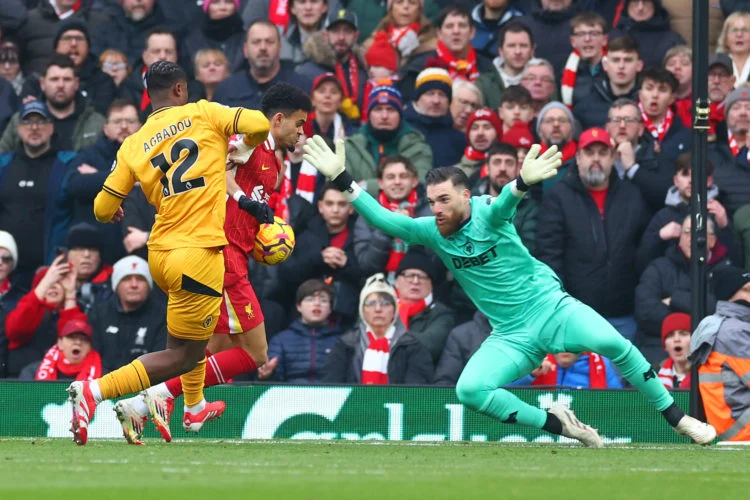
The most controversial moment of the game came in the first half when Liverpool were awarded a penalty after Luis Diaz went down under a challenge from Wolves goalkeeper Jose Sa. Initially, it appeared to be a straightforward call, with Sa rushing out and making contact with Diaz. However, upon reviewing the footage, it became clear that the contact was minimal at best. Furthermore, Diaz seemed to have made contact with Wolves defender Emmanuel Agbadou in the buildup to the incident. Many believe that this should have been ruled a foul in Wolves’ favor, meaning that instead of a Liverpool penalty, Wolves should have been awarded a free-kick.
This decision divided opinion in the Sky Sports studio, with Jamie Redknapp and Jermain Defoe sharing conflicting views on whether Diaz had committed a foul before the penalty was awarded. Redknapp argued that Diaz did enough to impede Agbadou and that the goal should not have stood, stating:
“I personally think he gives him enough for it to be a free-kick. I just feel there’s a nudge.”
On the other hand, Defoe saw it differently, suggesting that Diaz had used his experience to gain an advantage in a legal manner. He responded:
“I think it’s clever, you have to make contact, I like that.”
Redknapp did acknowledge that Agbadou could have done better defensively in that situation, adding:
“I would say that Agbadou has to do better, it’s a poor piece of defending, he was so good up until that point as well.”
Regardless of how one interprets the incident, the reality is that the decision significantly impacted the game. Instead of Wolves gaining possession and relieving pressure, Liverpool were given a penalty, which Mohamed Salah converted with ease. Given that Wolves eventually pulled a goal back through Matheus Cunha, it is entirely possible that they could have come away with a point had the referee made a different decision in that key moment.
This penalty incident was not the only moment that left Wolves feeling aggrieved. Throughout the match, referee Simon Hooper’s decisions came under scrutiny, with Wolves players and staff growing increasingly frustrated at what they perceived as inconsistent officiating. Multiple fouls by Liverpool players in transition were overlooked, while Wolves players were quickly booked for dissent when they questioned decisions. This perceived inconsistency is a growing concern across the Premier League, with fans and pundits regularly criticizing the officiating standards.
The frustration for Wolves is compounded by the fact that this is not the first time they have been on the receiving end of controversial refereeing decisions this season. Earlier in the campaign, they were denied a clear penalty against Manchester United when Andre Onana collided with Sasa Kalajdzic in the box, a decision that was widely condemned by pundits and former referees alike. Similarly, a highly questionable penalty call went against them in a match against Newcastle. These incidents contribute to the feeling among Wolves supporters that their team is not getting a fair deal from match officials.
Of course, Wolves cannot place the entire blame for their defeat on the referee. While they were competitive for large periods of the game, their lack of cutting edge in the final third ultimately proved costly. Despite Cunha’s well-taken goal in the second half, Wolves struggled to create enough clear-cut chances to truly trouble Liverpool’s defense. Against a team of Liverpool’s quality, those missed opportunities can be the difference between securing a result and leaving empty-handed.
However, in tight matches like these, refereeing decisions can be the deciding factor, and when key calls go against a team, it makes an already difficult task even harder. Wolves have shown this season that they are capable of competing against the best teams in the league, but they need a fair and level playing field to have a genuine chance of picking up points against the top sides.
Looking ahead, Wolves will need to regroup and focus on their upcoming fixtures, ensuring that they do not allow this defeat to derail their momentum. They have shown resilience in previous matches, and manager Gary O’Neil will be eager to channel the team’s frustration into a positive response in their next game.
At the same time, there is a strong argument that Wolves should push for greater accountability from referees and the PGMOL (Professional Game Match Officials Limited). With VAR in place, one would expect a higher level of accuracy in decision-making, yet controversial calls like this one continue to occur. Other clubs have taken the step of formally raising concerns about refereeing decisions, and Wolves may feel that they need to do the same if they continue to be on the wrong end of these calls.
The wider debate about the standard of officiating in the Premier League is unlikely to go away anytime soon. Fans, players, and managers alike have expressed concerns about the inconsistency of refereeing decisions, and Wolves’ experience at Anfield is just the latest example. The question remains: what can be done to improve the situation? Should referees be held to higher standards, with greater transparency in how decisions are reviewed? Should there be more accountability when clear mistakes are made?
For now, Wolves must move forward and focus on their performances, but the feeling of frustration will likely linger. Matches like these can define a season, and if Wolves miss out on valuable points due to questionable officiating, it could have significant consequences in their final league position.
In the immediate future, Wolves will need to bounce back, but there will be many within the club and fanbase who feel that a serious conversation about refereeing standards needs to happen sooner rather than later.