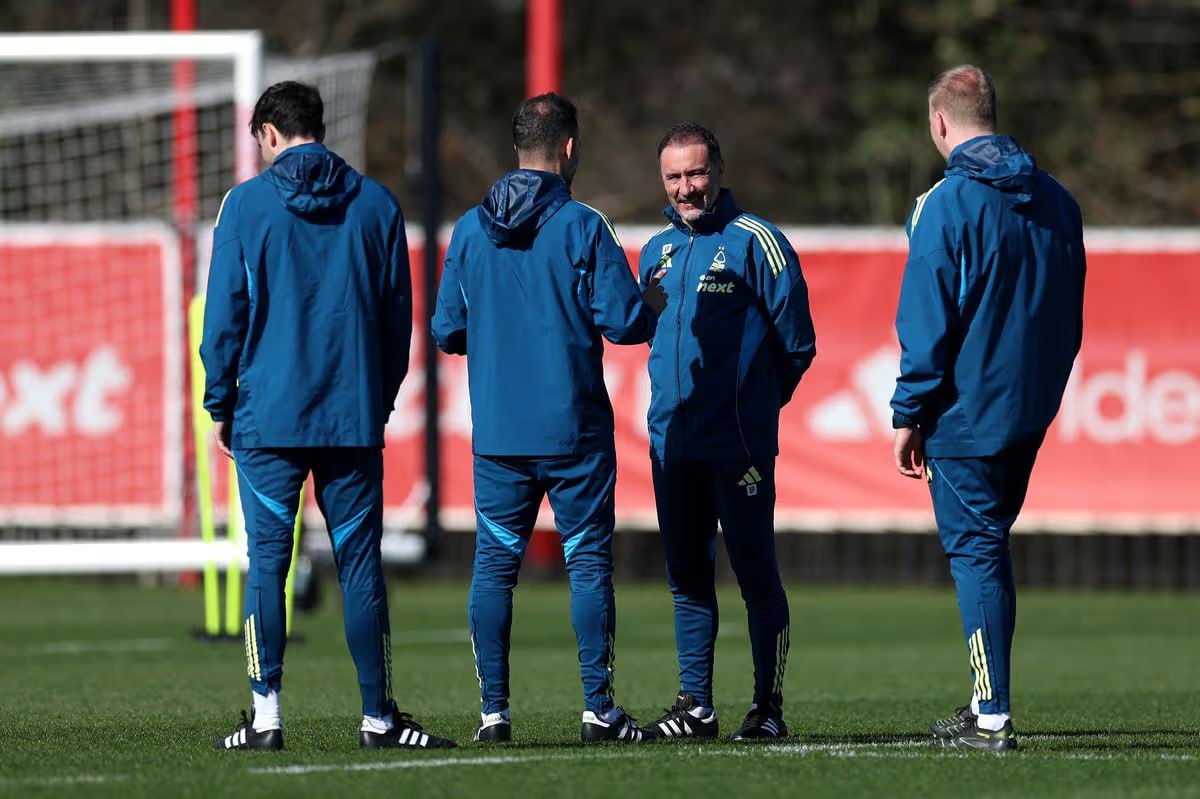
For Nottingham Forest, the coming days could shape the entire trajectory of their season. A daunting trip to Denmark to face FC Midtjylland in the second leg of their UEFA Europa League last-16 tie is already loaded with pressure. Trailing 1-0 from the first leg, the Reds must produce a response if they are to keep their European dream alive.
But looming just days later is an equally significant clash in the Premier League against Tottenham Hotspur — a fixture that could have major implications in the relegation battle.
At the centre of it all stands Vítor Pereira, faced with a dilemma that defines modern football management: rotate and prioritise survival, or go all-in for a rare European opportunity.
The Temptation to Rotate
After a draining run of fixtures and a physically demanding campaign, the temptation to rotate heavily for the trip to Denmark is understandable. Forest’s squad has shown signs of fatigue, and injuries have only compounded the problem.
Pereira himself hinted at potential changes following the weekend draw with Fulham. With a high-stakes league game against Tottenham just around the corner, protecting key players could seem like the logical move.
There is also the reality that Forest are not blessed with the deepest squad. Fringe players have struggled to make a consistent impact when called upon, raising concerns about whether a heavily rotated side would be capable of overturning the deficit against a well-organised Midtjylland team on their home turf.
Why Europe Still Matters
And yet, this is not a decision that should be taken lightly — far from it.
Opportunities like this do not come around often for clubs like Nottingham Forest. A place in the quarter-finals of a major European competition would represent a significant milestone, both in terms of prestige and the club’s long-term development.
European nights carry a different weight. They build belief, attract attention, and create moments that define eras. For supporters, they are memories that last far beyond the grind of a league season.
To effectively concede that opportunity by fielding a weakened team would be a gamble — one that risks sending the wrong message about the club’s ambitions.
The Momentum Factor
There is also a psychological element at play.
Forest’s recent form has been inconsistent, and confidence appears fragile. A strong performance and positive result in Denmark could provide a much-needed boost heading into the clash with Tottenham.
Momentum in football is often intangible but undeniably powerful. A comeback victory in Europe could galvanise the squad, lifting spirits and injecting belief at a critical stage of the campaign.
Conversely, a limp exit — especially one that feels self-inflicted due to team selection — could deepen existing doubts and carry negative energy into the weekend.
Striking the Right Balance
The solution, as is often the case, lies somewhere in between.
Rather than wholesale changes, Pereira may need to adopt a hybrid approach — blending experienced first-team regulars with carefully selected fringe players. This would allow Forest to remain competitive in Denmark while still managing the physical demands on key individuals.
Starting strong could also be crucial. If Forest can stay in the tie for the first hour — or even find an early goal — Pereira would then have the flexibility to adjust, either by introducing fresh legs or protecting players ahead of the Tottenham clash.
This measured approach acknowledges both priorities without fully sacrificing either.
Selection Headaches in Attack
One of the key decisions Pereira must make revolves around his attacking options.
Taiwo Awoniyi has made a compelling case for more minutes after an impactful cameo against Fulham, offering physicality and directness that has been lacking at times. Meanwhile, Igor Jesus has struggled for goals, and there is a growing sense that fatigue may be affecting his performances.
Lorenzo Lucca presents another option, giving Pereira tactical flexibility depending on how he wants to approach the game.
With Chris Wood still working his way back from injury, the burden on the available forwards is significant. Choosing the right combination — both for Europe and the league — could prove decisive.
No Guarantees Either Way
Perhaps the most important point in this entire debate is that prioritising one competition does not guarantee success in the other.
Resting players for the Europa League tie does not ensure a positive result against Tottenham. Football rarely offers such straightforward trade-offs.
What it does guarantee, however, is that one opportunity — progression in Europe — may be diminished or lost altogether.
A Defining Week
For Nottingham Forest, this is about more than just two matches. It is about identity, ambition, and belief.
Do they see themselves as a club fighting solely for survival, or one capable of competing on multiple fronts?
Pereira’s team selection in Denmark will provide a clear answer.
Whatever decision he makes, it will carry consequences — not just for the next two fixtures, but potentially for how this season is remembered.