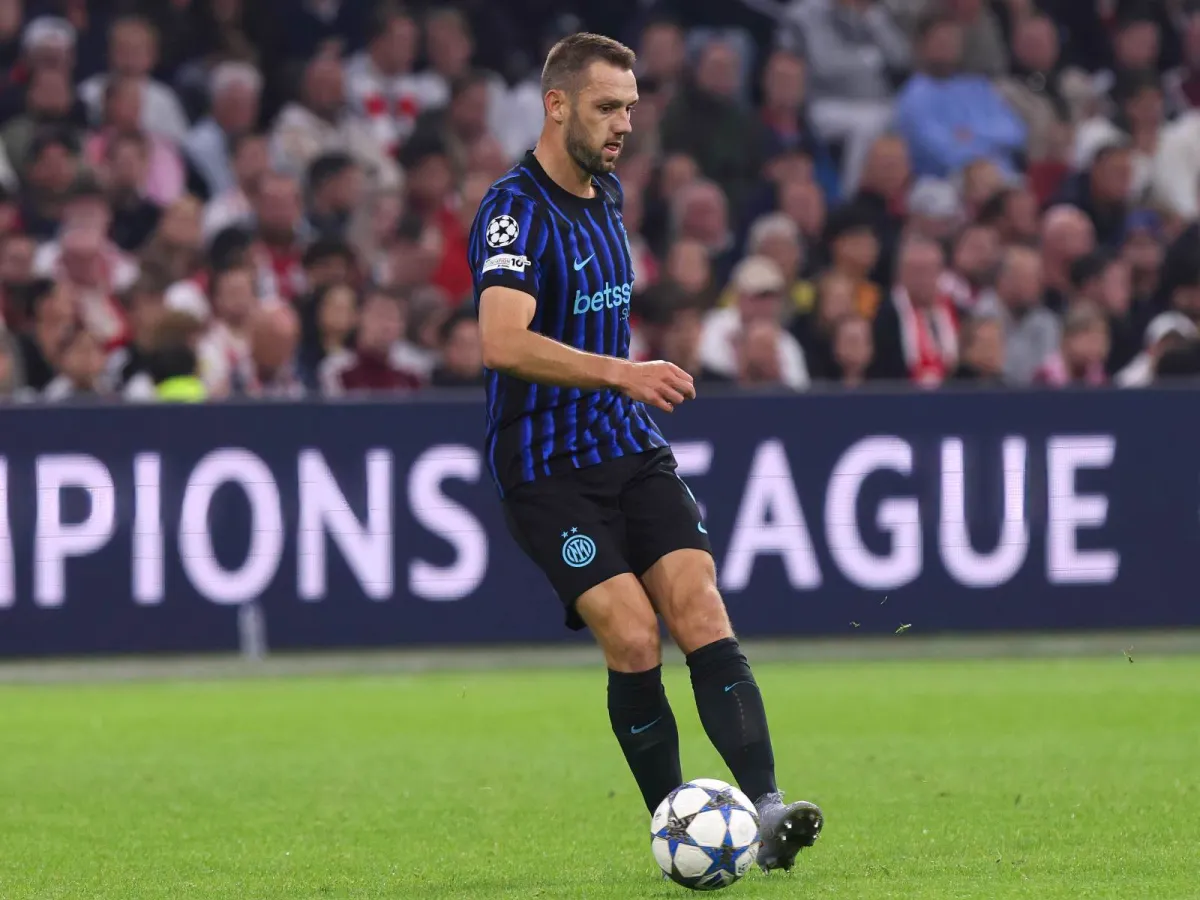
EXCLUSIVE: Stefan de Vrij to Nottingham Forest — Inside the Deal to Bring the Inter Milan Giant to the City Ground
NOTTINGHAM — In the high-stakes theater of the January transfer window, Nottingham Forest have pulled off what many are calling the most astute defensive acquisition of the season. On January 14, 2026, the club reached a definitive agreement with Inter Milan for the permanent transfer of veteran Dutch international Stefan de Vrij.
The deal, meticulously brokered by Forest’s recruitment team and spearheaded by manager Sean Dyche, represents a significant shift in the club’s strategy under owner Evangelos Marinakis. By securing a player of De Vrij’s continental pedigree for a cut-price fee, Forest have not only addressed a glaring tactical need but have also sent a clear message to their Premier League rivals: they have no intention of being dragged back into the Championship.
The “Nominal” Fee: Exploiting the Contractual Clock
The most striking aspect of this transfer is the financial efficiency. As first revealed by transfer correspondent Pete O’Rourke, Forest have secured the 33-year-old for a fee in the region of £2.5 million (€3m).
This bargain valuation was made possible by De Vrij’s contractual status at the San Siro. With his current deal set to expire in June 2026, Inter Milan faced a binary choice: retain an aging, high-earning squad player for six months and lose him for free, or recoup a small fee now while slashing his €3.8m net annual salary from their wage bill. For the Nerazzurri, who are currently undergoing a defensive refresh under Cristian Chivu, the latter option was a financial necessity.
The “World Cup” Factor: Why De Vrij Chose the Trent
While Inter were ready to sell, the player’s motivation was the final hurdle. Stefan de Vrij is a man with a singular focus: the 2026 World Cup in North America.
Despite being a stalwart for the Netherlands (earning over 70 caps), De Vrij’s lack of minutes in Milan—where he has fallen behind the likes of Yann Bisseck and Francesco Acerbi—threatened his standing in the national team. Reports from the Netherlands suggest that Oranje coach Ronald Koeman was explicit in his assessment: without regular first-team football in a major league, De Vrij’s seat on the plane to the World Cup was in jeopardy.
Nottingham Forest offered the perfect solution. In the Premier League’s high-visibility environment, De Vrij will be tested weekly against the world’s best attackers, providing Koeman with the “competitive data” he needs to justify the veteran’s inclusion.
The Sean Dyche Blueprint: Building a “Wall” on the Trent
Since taking the reins from Ange Postecoglou earlier this season, Sean Dyche has been vocal about the need for “battle-hardened” leadership. Nottingham Forest’s defense has been characterized by flashes of brilliance (largely from the Brazilian star Murillo) but plagued by a lack of vocal organization and aerial dominance in the dying minutes of games.
1. Replacing the “Murillo Void”
The timing of De Vrij’s arrival is no coincidence. Forest’s prized asset, Murillo, is currently the subject of intense interest from Chelsea and Manchester City, with valuations exceeding £50 million. By landing De Vrij now, Forest have secured an elite-level “insurance policy.” Should Murillo be sold to balance the club’s Profit and Sustainability (PSR) books, Dyche will already have a Champions League finalist ready to step into the starting XI.
2. Tactical Sophistication
While Dyche is often associated with “long-ball” football, his success at Burnley was built on a sophisticated, low-block defensive structure. De Vrij—who was named the Serie A Defender of the Year in 2020—is a master of this craft. His ability to read the game and intercept play before it reaches the danger zone will allow Forest’s more expansive players, like Morgan Gibbs-White and Elliot Anderson, the freedom to stay higher up the pitch.
3. Set-Piece Stability
Forest have conceded the second-highest number of goals from corners and indirect free kicks this season. At 6’2″ (189cm) and possessing elite heading statistics, De Vrij adds the physical presence required to dominate both boxes—a hallmark of every successful Sean Dyche team.
A Career of Excellence: What De Vrij Brings to the Dressing Room
De Vrij arrives in Nottingham with a resume that few in the Forest dressing room can match. Since joining Inter on a free transfer from Lazio in 2018, he has made nearly 300 appearances, winning the Scudetto, the Coppa Italia, and reaching the Champions League Final in 2023.
His arrival is expected to have a transformative effect on the club’s younger defenders. The likes of Andrew Omobamidele and Murillo will now have a mentor who has defended against the likes of Robert Lewandowski, Lautaro Martínez, and Kylian Mbappé on the world’s biggest stages.
The Inter Milan Perspective: Making Way for the Future
For Inter, the departure of De Vrij marks the end of an era. He was a cornerstone of the defense under Antonio Conte and Simone Inzaghi, providing the technical composure required for their three-at-the-back systems.
However, with the club moving toward a younger, more mobile defensive unit, the exit makes sense for all parties. Inter are reportedly using the funds and wage savings from the De Vrij deal to finalize their pursuit of Tarik Muharemovic, the Bosnian talent currently at Sassuolo.
Conclusion: The Signing That Defines Forest’s Survival Bid
As the January 31st deadline approaches, Nottingham Forest find themselves in 17th place—a position that demands immediate action. In Stefan de Vrij, they have found a rare commodity: a world-class player available at a bargain price with a massive point to prove.
If Sean Dyche can successfully integrate the “Dutch Giant” into his backline over the coming weeks, the £2.5m fee paid to Inter Milan may go down as the best piece of business in the Evangelos Marinakis era. Forest aren’t just buying a defender; they are buying the leadership, experience, and tactical discipline required to remain a Premier League club.