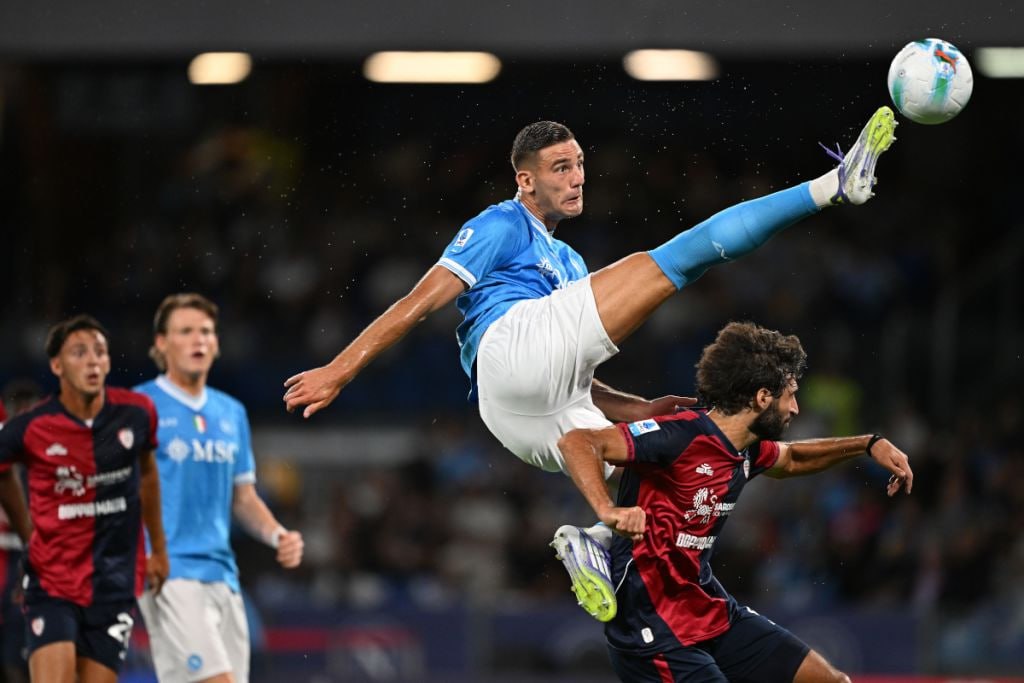
Strategic Accord: Nottingham Forest Finalize Terms with Napoli for Lorenzo Lucca
The landscape of the January transfer window is often defined by frantic, last-minute negotiations and high-stakes gambles. However, for Nottingham Forest, the pursuit of Italian international striker Lorenzo Lucca has been a calculated, multi-week endeavor designed to provide manager Sean Dyche with the specific tactical tools required to ensure Premier League survival. As of Sunday, January 18, 2026, this pursuit has reached a critical milestone. Following intensive discussions between the executive boards at the City Ground and the Stadio Diego Armando Maradona, a formal agreement has been reached for the transfer of the 25-year-old forward.
While the financial and structural parameters of the deal have been solidified between Nottingham Forest and SSC Napoli, the move currently rests upon a singular, human variable: the player’s personal consent. With his former club, Pisa, lingering in the wings and offering a sentimental alternative, the coming 48 hours will determine whether the “Tower of Pisa” becomes the new “Tower of Nottingham.”
The Financial Architecture of the Agreement
In an era of stringent Profit and Sustainability Rules (PSR), the structure of high-value transfers has become as important as the talent involved. Nottingham Forest owner Evangelos Marinakis and the club’s recruitment team have navigated these complexities by proposing a deal that offers Napoli immediate financial relief while providing Forest with necessary flexibility.
The agreement is built upon a “paid loan” framework. Under the current terms, Nottingham Forest will pay an initial loan fee of €1 million to secure Lucca’s services for the remainder of the 2025/26 campaign. Crucially, the deal includes a non-obligatory “option to buy” set at a premium valuation of €35 million, which can be triggered in the summer of 2026. This brings the total potential valuation of the package to €36 million.
From a corporate perspective, this deal is a “win-win.” For Napoli, it removes a high-earning player who has struggled for minutes under Antonio Conte, freeing up the wage bill and roster space for Conte’s own recruitment priorities. For Forest, it allows them to evaluate Lucca’s adaptation to the rigors of the Premier League before committing to a club-record permanent investment.
The Tactical Necessity: The Sean Dyche Blueprint
To understand why Nottingham Forest have identified Lorenzo Lucca as their primary target, one must examine the tactical philosophy of Sean Dyche. Since his arrival at the City Ground, Dyche has been transparent regarding the need for a physical “reference point” in the final third. The club’s current offensive output—averaging less than a goal per game—has become a significant hindrance to their climb up the table.
Standing at a remarkable 2.01 meters (6’7″), Lorenzo Lucca is not merely a tall striker; he is a specialist in aerial dominance and physical hold-up play. In a league where defensive lines are increasingly athletic, Lucca offers a unique challenge that few Premier League center-backs are accustomed to facing on a weekly basis.
Aerial duels: Lucca currently ranks in the 99th percentile for aerial duels won in Serie A over the last calendar year.
Tactical integration: Dyche’s preferred 4-4-1-1 system relies heavily on a striker who can win long-ball clearances, shield the ball from defenders, and allow inverted wingers to transition into attacking phases.
Replacement for Chris Wood: With Chris Wood’s recent injury concerns and aging profile, Forest require a long-term successor who possesses the same “old-school” sensibilities but with the technical ceiling of a modern continental forward.
Lucca’s ability to act as a “release valve” for the defense under pressure is seen by the Forest coaching staff as the missing link in their transition play. By securing a player of his stature, Forest intend to transform their attacking set-pieces into a primary source of revenue, capitalizing on the delivery of their creative midfielders.
The Napoli Perspective: Antonio Conte’s Tactical Culling
While Lucca arrived at Napoli with significant fanfare just six months ago, his tenure in southern Italy has been characterized by frustration. The appointment of Antonio Conte brought a shift toward a more mobile, high-intensity attacking style—a style that has favored the explosive Rasmus Højlund.
Højlund’s arrival in August effectively sidelined Lucca, relegating him to “Plan B” status. With only one goal in sixteen appearances this season, the majority of which came as late-game cameos, Lucca’s confidence has reportedly waned. Conte, known for his ruthless squad management, has signaled that he prefers a leaner squad and is eager to use the funds generated from Lucca’s departure to finalize a deal for Sevilla’s Youssef En-Nesyri. For Napoli, Lucca represents “trapped capital” that needs to be liquidated to facilitate the next phase of Conte’s rebuild.
The Pisa Dilemma: Ambition versus Sentiment
The final hurdle in this transfer is perhaps the most difficult to overcome: the player’s emotional attachment to his roots. Before Lucca was an international star at Napoli or Udinese, he was the breakout sensation at Pisa. It was in Tuscany that he earned the nickname “The Tower,” scoring six goals in his first seven matches and capturing the imagination of the Italian public.
Pisa, currently enjoying a resurgence in Serie B and contending for promotion to the top flight, have made a formal inquiry to bring their “Prodigal Son” home. While they cannot match the financial might of Nottingham Forest or the global prestige of the Premier League, they offer Lucca the role of the “undisputed protagonist.”
Sources close to the player indicate that Lucca is genuinely torn. On one hand, the Premier League represents the pinnacle of professional football and a significant financial upgrade. On the other hand, the pressure of a relegation battle in Nottingham is daunting, especially compared to the adoration he would receive in Pisa. Forest’s representatives are currently in active dialogue with Lucca’s agents to present a vision of his future in England that emphasizes his importance to the club’s long-term project.
A Comprehensive Market Strategy
The pursuit of Lucca is not an isolated incident but rather the centerpiece of a wider “Italian Market Raid” by Nottingham Forest. The club’s recruitment department has identified Serie A as a source of high-value talent that aligns with Sean Dyche’s physical requirements.
In addition to Lucca, Forest are reportedly in advanced negotiations for Napoli left-back Mathias Olivera. The club is also monitoring the situation of Inter Milan’s Davide Frattesi, signaling a desire to inject Serie A-proven quality into every department of the squad. This aggressive approach demonstrates Evangelos Marinakis’s commitment to avoiding the pitfalls of previous seasons by targeting players with high tactical intelligence and established pedigree.
Conclusion: The 48-Hour Deadline
As the January window enters its final stages, Nottingham Forest have done everything within their power to facilitate this transfer. The fee is agreed, the terms are set, and the tactical role is defined. The ball is now firmly in Lorenzo Lucca’s court.
Should the player choose the City Ground, Forest will have secured one of the most intriguing physical talents in European football—a signing that could be the catalyst for a surge up the Premier League table. Should he choose Pisa, the club will be forced to pivot to alternative targets, such as Wolves’ Jorgen Strand Larsen, with very little time remaining on the clock.
The next 48 hours will reveal the true extent of Nottingham Forest’s pull in the modern market and, ultimately, whether Sean Dyche has his “Tower” for the battles ahead.