Barry Ferguson is at a pivotal moment as he prepares his Rangers side for their return to domestic action against Dundee at the Scot Foam Stadium, or as most fans still refer to it, Dens Park. The former Rangers captain, now in the Ibrox hot seat, has already made his feelings known about certain weaknesses within the team. One of the biggest concerns he has raised is the lack of physicality and aggression in his squad, something he believes has hindered their ability to impose themselves on matches.
Ferguson has been vocal about wanting his Rangers team to be tougher, more relentless, and more difficult to break down, particularly in key moments against strong opposition. That desire for a more physically dominant side could result in a major selection decision—dropping club captain James Tavernier in favor of Dujon Sterling. For years, Tavernier has been a mainstay in the Rangers lineup, not only as a leader but also as a key attacking outlet from right-back. However, his defensive frailties have been well-documented, and with Ferguson looking to reshape the team to reflect his own aggressive playing style, the question arises: Is it time for a changing of the guard at right-back?
Tactical Evolution and the Sterling Factor
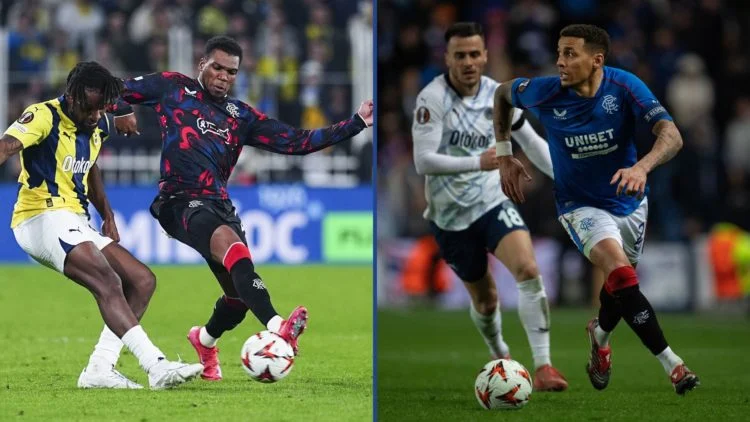
Rangers have recently undergone a tactical shift, experimenting with new formations in their last three encounters with Fenerbahce. During these matches, Philippe Clement moved Tavernier into a centre-back role while deploying Sterling as a right wing-back. This adjustment allowed Rangers to adopt a more defensively solid shape, balancing their attacking intent with greater stability at the back. While the tactical tweak was largely dictated by circumstances, including injuries, it highlighted a key factor: Sterling’s ability to provide defensive security without sacrificing width or athleticism.
Now, as Ferguson prepares for domestic action, he faces a crucial decision regarding his defensive setup. The chances of Rangers continuing with a back three are slim unless he decides to make a bold move by deploying a 3-4-3 formation, adding an extra forward. However, if he reverts to a traditional back four, it will likely mean having to choose between Tavernier and Sterling for the right-back position. This is where things could get controversial.
Ferguson’s preference for Sterling is not a new development. Even before stepping into the managerial role at Ibrox, he had spoken about his views on Rangers’ defensive options, particularly when analyzing games against elite opposition. His stance was clear: If forced to choose between Tavernier and Sterling, he would go with the latter.
Sterling, despite his occasional injury setbacks, has proven to be a highly capable defensive full-back when fit. His ability to win one-on-one duels, his physical strength, and his reading of the game all make him a formidable defensive presence. In contrast, while Tavernier’s attacking contributions—particularly his goal-scoring ability from penalties and set-pieces—have made him invaluable to Rangers, his defensive shortcomings have often been exposed, especially in big matches.
The Case for Sterling Over Tavernier
Sterling’s defensive capabilities were on full display in a previous Old Firm clash against Celtic. Tasked with marking Jota at Parkhead, he completely nullified one of Celtic’s most dangerous attacking players. His pace allowed him to keep up with Jota’s quick movements, while his aggression prevented the Portuguese winger from finding the space and time to create chances. Unlike Tavernier, who is often caught high up the pitch, Sterling thrives in defensive duels and is excellent at anticipating danger.
One of his standout moments in a Rangers shirt came in another match against Celtic, where he made a spectacular goal-line clearance to prevent a certain goal. His defensive instincts and awareness allowed him to react in a split second, showcasing his ability to read the game at a high level. That type of awareness is something Rangers have often lacked in crucial moments, particularly in high-pressure matches where defensive lapses have been costly.
If Ferguson is serious about transforming Rangers into a more aggressive and physically dominant team, one of the first major statements he could make would be to bench Tavernier. It would send a clear message that no player is undroppable and that defensive solidity will be prioritized over attacking output from full-back.
The Risks of Dropping the Captain
While there are clear footballing reasons to consider replacing Tavernier with Sterling, such a decision would not come without risks. Tavernier has been a key figure at Rangers for years, not just as a player but as a leader within the squad. He has contributed immensely with goals and assists, particularly in games where Rangers have needed a moment of individual brilliance. His presence in the dressing room is significant, and dropping him could create tension within the squad, especially if results do not immediately improve.
Additionally, Tavernier’s attacking output is something that Sterling does not yet replicate. Over the years, the Rangers captain has been one of the club’s most reliable sources of goals from set-pieces and open play. He consistently delivers in forward areas, often popping up in crucial moments to score or assist. Ferguson would need to carefully weigh whether the defensive benefits of Sterling outweigh the attacking threat that would be lost without Tavernier.
There is also the issue of whether Sterling can maintain consistent fitness. Injuries have been a recurring problem for him, and while he has looked impressive when available, the reality is that he has missed several matches due to various physical setbacks. If Ferguson were to drop Tavernier in favor of Sterling, only for the latter to pick up another injury, it could leave Rangers scrambling for defensive cover.
Ferguson’s Vision for Rangers
Ultimately, this decision is about more than just one position. It is about the direction Ferguson wants to take Rangers in. If his vision is to build a physically imposing and defensively resilient team, then dropping Tavernier for Sterling could be a necessary step. However, if he wants to maintain the attacking firepower that Tavernier provides while still addressing defensive weaknesses, he may have to find a system that accommodates both players.
A potential compromise could be shifting Tavernier into a more central defensive role, as was seen in the Fenerbahce matches. This would allow Sterling to operate as a traditional right-back while still keeping Tavernier’s leadership and attacking threat in the lineup. However, this approach would require adjustments in other areas of the team, particularly in midfield and defensive shape.
Ferguson’s decision could also set the tone for the summer transfer window. If he chooses Sterling over Tavernier now, it may indicate that he is planning for a future where Tavernier is no longer an automatic starter. This could lead to further defensive reinforcements being targeted in the transfer market, potentially reshaping Rangers’ backline for the long term.
A Defining Moment for Ferguson
Whatever choice Ferguson makes, it will be a defining moment in his early tenure as Rangers manager. If he sticks with Tavernier, he risks continuing the same defensive issues that have plagued Rangers in big games. If he chooses Sterling, he risks alienating his captain and shaking up the dressing room.
The upcoming match against Dundee may not be the most high-profile fixture, but the selection decisions Ferguson makes will offer insight into his managerial philosophy. Will he prioritize experience and attacking contribution, or will he make a bold statement by placing faith in a player who embodies the physicality and defensive toughness he wants to instill in his team?
Either way, this decision will be closely watched by Rangers fans, pundits, and even the players themselves. It could be the first major test of Ferguson’s authority as he looks to forge a new era at Ibrox.