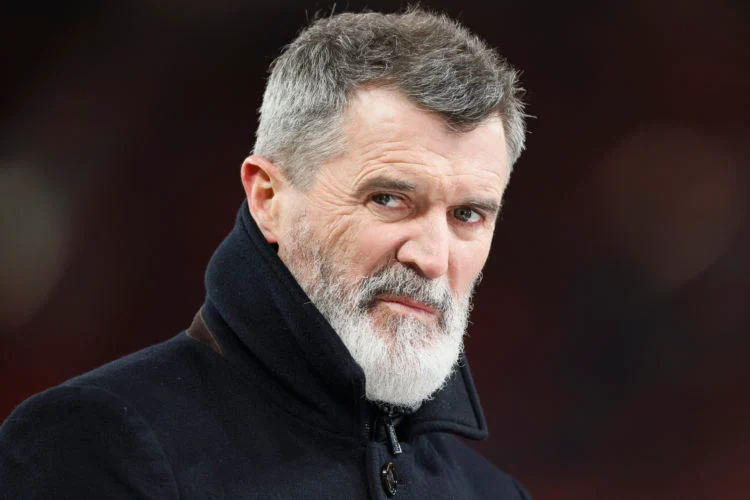
Roy Keane has always been known for his brutally honest and pragmatic approach to football, both during his playing career and in his punditry. His recent admission that he does not consider himself a fan of either Nottingham Forest or Manchester United, despite his immense success and legendary status at both clubs, will likely come as a surprise to many supporters. While he has never been one for sentimentality, hearing him say outright that their results do not affect him in any emotional way might sting a little for fans who still hold him in such high regard.
Keane’s Legacy at Nottingham Forest
Keane’s journey to becoming a professional footballer was far from easy. As a young boy in Ireland, he was told he was too small to play at a high level, yet he defied those expectations to carve out an incredible career. His rise to prominence truly began at Nottingham Forest, where he was signed by the legendary Brian Clough in 1990. Clough, known for his unique but brilliant management style, played a crucial role in shaping Keane into the player he would become. Keane has often spoken about how Clough made his transition to English football much smoother and helped him develop the mental and physical attributes required to succeed at the highest level.
During his three-year spell at Forest, Keane quickly became one of the most exciting young midfielders in English football. His combination of technical ability, aggression, and tireless work rate made him a standout performer in a Forest side that was struggling to maintain its previous levels of success. Even in a team that was ultimately relegated from the Premier League in 1993, Keane’s performances were so impressive that he earned a then-British record transfer to Manchester United for £3.75 million.
Given the importance of his time at Forest in shaping his career, many fans would have assumed that Keane felt a deep connection to the club. However, his recent comments suggest otherwise. While he clearly respects Forest and acknowledges the role they played in his development, he doesn’t feel that sense of emotional attachment that fans often hope former players will have.
The Unexpected Tottenham Connection
Perhaps even more surprising than his lack of attachment to Forest or Manchester United is Keane’s revelation that he has always had a soft spot for Tottenham Hotspur—a club he never actually played for.
Keane explained that his affection for Spurs dates back to his childhood when he played for Rockmount in Ireland. A teammate’s father, who was a Tottenham fan, used to drive him to training and influenced him to take an interest in the club. He admired players like Glenn Hoddle and Clive Allen, two of Spurs’ biggest stars at the time, and that admiration stayed with him as he grew older.
What makes this even more intriguing is the fact that Keane had a chance to join Tottenham early in his career. After returning from a trial at Nottingham Forest, Spurs offered him a trial as well. However, he turned it down, choosing instead to stay with Forest out of loyalty to the club and Brian Clough. It’s a fascinating “what if” scenario—if he had chosen Tottenham instead of Forest, how different would his career have been? Would he have still gone on to achieve the same level of success at Manchester United? Would his playing style have been different under a manager other than Clough?
Despite never playing for Spurs, it seems that his childhood admiration for the club has never completely faded. While he’s not the type to celebrate their wins like a true supporter, it’s clear that he holds them in higher regard than either of the two clubs where he became a legend.
Keane’s Lack of Emotional Attachment to His Clubs
What really stands out from Keane’s comments is the way he views his career in football. Many players, especially those who become legends at a club, develop a lifelong attachment to their former teams. They continue to support them, follow their results, and sometimes even take on coaching or ambassadorial roles. Keane, however, sees things differently.
He admitted that he doesn’t feel any strong emotional connection to the clubs he played for—not Nottingham Forest, not Manchester United, and not even Celtic, where he had a brief spell at the end of his career. In his own words, their results don’t make or break his weekend, and he doesn’t go home celebrating their victories or feeling disappointed by their losses.
This might be disappointing for Forest and United fans to hear, as they still hold him in such high regard. To them, he’s not just a former player—he’s a legend, someone who gave everything on the pitch and helped shape the history of their clubs. But for Keane, football was always a job. He was dedicated and committed while he was playing, but once he left a club, he moved on without looking back in an emotional way.
It’s a mindset that fits with his personality. Keane has always been known for his intensity and focus on the task at hand. He was never one for sentimentality or nostalgia, and his brutally honest nature means he’s not going to pretend to feel something that he doesn’t.
How Will Forest Fans React?
For Nottingham Forest supporters, this revelation might be a little difficult to take. Keane remains one of the club’s most famous players, and his time at Forest is still remembered fondly by those who watched him play. They might have hoped that he felt the same way, that he still cared deeply about the club and followed their results like a true fan. Instead, he has made it clear that while he respects Forest, his feelings towards them are purely professional.
That being said, this probably won’t change his status as a Forest legend. His performances on the pitch spoke for themselves, and no amount of personal detachment can erase what he achieved in a Forest shirt. Fans may wish he felt a stronger connection to the club, but ultimately, his legacy remains intact.
Conclusion
Roy Keane’s recent comments offer a fascinating insight into his mentality. While many footballers become lifelong fans of the clubs they played for, Keane approaches things differently. He views football as a profession rather than an emotional investment, and once he left a club, he moved on without carrying any lingering attachment.
His admission that he has always had a soft spot for Tottenham, despite never playing for them, adds another layer of intrigue to his story. While his respect for Nottingham Forest and Brian Clough is clear, he doesn’t consider himself a fan of the club, just as he doesn’t consider himself a Manchester United fan.
For Forest supporters, this might be disappointing, but it doesn’t erase the impact he had during his time at the City Ground. He will always be remembered as a Forest great, even if he doesn’t see himself as part of the club’s fanbase.
What do you think? Does this change how you view Keane, or is this just another example of his straightforward, no-nonsense personality?