The Vitality Heist: Why Sean Dyche is Obsessed with Marcus Tavernier
The January transfer window of 2026 has become a theatre of the unexpected for Nottingham Forest. While the headlines have been dominated by the search for a new “No. 9” to replace the departing Arnaud Kalimuendo, a more nuanced and tactical pursuit is unfolding behind the scenes. According to The Athletic, Forest have set their sights on Marcus Tavernier, the captain of AFC Bournemouth, in a deal that would signal a massive shift in the club’s creative identity.
This isn’t just a move for a talented winger; it is a pursuit born of a specific, painful memory. On October 26, 2025, Tavernier didn’t just play against Nottingham Forest—he dismantled them. In what was Sean Dyche’s first Premier League game in charge of the Reds, Tavernier delivered a captain’s performance that included a rare and stunning “Olimpico” goal directly from a corner. Since that day, Tavernier has reportedly sat at the very top of Dyche’s “most wanted” list.
The “Dyche 2.0” Blueprint: Why Tavernier Fits
To understand why Forest are prepared to enter a difficult negotiation for Tavernier, one must look at the “Dyche Model.” At Burnley and Everton, Dyche’s success relied on wide players who possessed a specific blend of three traits: tactical discipline, exceptional delivery from set-pieces, and a “relentless” physical engine.
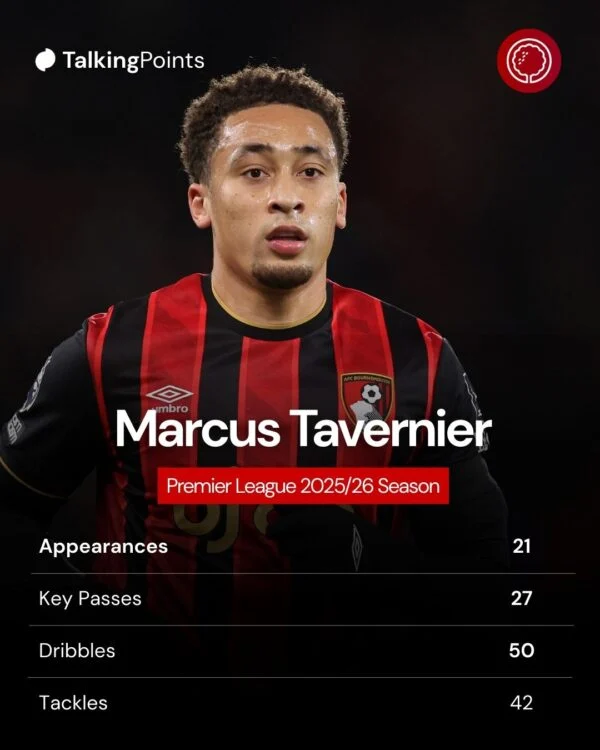
Marcus Tavernier is the embodiment of these traits. This season, Tavernier has already notched 4 goals and 3 assists in 21 appearances, but his underlying numbers are what have captured the attention of Forest’s recruitment team:
- The Set-Piece Specialist: With 37 corners taken this season and a history of scoring directly from them, Tavernier offers the “free goal” potential that Dyche-led teams thrive on.
- Defensive Contribution: Among Premier League wingers, Tavernier ranks in the top 15% for successful tackles and interceptions. In a Dyche system, the winger is the first line of defense; Tavernier’s work rate makes him a natural fit where others, like Kalimuendo, failed.
- Ball Progression: With 46 progressive carries this term, he provides the transition speed necessary to turn defensive blocks into counter-attacking goals.
The “Olimpico” That Changed Everything
Football history is littered with transfers sparked by a single performance, and Tavernier’s display against Forest in October is rapidly becoming the stuff of legend. Captaining the Cherries to a 2-0 victory, Tavernier’s 25th-minute corner curved over a leaping Matz Sels to nestle into the far side-netting.
It was a goal that left the traveling Forest fans in silence and Dyche in visible contemplation. That victory propelled Bournemouth to second place in the Premier League at the time, while Forest languished in 18th. For Dyche, Tavernier represented the “missing link”—a player who could lead, create, and score in the most difficult of circumstances.
The Bournemouth Blockade: Why the Deal is “Difficult”
While Forest’s interest is concrete, concluding the deal before the January 31 deadline will be one of the toughest tasks of the window. Bournemouth are not in a position where they need to sell, and several factors make this a high-stakes standoff:
- The “Semenyo Funds”: Bournemouth recently completed the club-record sale of Antoine Semenyo to Manchester City for a staggering £64m. This massive influx of cash means the Cherries are under zero financial pressure to offload their captain.
- Captaincy and Loyalty: Tavernier is more than just a player; he is the emotional heart of Andoni Iraola’s side. Having signed a contract extension until 2029 just months ago, Bournemouth hold all the cards in negotiations.
- The Price Tag: Rumors suggest it would take a bid in excess of £35m–£40m just to bring Bournemouth to the table. For a Forest side still mindful of Profit and Sustainability Rules (PSR), this requires a delicate balancing act.
Forest’s Multi-Club Influence: The “Edu” Factor
This window marks the first real test of the new recruitment structure at Nottingham Forest, spearheaded by the global head of football, Edu. The former Arsenal director is reportedly working closely with Dyche to ensure that January signings aren’t just “names,” but “solutions.”
The pursuit of Tavernier represents a shift toward Premier League-proven talent. Forest have moved away from the high-risk, high-reward continental signings of the past three years. Instead, they are targeting players like Tavernier and Jørgen Strand Larsen—players who have already survived the “meat grinder” of the English top flight.
“We are clear on what we need,” Dyche stated in a recent press conference. “It’s not just about adding numbers; it’s about adding the right personality. Players who understand the league and can hit the ground running.”
The data confirms the “Dyche Eye Test.” While Elanga is faster and Hudson-Odoi is perhaps more skilled in 1v1 situations, Tavernier is far more complete. His 28 tackles dwarf the defensive contributions of Forest’s current wingers, illustrating why Dyche views him as the defensive “security blanket” that would allow Morgan Gibbs-White more freedom to roam.
The Final Sprint: Will the Deal Happen?
As we enter the final two weeks of the window, the narrative is clear. Nottingham Forest have the ambition and, following the loan exit of Kalimuendo, the squad space to make a move. Bournemouth, buoyed by the Semenyo windfall, have the resolve to say no.
If Forest are to pull off the “Vitality Heist,” it will require a record-breaking effort from the recruitment team and perhaps a personal push from the player himself. Tavernier has achieved legendary status on the South Coast, but the allure of leading the “Dyche Revolution” at a historic club like Forest—and the potential for a significant wage increase—may yet turn his head.
For Sean Dyche, the motivation is simple. He doesn’t want to see Marcus Tavernier scoring against him again; he wants him scoring for him.