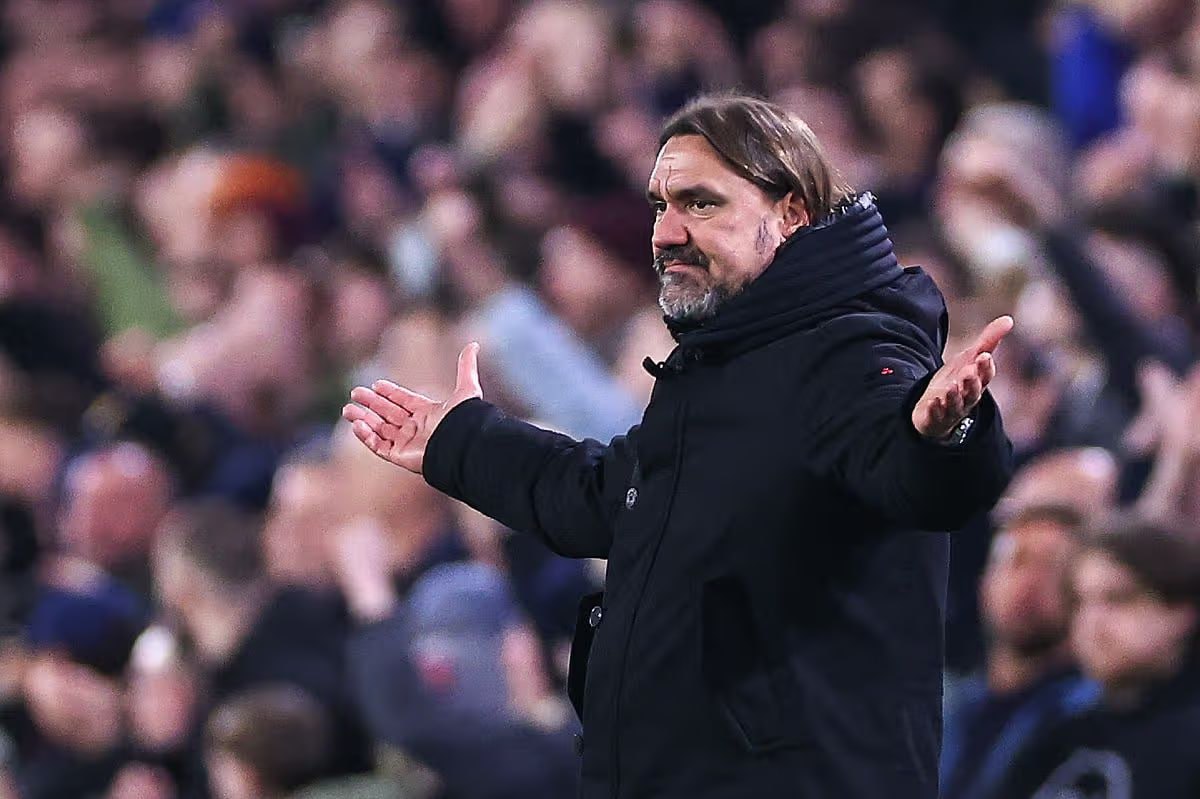
Daniel Farke breaks silence on red card as Leeds United F.C. weigh appeal
Daniel Farke has insisted his dismissal following Leeds United’s defeat to Manchester City was unjust, claiming referee Peter Bankes “overreacted” and moved to “embarrass” him rather than engage in a brief post-match explanation.
The Leeds boss was shown a straight red card at full-time after approaching Bankes on the pitch, frustrated that additional seconds were not added to stoppage time despite several delays by Manchester City during the closing stages. Now, with the Football Association yet to formally contact the club, Leeds are considering whether to appeal the decision — a move that could determine whether Farke’s touchline ban is enforced or overturned.
What triggered the flashpoint?
Tensions had been simmering throughout added time at Elland Road. City, protecting a narrow lead, were accused of delaying restarts on multiple occasions. Farke believes that three such incidents warranted additional time being played beyond the six minutes initially signalled.
During that period, City defender Rayan Aït-Nouri was booked for time-wasting — a decision that, in Farke’s view, logically demanded extra seconds to compensate for the delay.
However, when Bankes blew the final whistle almost immediately after the six minutes expired, Farke reacted. He jogged towards the referee intending, as he later explained, to ask a straightforward question: why issue a yellow card for time-wasting if no further time would be added?
Instead of receiving an explanation, Farke was shown a red card almost instantly.
“There was not one bad word”
Speaking publicly for the first time since the incident, Farke was firm in his belief that the punishment did not fit the action.
“I’m a very self-critical person,” he said. “When I make a mistake, I always hold my hand up and apologise. In my job, I also have to be a role model. But in this case, I honestly believe it should not have been a red card.”
The German coach was adamant that his conduct remained respectful.
“There was not one bad word. I didn’t abuse anyone. I didn’t swear. There were no flying arms. I was just jogging over and wanted to ask him: what do you give the yellow card for, if you don’t add any seconds?”
According to Farke, he did not even finish his sentence before the red card was produced.
“As soon as I arrived, he had the red card in his hand. He didn’t speak to me, didn’t even look at me, just showed the red card.”
Claims of “embarrassment”
Perhaps the strongest part of Farke’s response was his suggestion that the decision felt personal.
“In this manner, it felt more like to embarrass me,” he said. “To show the whole world, ‘Listen, this guy is not worth talking to.’”
Farke claimed even the assistant officials appeared surprised by the swiftness of the decision, describing their reaction as sympathetic.
“I think this is not how we should work with each other,” he added. “I have so much respect for referees. I have been in this business for nearly 20 years without showing a red card like this.”
The Leeds boss, known for his generally calm demeanour on the touchline, suggested he may have been misinterpreted in the heat of the moment.
“I learned my lesson. I will never ever jog again on the pitch,” he said, half-wryly. “I think he just misinterpreted something like this. But for me, it should never be a red card.”
What happens next?
As of Monday afternoon, the FA had yet to formally contact Leeds United regarding the sanction. If the red card stands, Farke would typically serve a one-match touchline suspension.
Given the timing, that could mean missing Leeds’ upcoming FA Cup tie against his former club Norwich City F.C.. There is also the looming Premier League clash with Sunderland A.F.C. to consider, with uncertainty over exactly when any suspension would apply.
Leeds are now carefully reviewing the footage and weighing whether there are sufficient grounds to challenge the decision. Appeals in such cases can be difficult, particularly when the referee’s report carries significant weight, but Farke’s insistence that there was no abusive language may strengthen their argument.
Bigger questions about consistency
The incident also reopens broader debates about managerial conduct and officiating standards. While referees are rightly protected from abuse, there remains a fine line between dissent and legitimate inquiry.
Farke’s case rests on the distinction between confrontation and communication. Managers frequently approach officials after matches seeking clarification. The difference, often, lies in tone, body language and perception.
If Leeds do appeal successfully, it could reinforce arguments that emotional but respectful interaction should not automatically result in dismissal. If not, it may serve as a warning to managers that even non-verbal frustration can cross the threshold in the eyes of officials.
Focus must quickly shift
Despite the controversy, Leeds cannot afford to dwell. Their league position and upcoming fixtures demand full concentration. Farke’s comments suggest he is eager to move forward, even while maintaining his belief that an injustice occurred.
For now, the spotlight remains on the FA’s next move.
What is certain is that Daniel Farke does not see himself as having crossed a line — and Leeds United must now decide whether they are prepared to fight his corner or accept the sanction and refocus on the challenges ahead.