The Death of the Roar: Why VAR is Erasing the Soul of Football for the “Ninety-Nineties” Generation
For those of us who grew up standing on the terraces or sitting in the old Trinity Road Stand in the early 1990s, football was a game of moments. You remember the smell of the rain on the pitch, the collective intake of breath as Dalian Atkinson embarked on a mazy run, and, most importantly, the instantaneous, unadulterated explosion of joy when the ball hit the back of the net. In that era, the “roar” was immediate. There was no hesitation, no glancing at a giant screen, and no three-minute delay while a man in a windowless room miles away drew digital lines on a frozen frame.
Today, as an Aston Villa supporter—and indeed as a football fan in general—that soul-stirring spontaneity is being systematically dismantled by the Video Assistant Referee (VAR). What was sold to us as a tool to correct “clear and obvious” errors has morphed into a bureaucratic nightmare of “re-refereeing” that is ruining the spectacle of the beautiful game.
The Anatomy of a Ruined Moment
The primary argument against VAR isn’t just about accuracy; it is about the fundamental emotional contract of the sport. In the nineties, the goal was the crescendo. When Dean Saunders or Tony Daley scored, the emotional release was total.
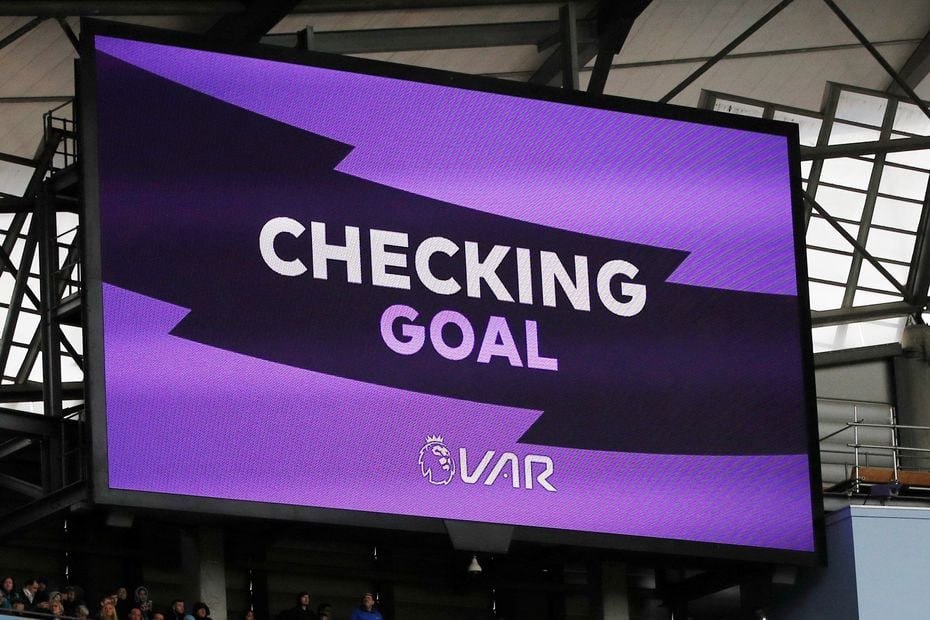
In the VAR era, we have been conditioned to suppress our joy. Every goal is now followed by a “limbo” period. Fans in the stadium look at each other, not in celebration, but in confusion. We wait for the “Check Over” message like defendants waiting for a jury’s verdict. By the time the goal is finally awarded, the raw, visceral energy has evaporated. You cannot recreate a roar that was silenced three minutes prior. We are trading the heartbeat of the game for a sterile, surgical version of “correctness” that nobody actually asked for.
The Curse of “Re-Refereeing”
The most frustrating aspect of the current system is the shift from correcting blunders to over-analyzing the minute details of the game. We are now seeing goals chalked off because a striker’s armpit was a millimeter offside, or because of a subjective “foul” in the buildup that occurred forty seconds before the ball entered the net.
This is the “re-refereeing” of football. The game was never meant to be played or officiated with a microscope. Football is a high-speed, contact sport governed by human interpretation. By trying to apply mathematical precision to a fluid game, VAR has introduced more controversy, not less. We still argue about “clear and obvious,” but now we do so after sitting through tedious delays that kill the tempo of the match. For a Villa fan used to the fast-paced, high-octane battles of the nineties, this stop-start rhythm feels like watching a courtroom drama rather than a sporting contest.
[Table: The Evolution of the Fan Experience]
| Era | Decision Speed | Fan Reaction | Key Emotional Driver |
| The 1990s | Instantaneous | Spontaneous Roar | Raw Emotion / Trust in Ref |
| The VAR Era | 2–4 Minute Delay | Muted / Skeptical | Anxiety / Digital Validation |
| Result | Game Continues | Moment Lost | Surgical Precision |
The Disconnect in the Stadium
Perhaps the greatest sin of VAR is the way it alienates the match-going fan. If you are watching on TV, you get the replays, the lines, and the commentary. If you are in the Holte End, you are left in total darkness. You see a referee standing with a finger to his ear, and you wait. You have paid a significant amount of money for a ticket, yet you are the last person in the world to know why a goal has been disallowed.
This creates a toxic atmosphere. It turns the crowd against the officials and, more importantly, against the product itself. Football is supposed to be an escape, but VAR has turned it into a technical audit.
The Counter-Argument: Why We Needed It
To be fair and objective, it is important to acknowledge why VAR was introduced in the first place. The “good old days” were not without their flaws.
- Ending the “Injustice” Narrative: We all remember the high-profile errors—the “Hand of God,” or more recently, goals clearly crossed over the line but not given (a pain Villa fans know too well from the ghost goal era). VAR has virtually eliminated the “big” mistakes that can cost a club millions in prize money or a place in a major final.
- Player Protection: The presence of multiple camera angles acts as a deterrent for violent conduct away from the ball. “Off-the-ball” incidents that would have been missed in the nineties are now caught, leading to a cleaner, safer game for the players.
- Objective Offsides: While the “armpit” offsides are infuriating, VAR has removed the human error of a linesman missing a two-yard offside because they were out of position. On a purely binary level—is it offside or not?—the technology provides a definitive answer.
The Subjectivity Trap
However, the “importance” of VAR often falls apart when we move from objective facts (like goal-line technology) to subjective opinions (like “Is that enough contact for a penalty?”).
In the nineties, if a referee made a mistake, we grumbled, called him a few names, and moved on. It was part of the “rub of the green.” Now, because we have the technology, we expect perfection. When VAR looks at a replay ten times and still makes a decision that feels wrong, the anger is magnified tenfold. It feels like a betrayal of the technology’s promise. We have traded human error for “technological incompetence,” and that is a much harder pill to swallow.
The Verdict: A Game Out of Touch
As someone who has followed the Villa through the highs of the 1994 League Cup and the lows of relegation, I’ve seen the game change immensely. But no change has been as detrimental to the experience of being a fan as VAR.
Football is a game of flow. It is a game of mistakes. It is a game where the referee’s whistle should be the final word, not the opening of a debate. By trying to make football “perfect,” the authorities have made it predictable and dull. They have taken the “moment” away from the fans and placed it in the hands of technicians.
If we continue down this path of re-refereeing every tackle and every inch of grass, we risk losing a whole generation of fans who simply can’t be bothered with the wait. For those of us who remember the ninety-nineties, the message is clear: Give us back our game, flaws and all. Give us back the roar.