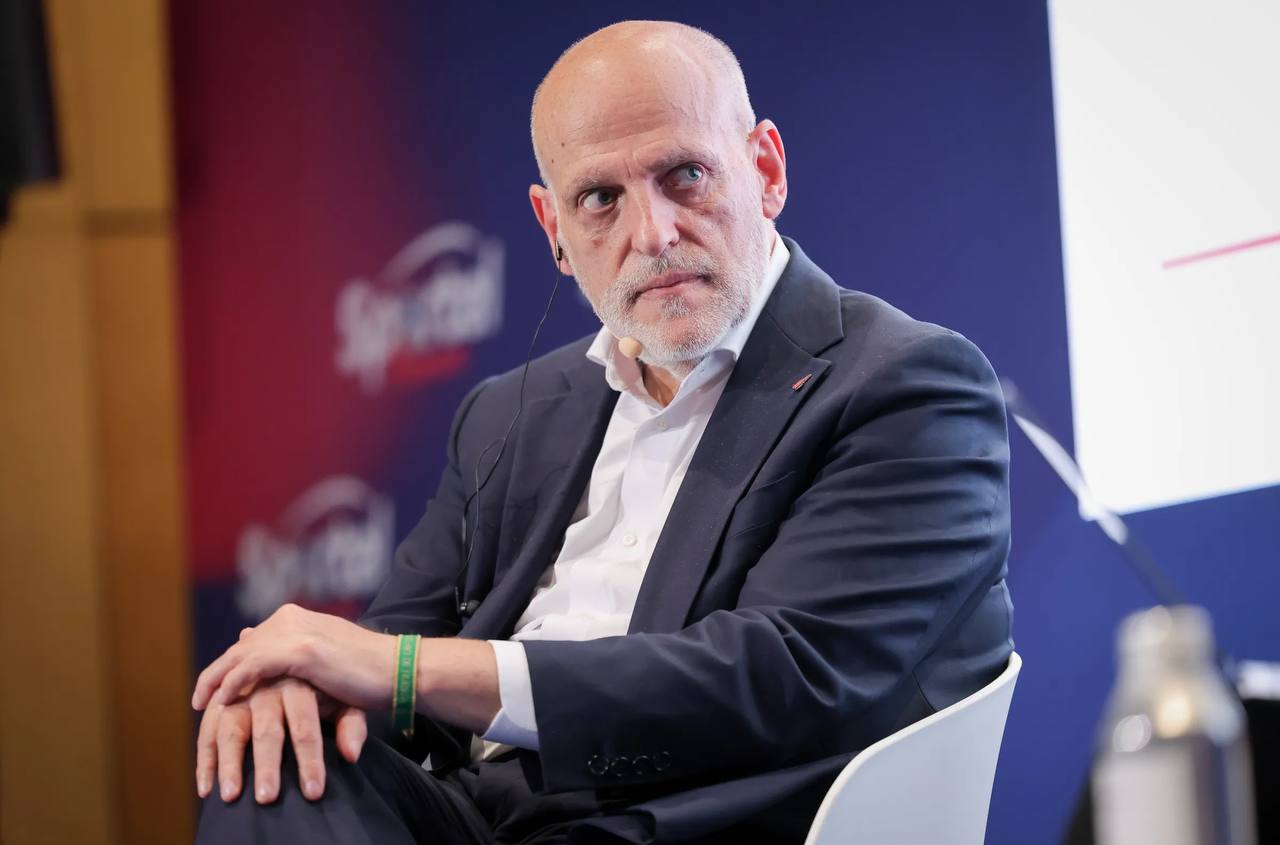
Tebas claims English clubs continue to outspend European rivals and argues financial rules still leave La Liga at a disadvantage.
La Liga president Javier Tebas has renewed his criticism of Premier League financial power, taking direct aim at Everton and Aston Villa in his latest comments about spending in English football.
Speaking to media, Tebas argued that the gap in financial capability between the Premier League and Spain’s top division remains too wide, even with upcoming changes to spending regulations. He insisted that clubs in England still benefit from an economic advantage that makes competition across Europe increasingly difficult.
“We are fooling ourselves,” Tebas said. “It is commendable that we seek Financial Fair Play rules. But English football has a turnover, excluding transfers, that is double that of the Spanish league and double that of the Bundesliga. With normal Financial Fair Play, it will always have double the investment capacity. We know that we cannot compete financially with the Premier League.”
Tebas’ remarks come amid ongoing debate about financial regulation in football. The Premier League is set to replace its current Profit and Sustainability Rules with a system more closely aligned to UEFA regulations. Under the new model, clubs will be allowed to spend up to 85% of their revenue on transfers, salaries, and agent fees.
The shift is intended to modernise financial governance and prevent excessive losses, but critics argue it still leaves wealthy clubs with significant spending power. Tebas has repeatedly voiced concerns that Premier League teams are able to outspend rivals in Spain and across Europe, creating an uneven playing field in the transfer market.
Everton and Aston Villa have previously been cited in discussions about financial manoeuvring. Both clubs have made structural changes in recent years that allowed them to comply with spending regulations while increasing investment capacity. Everton transferred ownership of their women’s team to Roundhouse Capital Holdings in 2025, creating financial flexibility. Aston Villa executed a similar strategy, selling their women’s team to a parent holding company in a deal reportedly worth £55 million.
Chelsea completed an even larger transaction, valued at around £200 million, which turned significant losses into a pre-tax profit and helped them navigate financial restrictions. These moves have been legal under existing rules but have drawn scrutiny from regulators and rival leagues.
Tebas, however, suggested that the focus on individual clubs misses the broader issue. He argued that the Premier League’s overall revenue strength ensures sustained dominance in the transfer market, regardless of regulatory adjustments.
“With normal Financial Fair Play, it will always have double the investment capacity,” he added. “We can sign better players, have better coaches, but we cannot compete. The Premier League alone, with normal Financial Fair Play, is enough to be number one by a wide margin.”
The comments highlight ongoing tensions between Europe’s major football leagues over financial parity and competitive balance. While the Premier League remains the world’s richest domestic competition, La Liga officials continue to push for reforms that would narrow the economic gap.
For Everton and Aston Villa, Tebas’ remarks are unlikely to have immediate consequences. Both clubs continue to operate within English football’s financial framework and remain focused on sporting progress. However, the debate over spending and sustainability shows no sign of slowing as European football grapples with evolving economic realities.