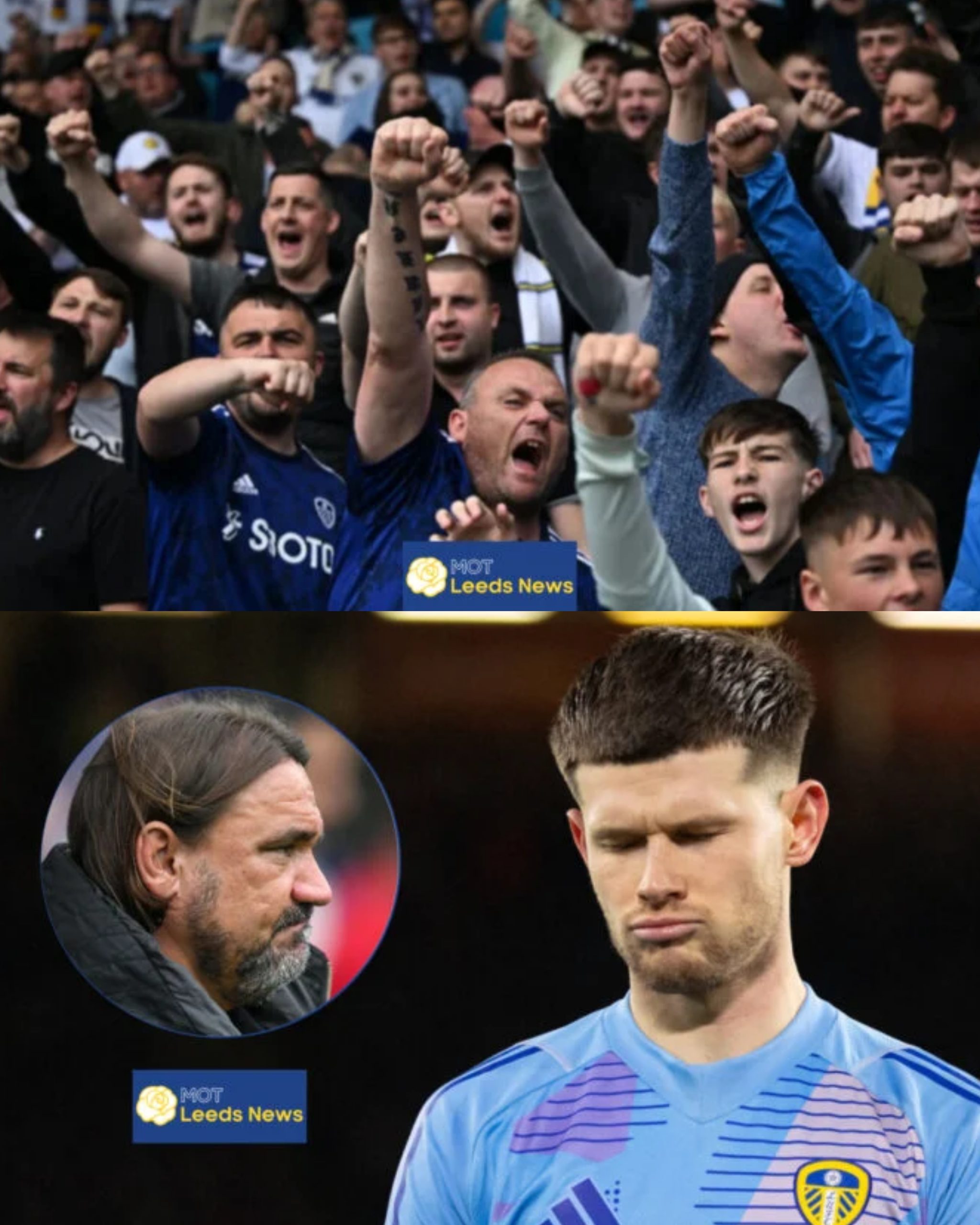
Leeds United’s 1-1 draw with Luton Town at Elland Road on Saturday was more than just two points dropped—it was another missed opportunity at a time when there is no longer any room for error. With Burnley picking up maximum points and Leeds’ winless streak now extended to three games, Daniel Farke’s side have dropped out of the automatic promotion places and sit third in the Championship table. There is still time left in the season, but with momentum heading in the wrong direction and old concerns beginning to resurface, the pressure is building fast in West Yorkshire.
It wasn’t long ago that Leeds looked like a team destined to reclaim their place in the Premier League. Farke had guided his side into the thick of the promotion race with a blend of attacking verve, tactical discipline, and defensive resilience. There were consistent performers all over the pitch, and the team’s depth was widely praised. Even when star players like Crysencio Summerville and Wilfried Gnonto were sidelined or off-form, others like Joel Piroe, Georginio Rutter, and Archie Gray stepped up.
But football seasons are long and unforgiving, and they tend to expose every weakness eventually. For Leeds, that exposure has come at the most inopportune time. April is the business end of the campaign, the period where promotion bids are secured or lost. While other teams are finding form—Burnley chief among them—Leeds have started to falter. The result against Luton wasn’t disastrous in isolation, but in the context of the wider picture, it feels like another significant blow to their top-two hopes.
Perhaps the most glaring issue has been at the back, particularly between the sticks. Illan Meslier, once heralded as one of the most promising young goalkeepers in Europe, has had a turbulent season filled with costly mistakes and erratic decision-making. He has never been the most commanding presence in the box, but this year his shot-stopping ability has also come into question. The Frenchman has looked short of confidence, and when your last line of defence is uncertain, the entire backline tends to suffer.
Daniel Farke made a bold call by dropping Meslier for the Luton clash and giving Karl Darlow the nod. It was a move designed to bring some stability, and while Darlow didn’t make any glaring errors, the change didn’t have the desired transformative effect. Leeds still conceded, still looked fragile at times, and crucially, still didn’t get the win. That means the goalkeeping issue hasn’t been resolved—it’s simply been pushed down the road.
To add an almost symbolic layer to the atmosphere at Elland Road, a moment before kickoff perfectly captured the uncertainty and lack of sharpness currently plaguing the squad. Writing for the Yorkshire Evening Post, Graham Smyth described how third-choice keeper Alex Cairns skied a warm-up shot into the stands, accidentally injuring a fan and offering an apologetic wave. Moments later, Tanaka repeated the mistake—twice—without so much as a gesture, prompting a sharp look from fitness coach Chris Domogalla. These moments might seem insignificant on the surface, but they reveal the cracks in concentration and discipline. When things are going well, these are the kind of details that go unnoticed. But when results start to turn, every small error is magnified.
There’s also the looming psychological weight of history. Leeds United are no strangers to late-season collapses. The club’s end-of-season form has long been a source of ridicule from rival fans and painful reflection for their own supporters. The ghosts of playoff heartbreaks past still haunt Elland Road—from the Derby County collapse in 2019 to the missed opportunities before Marcelo Bielsa finally delivered promotion in 2020. It’s not just physical fatigue the players are battling—it’s the pressure of expectation and the fear of repeating past failures.
The most frustrating part for Leeds fans is the fact that this squad should be good enough. On paper, the team is filled with players who could hold their own in the Premier League. Farke has built a balanced side capable of playing attractive football while also grinding out results. But at this critical juncture, it’s not about what’s on paper. It’s about heart, character, and mental resilience. It’s about being able to turn a frustrating draw into a last-minute winner. It’s about bouncing back from setbacks and refusing to let momentum slip away.
Farke himself must now prove that he’s the man to steady the ship. His Championship pedigree is unquestionable—he won the division twice with Norwich City—but managing a promotion push at Leeds brings a different kind of scrutiny. The fanbase is passionate, expectant, and increasingly anxious. While many still back him, another poor result could shift the mood very quickly. And with every point dropped, the spectre of the playoffs looms larger. It’s not just that the playoffs are unpredictable—it’s that Leeds have rarely fared well in them. Everyone at the club knows that finishing third would be a psychological blow, not just a logistical one.
The fixture list isn’t doing them any favours either. With a trip to the Riverside Stadium to face Middlesbrough on Tuesday night, Leeds have little time to reset. While a midweek game can sometimes offer a quick shot at redemption, it can also pile on pressure and fatigue—especially when you’re out of form. Middlesbrough are no pushovers, and Chris Wilder’s side will relish the chance to deepen Leeds’ problems.
So, where do Leeds go from here? First, Farke needs to make a firm decision in goal. Chopping and changing won’t help, and the team needs stability. Whether he backs Darlow to finish the season or gives Meslier a shot at redemption, it has to be a decisive call. Secondly, the team needs leadership on the pitch. Players like Ethan Ampadu, Joe Rodon, and Pascal Struijk (when fit) need to rally the troops and lead by example.
And finally, the attacking players need to step up. Leeds have enough firepower to blow teams away, but they’ve lacked the cutting edge in recent weeks. Gnonto, Summerville, Rutter, Piroe—these are players who can win matches on their own. They need to start doing just that.
The gap to the top is still only two points. That’s the silver lining. Leeds United’s fate remains in their own hands—but only just. The next few weeks will define their season, their future, and perhaps even Daniel Farke’s tenure. There’s no more time for excuses. No more time for sloppiness. If Leeds want to avoid another playoff nightmare, they have to start winning again—starting at Middlesbrough.
Otherwise, history may be about to repeat itself. And nobody at Elland Road wants to see that.
Let me know if you’d like this formatted for an article or posted to a blog—it would work well as an editorial piece.