⚪ Dominic Calvert-Lewin to Leeds United: A Gamble Worth Taking or a Risk Too Far?
As Leeds United prepare for their long-awaited return to the Premier League, the club faces a pivotal summer transfer window — perhaps the most important in recent history. The challenge is clear: assemble a squad capable not just of survival, but of re-establishing Leeds as a competitive, modern top-flight side with staying power.
Promotion under Daniel Farke has reignited hope, but fans and pundits alike know that without substantial investment — particularly in the forward line — the return to the Premier League could be short-lived. In that context, Leeds’ reported approach for Dominic Calvert-Lewin, whose contract with Everton expires on 1 July, has raised eyebrows.
Is this a shrewd move for a proven Premier League striker available on a free transfer? Or is it a step back for a club that needs to build toward the future rather than rely on injury-prone stars of the past?
Let’s break it down — from the footballing logic and the financials to the potential squad shake-up and long-term implications.
✅ The Case For Signing Calvert-Lewin
🧠 1. Premier League Know-How
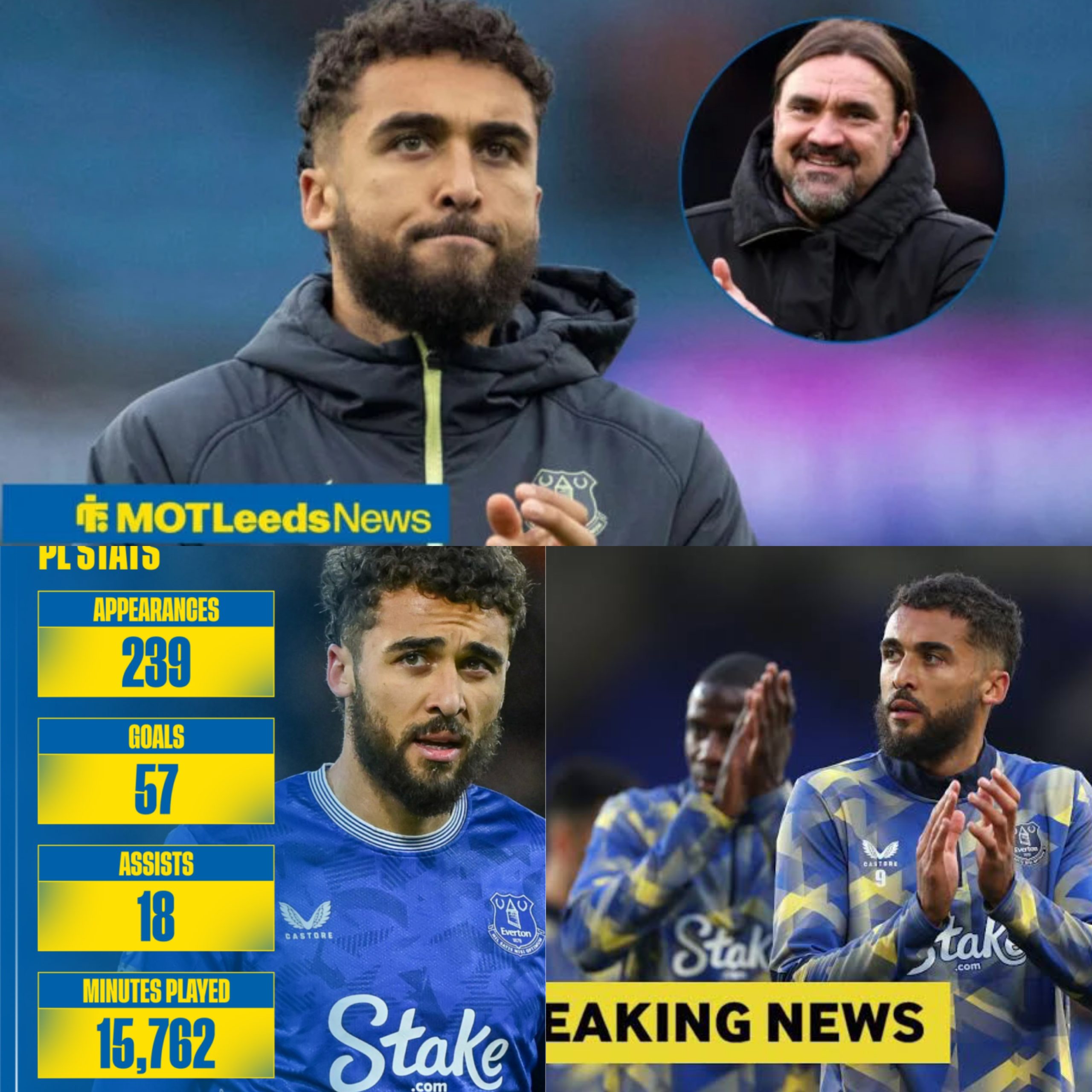
Calvert-Lewin is exactly the kind of player Leeds lacked during their 2022/23 relegation campaign — a proven, battle-tested striker with experience leading the line in high-stakes situations. Having made 239 Premier League appearances for Everton and scoring 57 goals, he brings a level of experience unmatched by any current Leeds attacker.
While Leeds boast technical talent in players like Crysencio Summerville, Wilfried Gnonto, and Georginio Rutter, there’s a glaring absence of a centre-forward with a genuine Premier League track record. Calvert-Lewin can offer that.
His time at Everton has included fighting relegation battles, dealing with fan pressure, and playing against elite defenders. That kind of mental resilience is invaluable — especially in a squad filled with younger, less experienced players.
⚽ 2. Tactical Fit: A Classic Number Nine
Daniel Farke has typically operated with a single, central striker who can:
Act as a target man
Hold the ball up
Bring wingers and midfielders into play
Occupy central defenders
Capitalise on crosses and second balls
Calvert-Lewin, in his prime, has excelled in that exact role. He’s strong in the air, intelligent with his movement, and capable of scoring a variety of goals — from headers and tap-ins to more technical finishes. His physicality and ability to stretch defences could be the ideal complement to the dynamic, pacey wingers Leeds already have.
Farke’s system thrives on quick transitions and overlapping full-backs. With someone like Calvert-Lewin acting as the focal point, the likes of Summerville and Gnonto would have a reliable target in the box — something they often lacked last season.
🏆 3. Leadership, Experience & Mentality
Off the pitch, Calvert-Lewin could play a vital role in the dressing room. Leeds have a youthful squad, and many of the club’s most promising players — Archie Gray, Joseph, Jaidon Anthony, etc. — are still developing mentally as well as physically.
Calvert-Lewin has been through the highs of European qualification and the lows of injury hell. If he can bring maturity, professionalism, and standards to the training ground, it could raise the level of those around him.
⚠️ The Case Against the Deal
🏥 1. Chronic Injury Concerns
This is the single biggest concern — and rightly so.
Over the last four seasons, Calvert-Lewin has been plagued by hamstring injuries, groin issues, and other muscular setbacks. He has managed over 26 league appearances only once in that time.
That level of unreliability poses a huge risk for Leeds. In the brutal, high-intensity environment of the Premier League, you can’t afford to build your attack around a striker who may only be available for half the season — especially not without reliable backup.
It’s not just about missed games, either. Even when fit, players returning from long injuries often take time to regain sharpness, confidence, and rhythm — all of which are vital for a centre-forward.
Leeds’ medical staff would need to do a thorough assessment before committing to any deal. A structured fitness programme, load management, and a clear backup plan would all be essential.
🧊 2. Declining Output
Calvert-Lewin’s last double-digit Premier League goal season came in 2020/21, when he scored 16 times. Since then:
2021/22: 5 goals in 17 games
2022/23: 2 goals in 17 games
2023/24: 7 goals in 32 games
While his role has often involved more hold-up play and less emphasis on scoring, the numbers don’t lie — he hasn’t been clinical. For a team like Leeds that may struggle to create many clear-cut chances in the Premier League, a striker must be efficient. If Calvert-Lewin is going to return to form, it has to happen quickly — and that’s no guarantee.
💰 3. Wage Demands and Financial Strategy
Even as a free agent, Calvert-Lewin will command Premier League-level wages — likely in the region of £80,000–£100,000 per week. For Leeds, who must still operate within sensible financial boundaries after relegation and promotion in quick succession, this could be a sticking point.
Spending that much on a player with durability concerns could backfire financially, particularly if it prevents the club from signing a second striker or strengthening elsewhere.
🔄 Squad Implications and Transfer Strategy
Bringing in Calvert-Lewin would likely have major ripple effects across the squad:
Patrick Bamford: A similar style of player but with his own injury issues, Bamford may finally be moved on if a deal for Calvert-Lewin is struck.
Joel Piroe: The Dutchman could be played as a second striker or attacking midfielder, but it’s clear that Farke does not fully trust him as a solo No. 9 in the Premier League.
Mateo Joseph: Still raw, Joseph may need a loan to get regular first-team football — especially if Leeds sign two strikers.
Rodrigo Muniz or Nikola Krstovic: Leeds must pursue a more durable, starting-calibre forward alongside Calvert-Lewin. Relying on DCL alone would be negligent.
Calvert-Lewin should be viewed as part of a multi-striker rebuild — ideally the experienced backup or Plan B. If he’s the only striker signed, the club would be taking a dangerous gamble.
🌍 Competition for His Signature
Reports suggest there is interest from abroad, including clubs in Italy, Turkey, and MLS. Calvert-Lewin might opt for a fresh start outside England, particularly if lifestyle, weather, or reduced physical pressure are considerations. Leeds’ only real chance of signing him is offering:
A leading role in an ambitious Premier League project
A competitive wage
A clear plan to manage his fitness
If those boxes can be ticked, and if the club sells him on the idea of being the senior leader in a youthful, high-energy side, there’s every chance the move could happen.
📊 Final Verdict: Risky but Potentially Rewarding
✔ If managed properly:
A free transfer
With carefully managed game time
And a complementary striker also signed
Calvert-Lewin could be an extremely smart addition, providing leadership, tactical flexibility, and Premier League experience at no transfer cost.
✖ If mishandled:
Signed as the primary striker
No other forward brought in
Fitness issues reappear
This deal could quickly turn into an expensive mistake that derails Leeds’ return to the top flight.
🧠 Summary: A Move With Clear Conditions for Success
Category Rating Notes
Experience ✅✅✅✅ Proven at EPL level
Tactical Fit ✅✅✅✅ Excellent hold-up man
Injury Risk ⚠️⚠️⚠️⚠️ High concern
Financial Viability ⚖️⚖️⚖️ Depends on wages
Long-Term Value ❓❓❓ Short-term option only
Squad Impact 🔄🔄🔄 Could lead to reshuffle
📌 Final Thoughts
Dominic Calvert-Lewin could be the right signing at the right time — but only under the right circumstances. Leeds must not see this as a shortcut to solving their striker problem. He should be one piece in a larger, smarter rebuild of the club’s attacking options.
Leeds fans should welcome the move — cautiously — but demand that the club also secure a more reliable, long-term option to lead the line.