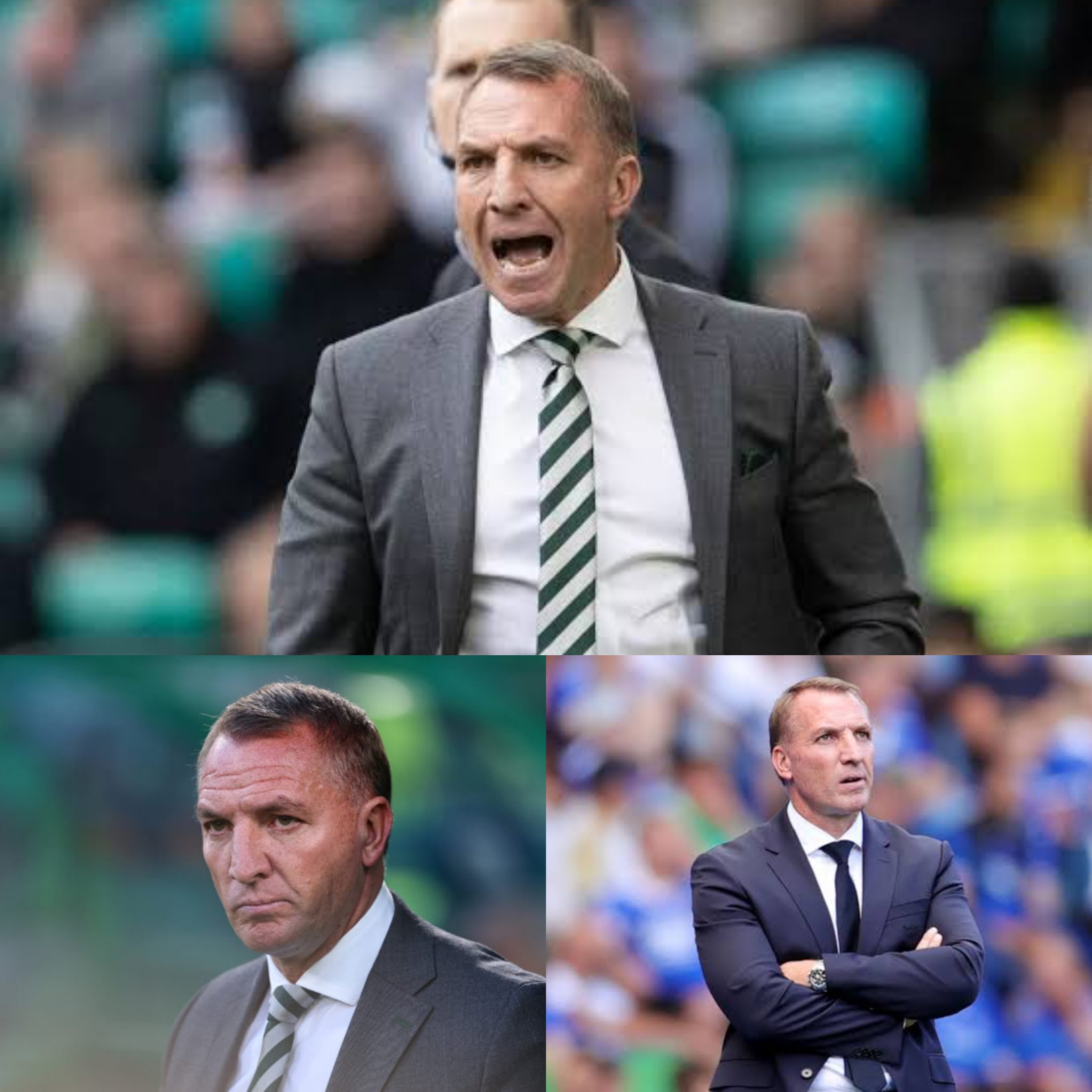
Brendan Rodgers Slaps Down ‘Crisis’ Talk as Celtic Navigate Stormy Start to the Season
In Glasgow, the standards are high — especially at Celtic Football Club. Success isn’t just expected; it’s demanded. Trophies aren’t a hope, but a requirement. So when the opening stages of a new season are marked not by triumphs, but by boardroom tension, fan protests, and transfer failings, it’s inevitable that alarm bells start ringing among the support.
But Brendan Rodgers, now in his second spell at the helm of the Scottish champions, isn’t ready to buy into the growing narrative of a “club in crisis.” Instead, the Northern Irishman has called for calm, perspective, and unity — insisting that Celtic are not only far from crisis, but building steadily toward form and cohesion.
In an extended statement ahead of Celtic’s upcoming Premier Sports Cup clash with Partick Thistle, Rodgers addressed the concerns head-on and issued a firm rejection of the crisis talk surrounding the club. However, there’s no denying that the Hoops have entered a critical juncture in their campaign — one that could define the trajectory of the season ahead.
A Transfer Window That Sparked More Questions Than Answers
Rodgers’ defiance comes at the end of what can only be described as a frustrating and underwhelming transfer window. While the club completed several signings throughout the summer, including young prospects and rotational depth, it was the final few weeks — and particularly deadline day — that left a sour taste in the mouths of supporters.
Two key attacking options — Nicolas Kühn and Adam Idah — departed the club without adequate replacements. Kühn’s time in Glasgow was mixed, but he remained a creative option. Idah, whose loan spell from Norwich City culminated in crucial goals and strong performances, returned to England with no clear successor. The Irish forward’s physical presence and ability to impact games off the bench had become a vital part of Celtic’s attacking arsenal.
Supporters were left bewildered as the window slammed shut with glaring gaps still evident in the squad — particularly up front. Despite reported interest in a number of players, deals either fell through or never got over the line. The lack of a marquee signing or experienced reinforcement led many to believe that Rodgers had not been properly backed in the market — a belief that soon turned into frustration, then into outright protest.
Leak Fallout and Media Intrigue
As if transfer issues weren’t enough, the tension behind the scenes spilled into public view last week when media reports surfaced alleging internal discontent and communication breakdowns between Rodgers and members of the club hierarchy. Most notably, there were suggestions that club insiders had briefed the media in a way that painted the manager in a negative light — prompting Rodgers to condemn the leaks as “cowardly.”
This kind of internal undermining is a major red flag at any club — but especially at one like Celtic, where unity is so often linked to success. Rodgers, for his part, handled the situation with professionalism, but his frustration was clear.
“Of course, you want that unity within every sector of the club,” he said, alluding to the turbulence behind closed doors. “But we also have a job to do on the pitch — and that’s where our focus remains.”
For supporters, the leaks added to the growing feeling that all is not well behind the scenes. A large section of the fanbase already feels disconnected from the boardroom, with criticism aimed squarely at those responsible for recruitment and long-term planning. The failure to properly reinforce the squad, coupled with apparent breakdowns in communication at executive level, has only deepened that divide.
Fan Protests and Kilmarnock Relief
Tensions came to a head ahead of last week’s Premiership fixture against Kilmarnock, where visible protests were staged by fans within the stadium. Banners and chants made it clear: the support is watching, and they’re not happy.
Yet, football is ultimately about results — and the 1-0 win over Killie was a vital tonic. It wasn’t pretty, it wasn’t dominant, but it was a win. Kelechi Iheanacho — one of the few summer signings with real experience at a high level — stepped up to score a late penalty, sealing all three points and temporarily easing the pressure.
Rodgers acknowledged the importance of that victory, particularly given the circumstances surrounding it.
“While everything else is happening around the club, our job is to win games — and the players are absolutely doing that. You saw the togetherness at the end. That means something.”
It was a defiant performance in the face of adversity, and perhaps a sign that, despite the chaos off the pitch, the dressing room remains united.
Rodgers: “This is Not a Crisis”
Speaking to the press in the aftermath of the win, and looking ahead to the League Cup fixture against Partick Thistle, Rodgers took aim at the growing narrative surrounding Celtic’s start to the season.
“I see this noise about ‘Celtic in crisis’ — it absolutely is not,” he said. “We’re not at our best, of course, but everything that has happened is natural with the changes we’ve had and players adapting and coming in late into our structure.”
Rodgers pointed to the team’s domestic performances, arguing that while there’s room for improvement, there’s also been enough progress to warrant optimism. His message was clear: Celtic are evolving, not imploding.
He also called on supporters to remember their role in difficult times.
“Supporters won’t forget that they’re there to support their team, and give that encouragement — and I think you sensed that at the end of the game. The team and the fans are still connected.”
That call for unity is timely. The next few weeks could prove decisive in shaping not just the team’s fortunes on the pitch, but the tone of the wider conversation around the club.
Cup Redemption on Rodgers’ Mind
The next test for Celtic comes in the form of the Premier Sports Cup, where they’ll face Championship side Partick Thistle in a match that, on paper, should be straightforward. But if Rodgers has learned anything in his second spell, it’s that nothing can be taken for granted — especially in this competition.
It was in this very round last season that Celtic’s treble dreams were dashed, with a shocking penalty shootout defeat to Aberdeen. Worse still, Rodgers’ first cup match back as manager saw the Hoops fall at the hands of Kilmarnock — another early exit that sparked questions about the club’s direction.
Rodgers isn’t underestimating the challenge ahead.
“You have to be perfect in every cup match,” he said. “These are games where one mistake can end your campaign. We’re preparing with full focus, regardless of the opponent’s division.”
While Thistle are a Championship side, they’ve shown in the past that they can cause problems — and they’ll undoubtedly relish the chance to pile pressure on a Celtic side still finding its rhythm.
For Celtic, the League Cup represents not just a shot at silverware, but a chance to build momentum, restore confidence, and ease the tension that’s been bubbling under the surface. A convincing win could do wonders for morale — but another early exit would be disastrous.
The Road Ahead: Unity or Unraveling?
As Rodgers continues to front up to the media, handle internal challenges, and manage a squad that’s still settling, one thing is clear: this is a pivotal period in Celtic’s season. The next few games — both in the league and in the cup — could set the tone for the months ahead.
The manager has made it clear that he’s staying calm, confident that his methods will bear fruit. And to his credit, his previous record at the club — including an unbeaten domestic season and multiple trophies — gives him a certain credibility when asking for patience.
But patience is in short supply among large sections of the support, particularly when they feel their ambitions are being limited not by on-pitch performance, but by decisions made in the boardroom.
Rodgers, for now, continues to shield his players from the noise and push the message of togetherness. Whether that message resonates — and whether the results continue to follow — will determine if this season becomes one of redemption or regret.
Final Thought: Not a Crisis — But a Crossroads
Brendan Rodgers may be right: Celtic are not in crisis. Not yet. But they are at a crossroads. The direction the club chooses to go — on recruitment, leadership, and performance — will have lasting consequences.
Rodgers wants unity. The fans want ambition. The board must now prove they can deliver both — before this early-season turbulence turns into something far more serious.