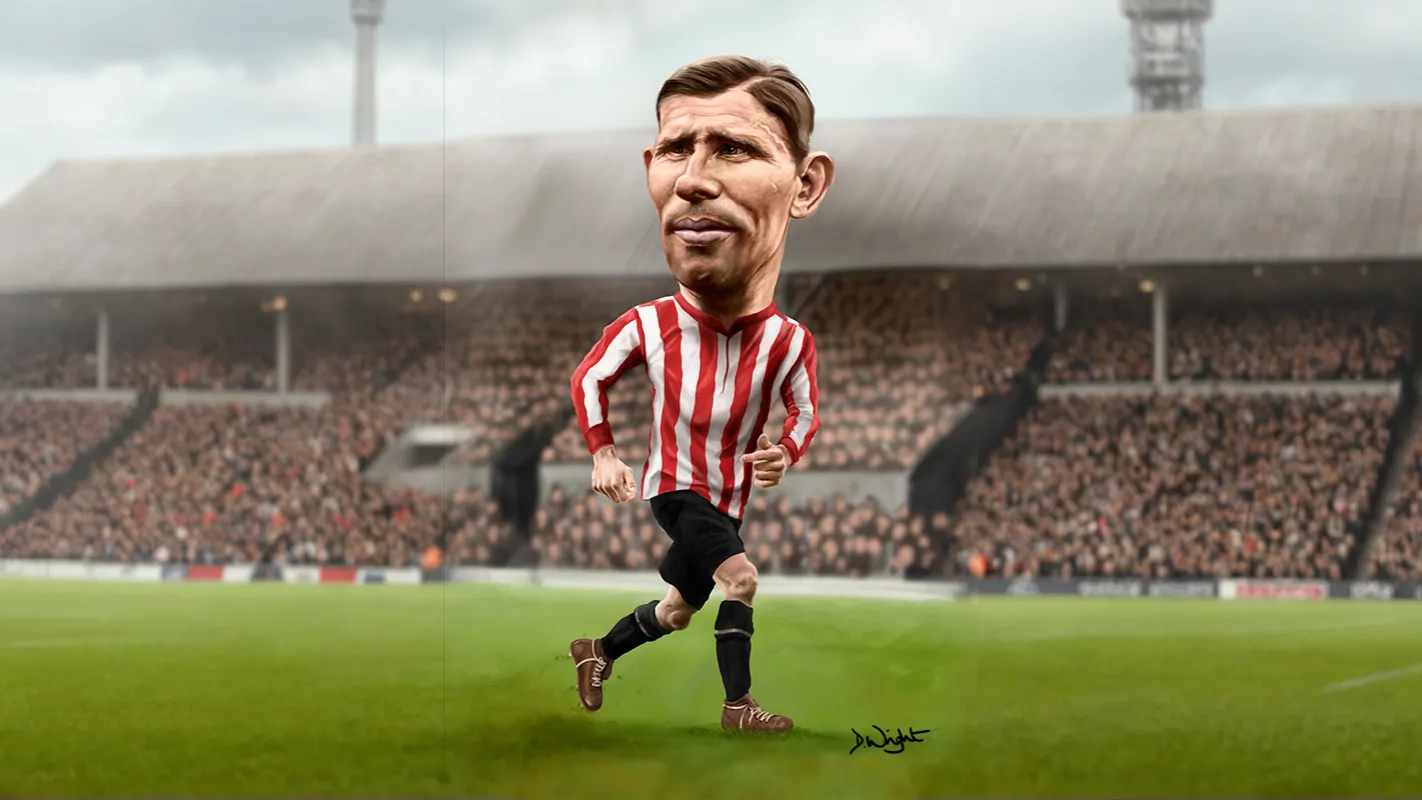
The Roker Park Riot: When Charlie Buchan and Sunderland Smashed Hull City
In the long and storied history of Sunderland Association Football Club, few names resonate with as much authority as Charlie Buchan. While the modern era of the sport is defined by high-speed analytics and global branding, the roots of the club’s identity were forged in afternoons like January 14, 1920. On that day, 106 years ago, Roker Park witnessed a clinical demolition that remains one of the club’s most celebrated FA Cup victories: a 6-2 thrashing of Hull City.
At the heart of this “Roker Park Riot” was the legendary Buchan, whose four-goal haul didn’t just secure passage to the second round—it cemented his status as the premier forward of the post-war era.
1. The Context: A Nation Returning to Normalcy
The 1919-20 season was a monumental period for English football. It was the first full professional season following the conclusion of the First World War. For the fans who packed into Roker Park, football was more than a game; it was a symbol of a returning way of life.
Sunderland, under the guidance of the legendary committee and manager Bob Kyle, were a powerhouse. Having won the league title just before the war in 1913, they were eager to assert their dominance once again. When the FA Cup first-round draw paired them with Hull City, a massive midweek crowd of 35,596 (with some contemporary reports suggesting figures as high as 40,000) descended upon Wearside.
The match had been delayed due to scheduling issues, and the anticipation was at a fever pitch. Hull City, then a second-division side, were viewed as the ultimate underdogs, but nobody expected the clinical slaughter that was about to unfold.
2. The Charlie Buchan Masterclass
Charlie Buchan was not your average centre-forward. He was a thinker, a tactician, and an “elegant” footballer who combined brute strength with a refined touch.
- The Opening Salvo: Sunderland started with intent, and Buchan found the back of the net in the 18th minute. However, Hull proved resilient early on. Goals from Kasher and Mercer briefly kept the Tigers in the contest, and for a short window, it looked like a classic cup upset might be brewing.
- The Second-Half Collapse: In the second half, Buchan turned the game into a personal exhibition. He scored in the 54th, 66th, and 70th minutes, completing his quadruple and effectively ending Hull’s hopes of a comeback.
- The Support: With Hull’s defense demoralized, Barney Travers and Sammy Stevens added late goals in the 71st and 80th minutes, rounding off a comprehensive 6-2 victory.
| Sunderland Scorer | Minute | Resulting Score |
|---|---|---|
| Charlie Buchan | 18′ | 1-0 |
| Charlie Buchan | 54′ | 2-2 |
| Charlie Buchan | 66′ | 3-2 |
| Charlie Buchan | 70′ | 4-2 |
| Barney Travers | 71′ | 5-2 |
| Sammy Stevens | 80′ | 6-2 |
3. Who Was the Man Behind the Goals?
To understand the significance of this match, one must understand the man who dominated it. Charlie Buchan is, quite simply, the greatest goalscorer in Sunderland’s league history.
- A Record-Breaker: Buchan remains the club’s all-time record league goalscorer with 209 goals. Over 14 years on Wearside, he was the leading scorer in seven seasons.
- A War Hero: Like many of his generation, Buchan’s career was interrupted by the Great War. He served with the Grenadier Guards and fought at the Somme and Passchendaele, returning to the pitch with a perspective that made him a natural leader.
- The Arsenal Legacy: After leaving Sunderland in 1925, he joined Arsenal for a revolutionary transfer fee based on the number of goals he scored. He helped Herbert Chapman develop the WM formation, which dominated English football for the next two decades.
4. The 1920 Cup Run: What Happened Next?
While the 6-2 win over Hull was a high point, Sunderland’s 1919-20 FA Cup campaign was ultimately a “what if” story.
- The Replay Drama: After dispatching Hull, Sunderland faced Burnley in the second round. A 1-1 draw at Turf Moor led to a replay at Roker Park, where nearly 50,000 fans watched Sunderland triumph.
- The Bogey Team: In the third round, Sunderland traveled to face their “bogey team,” Aston Villa. In a tight, tense affair in Birmingham, Sunderland fell 1-0. Villa would go on to win the trophy that year, proving that Sunderland were only a few inches away from potentially reaching the final themselves.
5. The Legacy of the 6-2 Victory
This match remains a cornerstone of Sunderland’s early 20th-century history. It represents the height of the “Roker Roar,” an era where the club was a genuine titan of the English game.
Buchan’s performance that day is still talked about in Wearside pubs and history books as the perfect example of “classic” centre-forward play. In an age before television, his four goals were legendary tales passed down through generations, fueling the mythos of the great Sunderland teams of old.