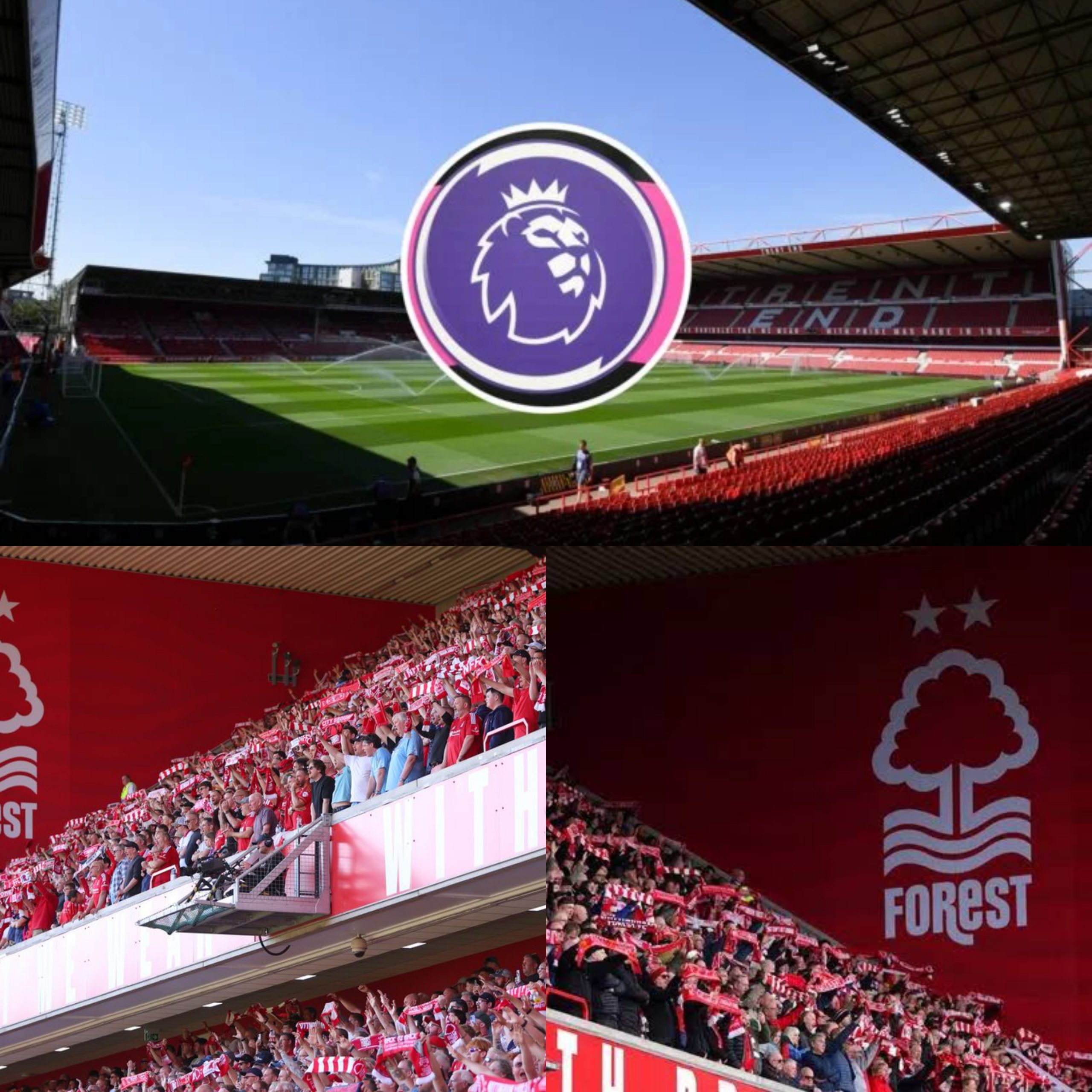
📅 Nottingham Forest Fans Vent Frustration as Opening Premier League Fixture Against Brentford is Rescheduled: A Sign of the Season to Come?
The 2025/26 Premier League fixture list had barely been made public before Nottingham Forest supporters were dealt their first scheduling blow — and judging by the reactions online, it may be the first of many. Forest’s highly anticipated opening fixture against Brentford, originally set for Saturday, 16 August, has been rearranged for Sunday, 17 August, a move that has left fans both confused and exasperated.
While the decision was made due to a clash with The Hundred cricket competition in Nottingham, Forest fans see the early change as a warning shot for the chaos to come in a season that promises to be shaped not only by domestic ambition but also by the demands of European football.
🏟️ From Excitement to Irritation: The Forest Fixture Reveal Turns Sour
When the full Premier League calendar dropped, Forest fans were cautiously optimistic. August presented a favorable run of fixtures, with three matches — two of them at home — that could provide momentum for a strong start. While eyes were already drawn nervously to a challenging October, the general consensus was that the season began with a winnable schedule, and a real opportunity to start on the front foot under manager Nuno Espírito Santo.
But that excitement quickly turned to frustration. It took less than a week for the first match to be moved — not for TV broadcast, not even for a European tie — but because of the domestic cricket tournament The Hundred, which is set to take place in Nottingham that same weekend.
This particular fixture reshuffle, while relatively minor in nature, has touched a nerve.
“What’s the point of releasing fixture lists if they’re going to be changed immediately?” one fan posted on X (formerly Twitter).
“Let’s be real, most of our games this season are going to be Sunday anyway,” another remarked.
“We haven’t even kicked a ball and the chaos has already started,” read another widely shared comment.
This chorus of disgruntlement isn’t just about a day’s delay — it’s a reaction to the growing sense among fans that traditional matchday rhythms are slipping away, casualties in the wider war between commercial interests, broadcasting contracts, and the increasingly bloated football calendar.
🕰️ What’s Behind the Fixture Change?
The reason for the Brentford game’s rescheduling is a pragmatic one — The Hundred cricket tournament at Trent Bridge is expected to draw large crowds, creating potential policing, travel, and logistical headaches. With Nottingham’s capacity for large-scale events stretched thin, moving the football fixture to the following day was seen as the safest and most manageable solution.
But for supporters, particularly those who plan travel months in advance or balance matchdays around work and family, the impact is far greater than a minor inconvenience. Sunday fixtures often come with higher travel costs, fewer public transport options, and increased time commitments that can turn a day at the football into a logistical challenge.
Moreover, the Brentford match wasn’t picked up by broadcasters — meaning it’s still a 3 PM kickoff on a Sunday, a time slot that’s rare and, to many, strange. For some fans, that only adds to the sense of disconnect.
🏆 Forest’s Return to Europe: A Blessing or a Scheduling Curse?
It’s worth noting that Nottingham Forest’s entry into the UEFA Europa Conference League — their first European campaign in over two decades — is a major achievement. For the club, the players, and supporters, it marks a significant step forward and a validation of Nuno Espírito Santo’s project. But with this opportunity comes an unavoidable trade-off: fixture congestion.
The Conference League, with games scheduled on Thursday nights, introduces a whole new layer of complexity. UEFA rules and Premier League guidelines both recommend a minimum 48-hour gap between matches, meaning Forest’s league games will frequently be moved to Sunday or Monday to accommodate European fixtures. The deeper Forest go in the competition, the more their domestic calendar will be chopped, changed, and squeezed.
The evidence is clear. Last season, clubs like West Ham, Aston Villa, and Brighton — who also played in Thursday competitions — averaged just 6 Saturday 3 PM kickoffs throughout the league campaign. By contrast, Forest, without European distractions, had 15 such fixtures, more than double.
So when fans lament that “most of our games will be Sundays,” it’s not hyperbole. It’s likely a statistical certainty.
📺 TV Rights, the End of Tradition, and the Modern Matchday Experience
In many ways, the frustration over Forest’s opening day rescheduling taps into a deeper issue within English football: the steady erosion of the traditional 3 PM Saturday kickoff. For generations, that slot was sacred — a cultural fixture as much as a sporting one. Families and friends built their weekends around it, pubs thrived on it, and communities gathered around stadiums in ritual.
But today’s football is televised, globalized, and increasingly fragmented. TV broadcasters now dictate kickoff times as much as — if not more than — the Premier League or the clubs themselves. Games are spread across Friday evenings, Saturday lunch, Saturday late afternoon, Sunday noon, Sunday tea time, and Monday nights. The blackout window (3 PM to 5:15 PM on Saturdays in the UK) still exists for TV rights reasons, but it’s more of a loophole than a protection.
This shift has hit match-going fans the hardest. Their routines have been stretched and altered beyond recognition, often with late notice and minimal input from supporters’ groups or local communities.
Forest fans, many of whom travel from around the Midlands and beyond, now face a season where certainty is in short supply. Any fixture on the calendar today could be shifted tomorrow — for Europe, for TV, or for cricket.
🔮 The Bigger Picture: Adapting to Football’s New Reality
It’s tempting to look at the Brentford rescheduling as a minor hiccup. After all, the match is still being played at the City Ground, and it’s only moved by 24 hours. But for many, it’s symbolic — a harbinger of the kind of season Nottingham Forest are heading into.
A European campaign brings glamour, prestige, and excitement. But it also brings unpredictability.
Nuno Espírito Santo and his backroom staff will have to manage training schedules around midweek flights and recovery periods. Squad rotation will be essential. Injuries will need careful monitoring. And supporters will need to develop a kind of mental resilience — ready for games on any day, at any hour.
That’s the reality of success in modern football. Fixture congestion isn’t a bug — it’s a feature. And the Brentford match being bumped is just the start.
📍 What Happens Next?
Nottingham Forest’s early fixture rearrangement won’t be the last. In fact, as Conference League group stage dates are confirmed and broadcasters make their picks for TV coverage, fans can expect a steady stream of changes throughout the season.
To keep up, many supporters will rely on online calendars, travel alerts, and — increasingly — social media groups sharing updates and advice.
Some fans will take it in stride. Others, understandably, will feel alienated. But all will hope that if the disruption yields European nights to remember, and perhaps even a deep run in the Conference League, it will all feel worth it.
✍️ Final Thoughts
The rearrangement of Forest’s opening fixture has struck a chord because it speaks to something bigger: the feeling that match-going fans are afterthoughts in the modern game. While clubs chase continental glory and broadcasters pursue ratings, the very people who give football its soul — the supporters in the stands — are left adjusting their lives around last-minute kickoffs and disjointed schedules.
And yet, Nottingham Forest are on the brink of an exciting, possibly historic season. There will be new experiences, memorable nights under the lights, and chances to see the club compete on the European stage once more.
But one thing is certain: fans will need to stay flexible, organized, and resilient — because the road ahead is anything but traditional.