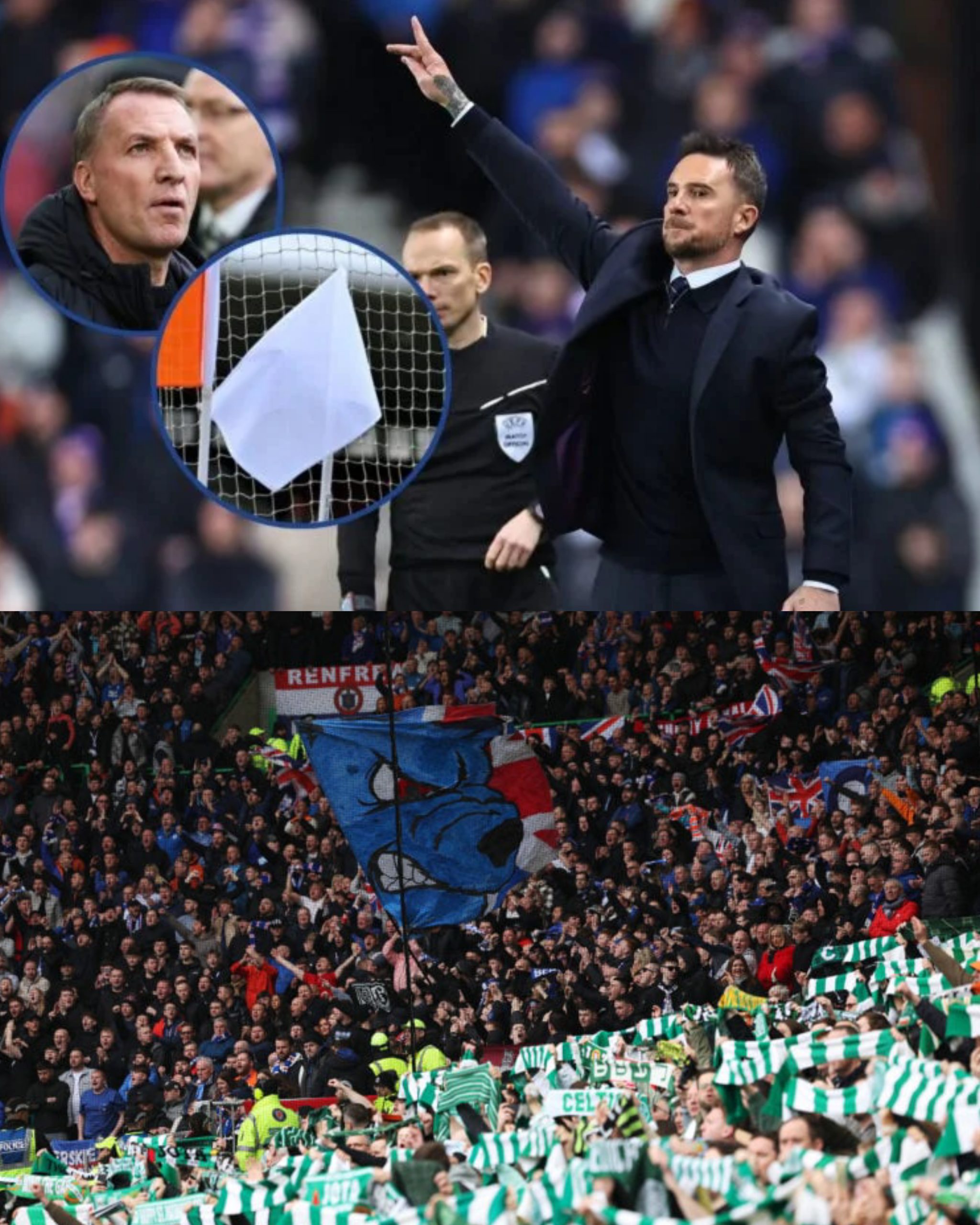
Rangers’ current state represents one of the most tumultuous periods in the club’s history, with an alarming combination of underperformance on the pitch, managerial instability, poor recruitment decisions, and a deepening rift between the board and the supporters. Despite Celtic’s own struggles, particularly their recent defeat to St Johnstone, Rangers have failed to capitalize on the opportunity to narrow the gap at the top of the Scottish Premiership, and this failure has only intensified the frustrations at Ibrox.
For the first time in the club’s history, Rangers have lost five consecutive home games, a stat that should be deeply concerning to all involved at the club. Equally worrying is the fact that Rangers have conceded two or more goals in six straight league games, a feat not seen since 1894. These statistics paint a damning picture of the team’s current defensive frailty and inability to defend their own ground, something that was once the hallmark of Rangers’ domestic dominance. The club’s failure to shore up their defense and rectify these recurring issues has left them vulnerable, and as Barry Ferguson rightfully pointed out after their 2-0 defeat to Hibs, there is a clear lack of identity within the team. It’s as if Rangers have lost the belief that they can compete for the top spot in Scotland, and this has become evident in their performances.
Despite these obvious shortcomings, Rangers had an opportunity to take advantage of Celtic’s own shortcomings when they lost to St Johnstone. If Rangers had managed to find form and win their recent home games against St Mirren, Motherwell, and Hibs, they could have been just four points behind Celtic with a crucial Old Firm game at Ibrox still to come. Instead, they failed to perform, squandering a chance to put real pressure on Celtic at a time when their rivals were struggling both in terms of form and confidence. This represents a massive missed opportunity, one that could have revitalized Rangers’ season and reignited hope among the fans.
Celtic, meanwhile, have been far from perfect in recent weeks. Their away form has been nothing short of disastrous, with only 11 points out of a possible 24 from their last eight away matches. This opens the door for Rangers, but the Ibrox side has been unable to take advantage of Celtic’s domestic struggles. In fact, Rangers’ own domestic performance has been just as poor, with inconsistency plaguing their results week after week. If the Gers had managed to find some form, they could have easily chipped away at Celtic’s lead, but instead, they have allowed their rivals to maintain a comfortable distance at the top of the table.
Rangers’ failure to strengthen their squad in the January transfer window has also been a point of contention. With Celtic’s struggles evident and the title race still wide open, many supporters expected Rangers to make significant moves to bolster their squad. Instead, they brought in just one player—Lille defender Rafael Fernandes, who has yet to feature under interim manager Barry Ferguson. This move, despite being a loan-to-buy deal, has raised serious questions about the club’s recruitment strategy. Fernandes, a 22-year-old centre-back, has struggled to break into the first team, and given the fierce competition for places in the Rangers defense, it is now unclear what the rationale behind his signing was. He is not even in Rangers’ Europa League squad, further highlighting the lack of immediate impact from the transfer.
Rangers have repeatedly failed to take advantage of the mid-season transfer window, and this is especially glaring when you look at the lack of progress with other signings, such as Colombian winger Oscar Cortes. Rangers are reportedly set to pay £4 million for Cortes this summer, yet he has played just 226 minutes this season—equivalent to just 2.5 full matches. This represents a considerable financial outlay for a player who has barely featured, and it highlights the troubling trend of wishful thinking in Rangers’ transfer dealings. The club has often pursued deals based on long-term potential rather than immediate impact, and as a result, they have failed to address pressing needs within their squad.
The club’s failure to make more meaningful moves in the market has compounded the feeling that Rangers are not truly committed to challenging Celtic for the title this season. Under the stewardship of Nils Koppen, the club has assembled a squad that lacks experience and the mental fortitude required to challenge at the top. This is a team that has yet to grasp the significance of the club’s expectations and one that, despite some promising talent, has failed to deliver in critical moments.
For Rangers fans, it has become increasingly difficult to reconcile their loyalty to the club with the reality of what they are being served on the pitch. They are expected to support a team that is clearly underperforming, and at the same time, they are being asked to dig deep into their pockets to finance a club that seems to be drifting aimlessly through the season. Meanwhile, those at the top, including executives and board members, appear to be more focused on their own prestige than addressing the club’s immediate footballing needs.
The boardroom at Ibrox is under immense scrutiny. The club’s leadership has come under fire for their lack of action, and the upcoming CEO fans’ forum will be a crucial moment for Patrick Stewart. Rangers supporters have long felt disconnected from those running the club, and their frustrations are now at breaking point. They have watched as their club has failed to make the necessary adjustments to win the title, all while seeing other clubs like Celtic and even Aberdeen continue to make strides.
For many Rangers fans, the growing feeling is one of betrayal. They have invested their time, money, and energy into a club that is failing to deliver on the pitch, while the executives appear to be more interested in maintaining the status quo than making the hard decisions necessary to challenge for trophies. The culture of failure that is now entrenched at Ibrox has become an uncomfortable reality for supporters, and unless there is a drastic change in leadership and direction, the club could be left behind while Celtic and other Scottish sides move forward.
When US investment eventually arrives at Rangers, there will likely be a major overhaul at the club. However, the damage done in this period of stagnation may be difficult to undo. Rangers are at a crossroads, and whether they can reverse their fortunes will depend on how quickly they can address the multitude of issues that have plagued the club for months. Without a change in direction, the sense that Rangers have waved the white flag in the Scottish Premiership will only grow stronger, and it will be up to the club’s leadership to prove that they are still capable of fighting for titles in the near future. Until then, it will be hard to shake the feeling that Rangers are simply going through the motions, unable to capitalize on opportunities and increasingly disconnected from the expectations of their supporters.