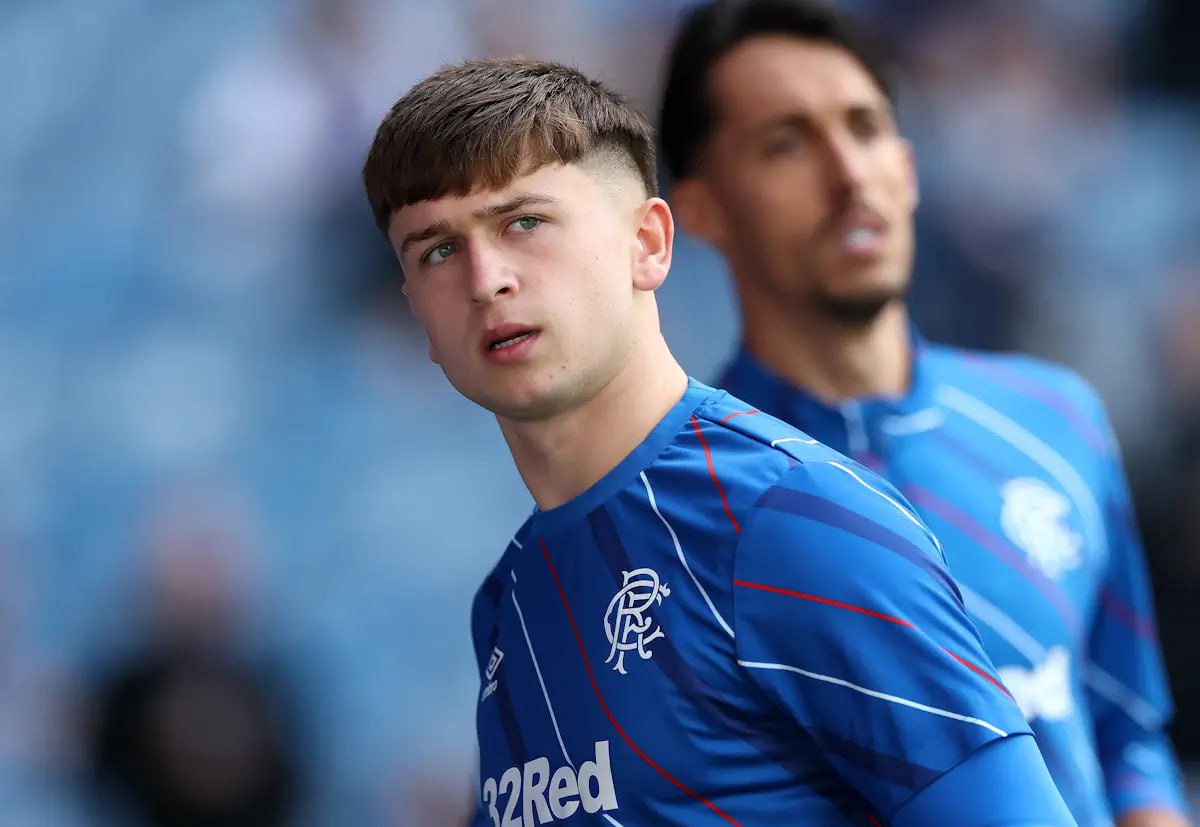
Rangers’ dramatic 2-2 draw with Celtic has sparked fierce debate in Scotland — and Tottenham Hotspur loanee Mikey Moore has found himself at the centre of it.
The 18-year-old winger impressed in a blistering first half at Ibrox, but former Rangers striker Gordon Dalziel did not hold back in his post-match assessment, suggesting the teenager “went missing” after the break as the Gers surrendered a two-goal lead.
A Tale of Two Halves at Ibrox
At half-time, Rangers looked in complete control.
Two goals to the good and playing with intensity, Danny Rohl’s side appeared poised to land a potentially decisive blow in the Scottish Premiership title race. The atmosphere inside Ibrox reflected that dominance, with supporters already beginning to talk about a statement victory.
But football — especially the Old Firm — rarely follows a script.
Veteran Celtic manager Martin O’Neill made decisive early second-half changes, introducing Sebastian Tounekti and Reo Hatate.
The impact was immediate.
Hatate, revitalised under O’Neill in recent weeks, became the heartbeat of Celtic’s resurgence. His energy, movement and technical quality shifted the momentum, culminating in the crucial goal that completed the comeback and silenced much of Ibrox.
Dalziel’s Dig at Moore
While much of the focus was on Celtic’s tactical adjustments, Dalziel turned his attention to Rangers’ attacking output — or lack thereof — in the second half.
Speaking on Clyde 1’s Superscoreboard, the former Gers forward pointed to Moore’s fading influence after an electric start.
“After about 25 minutes everybody was shouting ‘Give Mikey Moore the Man of the Match’,” Dalziel remarked.
“Never seen him [in the second half]. I can’t remember him doing anything.”
It was a blunt assessment of a player who had looked sharp and fearless in the opening stages. Moore’s direct running and willingness to take defenders on had caused Celtic problems early on, but as the tide turned, his involvement diminished.
Substitutions Told the Story
Former goalkeeper Cammy Bell echoed similar frustrations, arguing that Rangers’ tactical tweaks failed to match Celtic’s effectiveness.
When O’Neill made his changes, they altered the rhythm of the contest. In response, Rangers introduced Mohamed Diomande in an attempt to regain midfield control — but the move failed to restore balance.
Celtic grew stronger as Rangers retreated deeper.
For young attackers like Moore, the shift in territory made life far more difficult. Instead of receiving the ball high up the pitch, he was forced into defensive positions, limiting his ability to influence the game.
Still, critics argue that top players find ways to impact matches regardless of momentum swings — especially in fixtures of this magnitude.
A Young Talent Under the Spotlight
Moore’s loan move from Tottenham Hotspur has been closely scrutinised since day one.
He initially faced scepticism from former professionals such as Ross McCormack, but performances in recent weeks had begun to win over doubters, with ex-Hibernian striker Tam McManus praising his growing confidence and maturity.
Sunday’s draw, however, was a reminder of the unforgiving nature of Glasgow football.
At 18, consistency over 90 minutes — particularly in high-pressure derbies — is still developing. The intensity of Old Firm clashes can overwhelm even seasoned professionals, let alone a teenager adapting to Scottish football.
Title Race Implications
The result did neither side any favours.
Both Rangers and Celtic lost ground to Heart of Midlothian F.C. in the race for the Premiership crown, adding further frustration to what already felt like a missed opportunity for the Gers.
Rangers now face a challenging run of fixtures, including clashes with Celtic again in the Scottish Cup, St Mirren away and Aberdeen at home — matches that will demand resilience and composure.
Fair Criticism or Harsh Judgement?
Dalziel’s comments reflect the expectations placed on attacking players in big matches: deliver for the full 90 minutes or face scrutiny.
Yet context matters.
Rangers as a team lost control in midfield. Celtic dominated territory. Service to wide players diminished. When momentum swings so dramatically, even the brightest performers can fade.
For Moore, this may serve as a valuable lesson rather than a defining failure.
The talent is evident. The confidence is growing. But in Glasgow, especially against Celtic, brilliance must last beyond 45 minutes.
And that is the standard he will now be judged by.