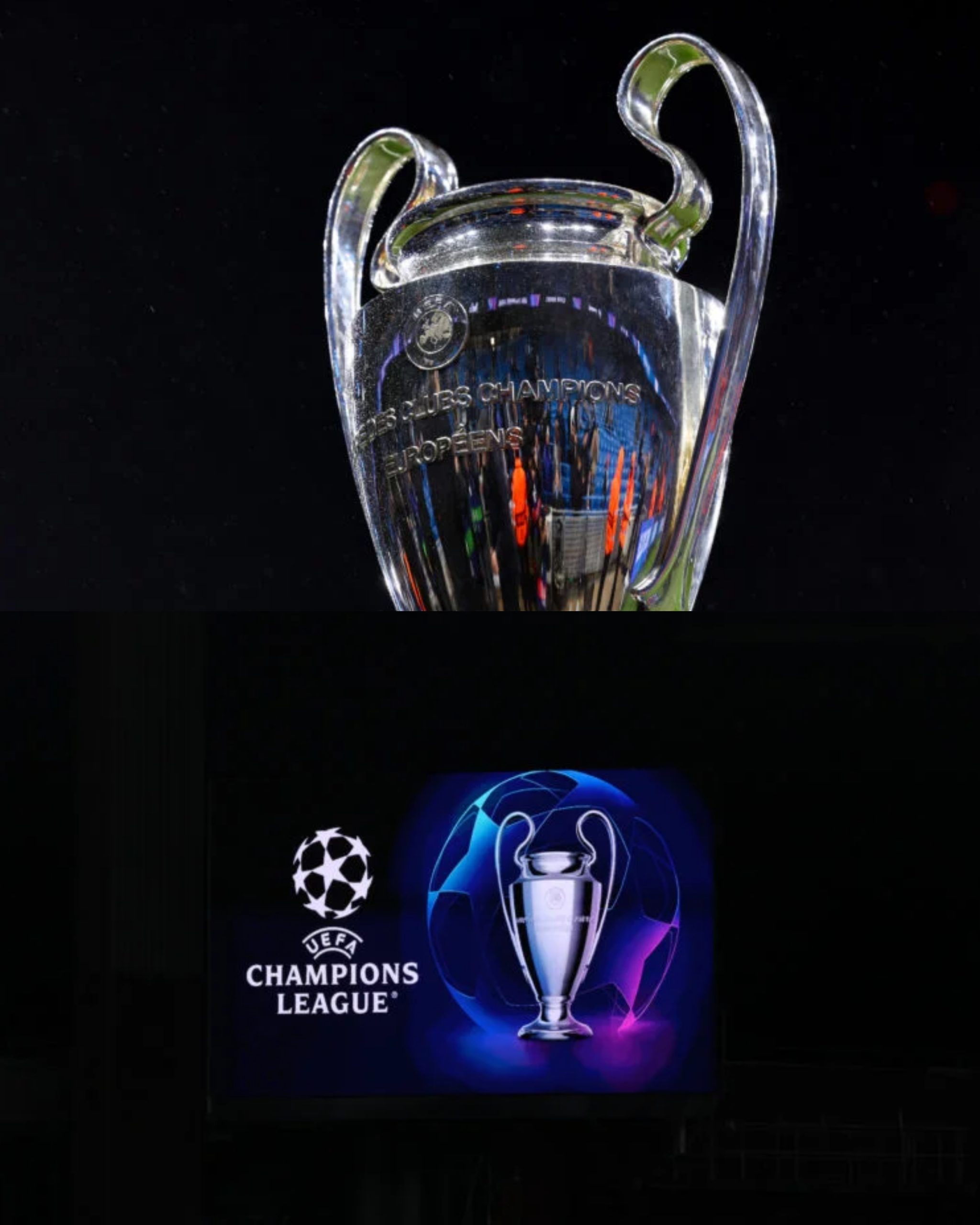
UEFA’s Champions League Shake-Up is a Slap in the Face to Celtic and Scottish Football – Andy Walker Speaks for Us All
Celtic fans have had much to celebrate in recent years. Dominant domestically, and more than holding their own on the European stage, the Hoops have shown the kind of resilience, identity, and passion that defines a proper football club. But next season, despite being poised to clinch their fourth consecutive Scottish Premiership title, Celtic will find themselves having to qualify—again—for the UEFA Champions League.
That news hasn’t just frustrated supporters. Former Celtic striker and now pundit Andy Walker has voiced his anger in no uncertain terms, slamming UEFA’s decision to force the Scottish champions through the third-round qualifiers while handing a fifth Champions League spot to the English Premier League.
It’s a story that deserves more attention—and not just from Scottish football fans. What’s happening here is a reflection of how football is increasingly built to favour the richest, most commercially lucrative leagues, at the expense of genuine champions who carry history, culture, and unmatched atmospheres to the European game.
Celtic’s Recent European Resurgence
Celtic have more than earned their place at Europe’s top table in recent seasons. After being granted direct access to the Champions League group stages over the past three years due to Scotland’s improved UEFA coefficient ranking, the Bhoys delivered memorable nights under the lights at Celtic Park. This season, under Brendan Rodgers, the club made a real mark—qualifying from the newly formatted Champions League league stage, picking up impressive wins against RB Leipzig and earning a gritty draw with Europa League winners Atalanta.
Those nights mattered. Not just for the financial rewards or prestige, but because they showcased Celtic’s ability to compete at the highest level. The Parkhead crowd once again reminded Europe why it’s one of the most electrifying atmospheres in world football. Yet now, thanks to a dip in the national coefficient rankings—with Scotland falling to 14th—Celtic must go back to the qualifiers, regardless of how convincingly they win their domestic league.
Walker’s Outburst: A Voice of Frustration
Speaking on The Go Radio Football Show, Andy Walker didn’t mince his words:
“I just wish UEFA could recognise the Scottish champions, get them into the Champions League.
I mean, I’m a big fan of English football, but come on, that’s five places now. You get four in Germany, four in Spain, four in Italy, and four in France.
The Scottish champions, I think, add to the occasion of the Champions League. Some of the nights, some of the sights and sounds that you see in Glasgow when Europe’s elite come to our city—it’s fabulous.
I just wish there was an avenue where the Scottish champions, whoever they are, could get straight into the Champions League. I think the competition would be better for it.”
It’s not just sentiment. Walker’s argument is grounded in fairness. How can a fifth-placed team in the Premier League—who haven’t won anything—be granted direct entry to the group stages, while a team like Celtic, who will have proven themselves over 38 grueling matches to be domestic champions, be forced to enter at the same level as a runner-up from Denmark or Austria?
UEFA’s justification for England’s fifth spot is the “European Performance Spot,” a place awarded to the top two associations in UEFA’s country coefficient rankings over the past season. England earned it thanks to results like Arsenal’s stunning 3-0 victory over Real Madrid in the Champions League quarter-finals, and other strong showings from English clubs in UEFA’s tournaments.
But this performance-based reward structure effectively doubles down on the advantages already enjoyed by the top leagues. More TV money, more lucrative commercial deals, deeper squads, and now extra Champions League spots. It’s an upward spiral for the rich, and a downward push for everyone else.
The Coefficient Trap
Scotland’s drop to 14th in UEFA’s coefficient table doesn’t just affect Celtic—it impacts every Scottish club hoping for European progress. The margin is tight, too. Scotland sits on 35.5 points, while Turkey, in 10th, have 43.9. That eight-point gap is surmountable, but only if clubs like Hearts, Rangers, and Aberdeen can also make deep runs in Europe.
It puts incredible pressure on Celtic. Not only do they carry the hopes of Scottish football, but now their route to meaningful European competition depends on navigating qualifiers that are notoriously perilous—especially so early in the season, when squads are still being shaped and players are still reaching full fitness. A single poor performance, a freak result, or even an unfortunate draw, and Scotland’s best team could find themselves in the Europa League or worse.
UEFA’s Contradiction: Rewarding Mediocrity, Punishing Champions
UEFA claims that the Champions League is a competition for Europe’s best. But who defines “best”? Is it the fifth-best team in England or Spain—or is it a national champion who’s proven their worth across an entire season?
The argument that Celtic “don’t bring enough to the table” commercially doesn’t hold water. The Parkhead crowd is iconic. The club’s global fanbase is enormous. And its history speaks for itself—from the Lisbon Lions in 1967 to famous victories over Barcelona, AC Milan, and Manchester United.
More importantly, the idea that financial value should dictate access to a tournament rather than sporting merit betrays the very ethos of the game. Football has always been about what happens on the pitch. The Champions League should be the pinnacle of competition, not just a closed shop for the wealthiest associations.
What Comes Next for Celtic?
Brendan Rodgers now faces one of the biggest challenges of his second spell in charge. He’ll need to have the team firing from the moment pre-season begins. There will be no time for half-measures in the summer transfer window. Every new signing must be ready to contribute immediately, and the squad needs to be built for a season that could hinge on a few high-stakes games in July and August.
The margins are brutal. There’s no margin for error in the qualifiers. Fail to make it through, and the financial implications are massive—not to mention the disappointment for fans and the long-term reputational impact.
Will UEFA Ever Change?
The reality is this: unless UEFA undergoes radical reform, these structural inequalities are here to stay. The governing body has shown time and time again that their priorities are commercial. They talk about inclusivity, but their actions say otherwise. They celebrate competition, but the system rewards consolidation.
Andy Walker has spoken out. Fans are voicing their concerns. But will UEFA listen? Or will clubs like Celtic have to keep fighting uphill battles just to earn what they’ve already won—the right to compete among Europe’s elite?
If UEFA truly wants to preserve the spirit of the Champions League, they should protect and value the presence of historic clubs from smaller nations. Because when Celtic Park is bouncing on a European night, when the banners are flying, and the anthem plays, there’s no fifth-placed club anywhere in Europe that can match that.
If you’d like, I can format this into a printable article or blog post layout for sharing or publication. Let me know!