Philippe Clement’s position at Rangers is becoming more precarious by the week, and his attempt to draw comparisons between his current struggles and those of Pep Guardiola at Manchester City will do little to buy him more time. While both managers are undoubtedly dealing with dips in form, the key difference is the level of trust and goodwill they have built up at their respective clubs.
Guardiola has earned near-unparalleled respect in the footballing world after revolutionizing Manchester City and guiding them to an era of dominance. Under his leadership, City have won five of the last six Premier League titles, multiple domestic cups, and, most importantly, the Champions League trophy that had eluded them for so long. Even as City go through what is statistically their worst spell under Guardiola—losing 12 of their last 24 matches—there is no real discussion about his job being in jeopardy. The reason for that is simple: his track record. He has delivered unprecedented success, and everyone knows that even the greatest managers go through tough periods.
Clement, on the other hand, is in a completely different situation at Rangers. He has been in charge for a year and a half, yet he has only delivered one trophy and a single Old Firm victory. For a club of Rangers’ stature, where success is measured not just in silverware but in how often they get the better of their biggest rivals, that is simply not good enough. Unlike Guardiola, who has built up a huge reservoir of credit over his years at City, Clement is operating on thin ice. He hasn’t done enough to earn the benefit of the doubt from the Rangers board or the fanbase, and every poor result increases the pressure on him.
The situation reached a boiling point after Rangers’ humiliating Scottish Cup exit to Queen’s Park. Losing to Celtic or even an in-form Hearts or Aberdeen in a cup competition would be one thing, but to be eliminated by a lower-division side is a disaster. It was a result that shattered the patience of many Rangers supporters, with large sections of the fanbase now openly calling for Clement to be sacked. When a Rangers manager loses the backing of the fans, it becomes incredibly difficult for him to continue. The expectation at Ibrox is that the team should be dominant in domestic football, and right now, they are falling well short of that standard.
With the pressure mounting on Clement, speculation about his potential replacement has intensified. The managerial market is always shifting, and many of the names previously linked with the Rangers job are now unavailable. Pascal Jansen, a target when Mick Beale was sacked, has since moved to MLS. Frank Lampard, another name frequently discussed, has taken over at Coventry City. Meanwhile, John Eustace, who was also considered a viable candidate, is set to leave Blackburn Rovers for Derby County. With these options now off the table, attention has turned once again to Kevin Muscat.
Muscat is a name that carries weight at Ibrox. A former Rangers player, he “knows the club,” which is a factor that often plays a significant role in managerial appointments. Beyond his familiarity with Rangers, Muscat has built an impressive coaching CV, winning league titles in three different countries. He led Melbourne Victory to A-League success, took over from Ange Postecoglou at Yokohama F. Marinos and won the J-League, and most recently, he guided Shanghai Port to the Chinese Super League title. His winning pedigree makes him an attractive option for Rangers, especially given the club’s desire to close the gap on Celtic as quickly as possible.
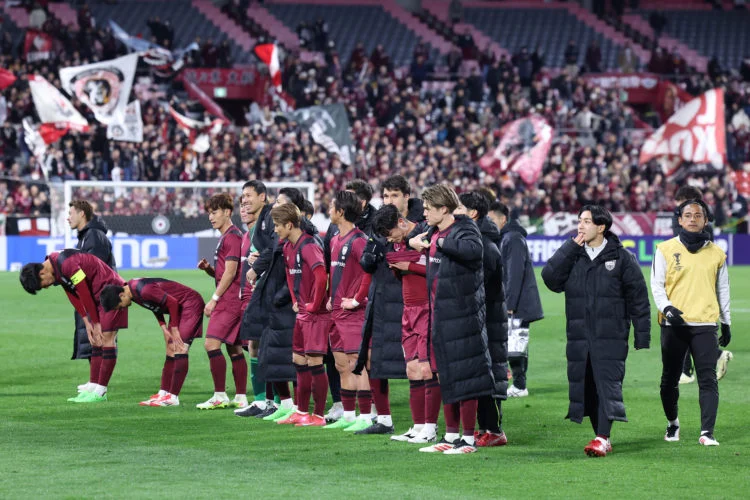
However, just as Clement is struggling at Rangers, Muscat is currently enduring a difficult period of his own in China. After a promising start at Shanghai Port, he has now come under fire following a series of poor results. His team suffered a disappointing 3-2 loss to their local rivals Shanghai Shenhua in the Chinese Super Cup before being hammered 4-0 by Vissel Kobe in the AFC Champions League. The manner of these defeats has led to growing criticism of Muscat’s tactical approach.
One of the biggest accusations leveled at Muscat is his reluctance to adapt. When key players such as Oscar and Matias Vargas left the club, and star striker Wu Lei was unavailable, Muscat did not change his tactical system to compensate for their absence. He stuck to his aggressive, high-pressing style despite his squad lacking the necessary quality to execute it effectively. This is a major red flag for any club considering hiring him, as one of the hallmarks of an elite manager is the ability to adjust tactics based on the players available.
Interestingly, this is a criticism that has also been directed at Guardiola during City’s current struggles. Some pundits have accused him of being too rigid and failing to account for the weaknesses in his squad. However, the difference is that Guardiola has earned the right to stick to his philosophy because it has worked for him time and time again. Muscat, by contrast, does not have the same level of authority, and his refusal to adjust could be seen as a sign of tactical stubbornness rather than confidence in his methods.
After the 4-0 defeat to Vissel Kobe, Muscat admitted that mistakes were made but also suggested that his team were simply outmatched physically. “Several decisive factors had an impact on the course of the game,” he said. “The opponent is a very strong team. Today, they made four replacements to their starting line-up, which gave them plenty of energy. The opponent was very physically fit. In a competition of the level of the AFC Champions League, we faced a strong opponent. Today, we made mistakes in several key areas, which led to goals from the opponent. Vissel Kobe was the better team.”
Muscat is not in immediate danger of losing his job, as he is still in the early stages of his tenure at Shanghai Port. However, the way he handles this adversity will be closely monitored. The best managers find ways to overcome setbacks, and if Muscat is unable to turn things around, it will raise serious questions about whether he is the right man for Rangers.
At the same time, Clement is hanging onto his job by a thread. Rangers’ upcoming fixtures will be crucial in determining his future. If the team continues to struggle, the board may feel they have no choice but to act before the end of the season. However, if Muscat does not show signs of improvement in China, Rangers may be forced to reconsider whether he is the best option to replace Clement.
Ultimately, the next few weeks will be decisive for both Clement and Muscat. If Rangers continue to falter, the board will have to decide whether to pull the trigger on Clement or give him more time. But if Muscat cannot prove that he can adapt and overcome adversity, the club may be forced to look elsewhere for a new manager. Either way, Rangers are entering a pivotal period that could shape the club’s future for years to come.