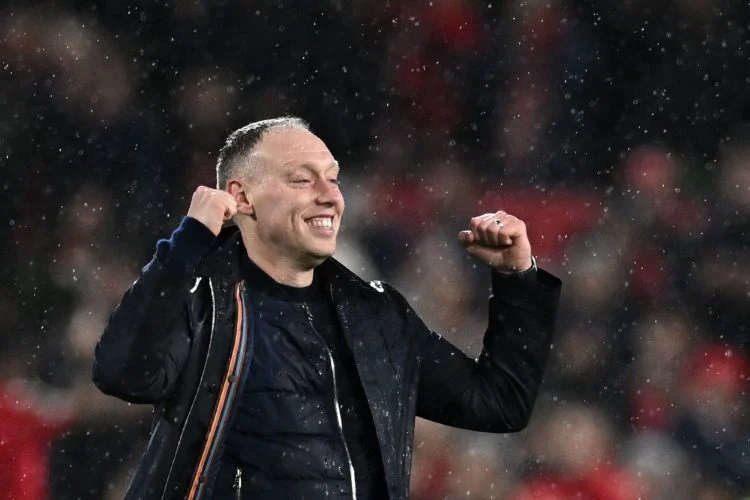
Steve Cooper’s Journey: From Nottingham Forest Hero to UEFA Technical Observer
Steve Cooper’s latest role as a UEFA Technical Observer marks a fascinating step in his career as he looks to maintain his involvement in football while waiting for his next managerial opportunity. Given his remarkable achievements—most notably guiding Nottingham Forest back to the Premier League—this move suggests he is taking a measured approach to his return, focusing on further developing his tactical knowledge while staying close to elite-level football.
His time at Forest remains one of the most impressive managerial feats in recent Championship and Premier League history. However, after a short and difficult stint at Leicester City, Cooper now finds himself at a crossroads. This UEFA role offers him the chance to refine his analytical skills, study top European teams, and prepare himself for his next challenge in the dugout.
Cooper’s Nottingham Forest Legacy: A Historic Turnaround
Steve Cooper’s reputation as a manager was significantly shaped by his tenure at Nottingham Forest. When he arrived at the City Ground in September 2021, Forest were in crisis. Under previous manager Chris Hughton, they had won just one of their first nine Championship matches and were sitting at the bottom of the table. Relegation looked more likely than promotion at that point, but Cooper managed to transform the club’s fortunes almost overnight.
Under his leadership, Forest went on an extraordinary run, surging up the table and eventually securing a play-off spot. The campaign culminated in a dramatic promotion through the play-offs, with a tense 1-0 victory over Huddersfield Town at Wembley. The triumph ended Forest’s 23-year exile from the Premier League and cemented Cooper’s status as a club legend.
Promotion was an incredible achievement, but keeping Forest in the Premier League the following season was arguably an even bigger challenge. The club embarked on a massive squad overhaul, signing more than 20 new players—a level of turnover rarely seen in top-flight football. Despite the difficulties in integrating so many players, Cooper managed to guide Forest to safety, ensuring they maintained their place in the Premier League.
However, Forest struggled in their second season under Cooper. A poor run of form in late 2023 saw them slip toward the relegation zone, and in December, owner Evangelos Marinakis made the difficult decision to sack Cooper. While the decision was met with disappointment from fans, it ultimately proved effective, as Nuno Espírito Santo managed to keep Forest in the Premier League.
Despite his dismissal, Cooper remains a beloved figure among Forest supporters. His work in revitalizing the club and bringing them back to the top flight will never be forgotten, and his legacy at the City Ground is secure.
Leicester City: A Tough Spell in Enemy Territory
After leaving Nottingham Forest, Cooper’s next job was always going to be crucial. Many expected him to wait for the right opportunity, but when Leicester City came calling, he decided to take the challenge. However, from the outset, the move seemed risky.
Leicester and Forest share a fierce rivalry, and many Leicester fans were skeptical about appointing a former Forest manager. Cooper’s ability to win them over was always going to depend on results, but unfortunately, things didn’t go to plan. After a poor start to the season, Leicester decided to part ways with Cooper just a few months into his tenure.
His struggles at Leicester will undoubtedly have dented his reputation, but it does not erase the success he enjoyed at Forest or in his previous roles, such as leading England’s U17 team to World Cup glory in 2017. Cooper remains a respected coach, and his decision to take on a role with UEFA suggests that he is carefully considering his next move rather than rushing back into club management.
What Does a UEFA Technical Observer Do?
Cooper’s new role as a UEFA Technical Observer is an interesting one and highlights the regard in which he is still held within the footballing world. UEFA’s Technical Observers are responsible for analyzing matches across European competitions, providing tactical insights, and helping determine individual and team awards.
Key Responsibilities of a UEFA Technical Observer:
Match Analysis: Observers attend European matches and assess tactical setups, team performances, and key moments in the game.
Selecting the Player of the Match: They are responsible for choosing the official Player of the Match in UEFA competitions.
Seasonal Awards: A pool of observers contributes to selecting the Team of the Season, Player of the Season, Young Player of the Season, and Goal of the Season.
In-Game and Post-Match Analysis: Observers work with UEFA’s technical team to review footage, analyze statistics, and provide insights that can be used for reports and coaching education.
Cooper’s first assignment in this role saw him overseeing Feyenoord’s Champions League clash with Inter Milan. Given that UEFA only selects highly knowledgeable and respected football figures for this position, it reflects well on Cooper’s standing within the game.
What’s Next for Steve Cooper?
While working with UEFA is a valuable experience, Cooper’s long-term ambition is likely to return to club management. The question is: where will he go next?
His stock has undoubtedly taken a hit after his brief spell at Leicester, meaning a return to the Premier League might not be immediate. However, his success at Nottingham Forest ensures that he will still be considered for managerial roles at a high level. There are several potential paths he could take:
- A Return to the Championship?
Cooper has already proven his ability to succeed in the Championship, having masterminded Forest’s promotion campaign. If a big club in the second tier needs a manager, he would be a strong candidate. Clubs like Leeds United, West Bromwich Albion, or even a return to Swansea City (where he previously reached the play-offs) could be options if their managerial situations change.
- A Move Abroad?
Given his experience with England’s youth teams and now with UEFA, Cooper could consider working in a different European league. Managers like Graham Potter and Brendan Rodgers have benefited from coaching abroad before returning to top-level jobs in England. Cooper’s tactical understanding could make him a good fit for a club in the Bundesliga, La Liga, or even Major League Soccer (MLS), where English managers have found success in recent years.
- A Premier League Return?
While an immediate return to the Premier League seems unlikely, Cooper could be in contention for jobs at smaller top-flight clubs if vacancies arise. Teams battling relegation may see him as a manager capable of steadying the ship. If a struggling club is willing to give him another chance, he could rebuild his reputation at the highest level.
- The Long-Term Approach
By taking on this UEFA role, Cooper is ensuring that he remains involved in elite football, studying the game, and refining his tactical knowledge. This patient approach could benefit him in the long run, as he will return to management with fresh ideas and a deeper understanding of the game at the highest level.
Final Thoughts
Steve Cooper’s journey has been one of ups and downs, but his decision to work with UEFA as a Technical Observer is a smart one. It allows him to stay engaged with football at an elite level while considering his next managerial move carefully.
While his brief spell at Leicester may have hurt his chances of walking into another Premier League job, his achievements at Nottingham Forest and his broader experience in youth and senior management mean he will always be on the radar for clubs in need of a proven leader.
The next step in Cooper’s career will be crucial, but this UEFA role ensures that when the right opportunity comes along, he will be ready to take it. His legacy at Forest remains intact, and it will be interesting to see where his managerial journey takes him next.